SuperCritical seawater uranium licence: extraction and fuel-cycle notes for engineers
Reviewed by Tom Sullivan
First reported on MINING.com
30 Second Briefing
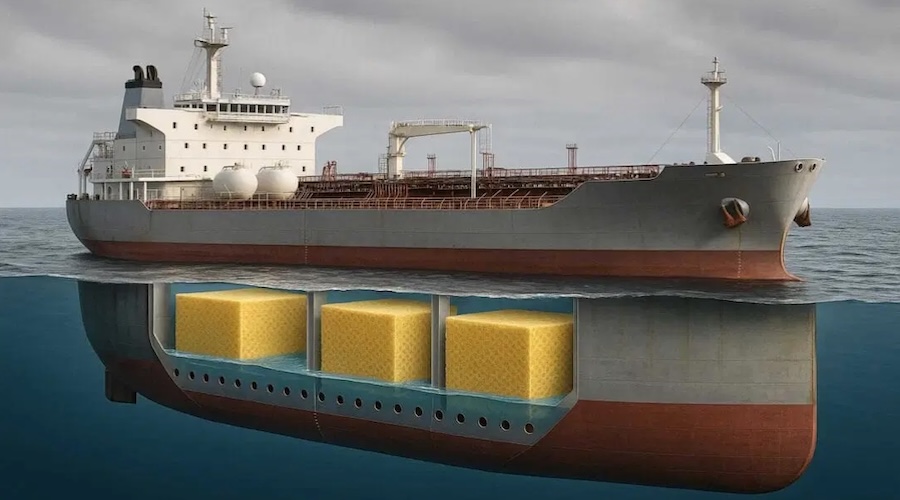
SuperCritical Materials has secured an exclusive US Department of Energy licence to commercialise a Pacific Northwest National Laboratory adsorbent manufacturing process that extracts uranium from seawater using acrylic fibres treated with proprietary adsorption chemistries. The Austin-based firm gains sole rights to deploy the technology in the US before expansion to allied countries, targeting uranium dissolved in oceans estimated at 4.5 billion tonnes and aiming to co-recover other strategic minerals. The move directly targets emerging bottlenecks in uranium, HALEU and fuel-cycle infrastructure for advanced reactors.
Technical Brief
- Licence covers a specific DOE/PNNL patented adsorbent manufacturing process, not just generic seawater sorbents.
- Acrylic fibres are surface-treated with proprietary adsorption chemistries to selectively bind uranium and other metals.
- Deployment concept involves immersing fibre-based adsorbent structures directly in seawater, then stripping captured metals onshore.
- Pacific Northwest National Laboratory led the underlying R&D under the DOE Office of Nuclear Energy programme.
- SuperCritical’s exclusive rights initially apply only within the United States, with later expansion to named allied countries.
- Former PNNL scientists, including co-founder Gary Gill, form the core technical team on seawater extraction.
- The technology is explicitly positioned to help relieve emerging bottlenecks in uranium conversion, enrichment and HALEU supply.
- Co-recovery of “other strategic minerals” from seawater is planned, aligning with US critical minerals policy objectives.
Our Take
Uranium shows up repeatedly in our 219 keyword‑matched pieces, but this SuperCritical seawater route sits outside the usual mine‑supply narrative dominated by producers like Cameco and Kazatomprom in the recent TOP 50 valuation coverage, signalling a potential future ‘third leg’ of supply alongside conventional mining and secondary sources.
The mention of gallium and aluminium alongside uranium aligns with US and Japanese concern over critical minerals security seen in other recent critical‑minerals coverage, and a plant capable of supplying up to 10% of global gallium would materially ease current concentration risk in Chinese refining.
Having the US Department of Energy and Pacific Northwest National Laboratory directly involved places SuperCritical’s work in the same strategic bucket as defence‑linked critical minerals initiatives referenced in our other uranium and rare earths coverage, which typically enjoy faster policy support and easier access to grant or offtake backing than standalone private projects.
Prepared by collating external sources, AI-assisted tools, and Geomechanics.io’s proprietary mining database, then reviewed for technical accuracy & edited by our geotechnical team.
Related Articles


Related Industries & Products
Mining
Geotechnical software solutions for mining operations including CMRR analysis, hydrogeological testing, and data management.
Construction
Quality control software for construction companies with material testing, batch tracking, and compliance management.
CMRR-io
Streamline coal mine roof stability assessments with our cloud-based CMRR software featuring automated calculations, multi-scenario analysis, and collaborative workflows.
QCDB-io
Comprehensive quality control database for manufacturing, tunnelling, and civil construction with UCS testing, PSD analysis, and grout mix design management.
HYDROGEO-io
Comprehensive hydrogeological testing platform for managing, analysing, and reporting on packer tests, lugeon values, and hydraulic conductivity assessments.