Geomechanics.io

  • Free Tools
Sign UpLog In
AllGeotechnicalMiningInfrastructureMaterialsHazardsEnvironmentalSoftwarePolicy

Geomechanics.io

Geomechanics, Streamlined.

© 2026 Geomechanics.io. All rights reserved.

Geomechanics.io

CMRR-ioGEODB-ioHYDROGEO-ioQCDB-ioFree Tools & CalculatorsBlogLatest Industry News

Industries

MiningConstructionTunnelling

Company

Terms of UsePrivacy PolicyLinkedIn
    Projects
    Contract Award

    South32’s US$35M Arctic copper push: design and permitting notes for mine teams

    January 22, 2026|

    Reviewed by Joe Ashwell

    South32’s US$35M Arctic copper push: design and permitting notes for mine teams

    First reported on MINING.com

    30 Second Briefing

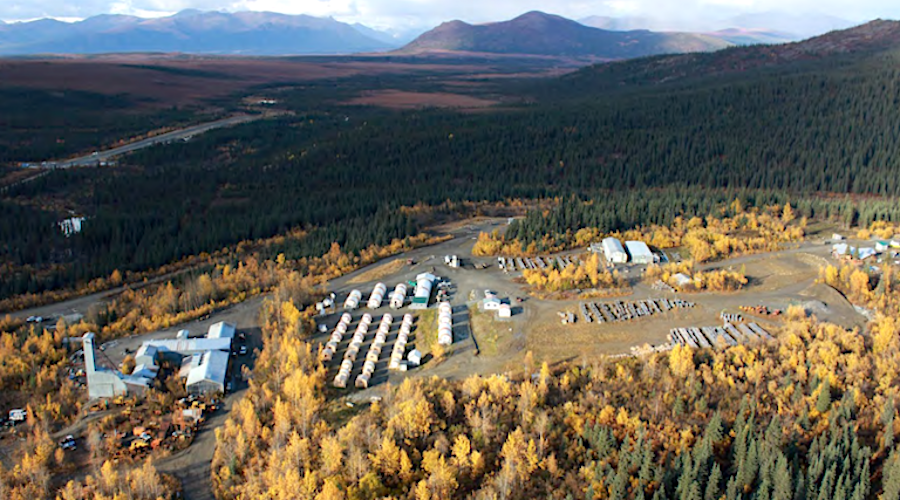
    South32 is funding a US$35 million work programme at the high-grade Arctic polymetallic deposit in Alaska’s Ambler district through its 50:50 Ambler Metals joint venture with Trilogy Metals, within the 1,900 km² Upper Kobuk Mineral Projects that also host the Bornite copper deposit. The 2026 field season will focus on geotechnical and condemnation drilling at Arctic to refine mine design, infrastructure siting and long-term production planning, while upgrading the Bornite camp for multi‑year operations. South32 has also sold about US$17.8 million of Trilogy shares to the US Department of War, giving Washington a 10% stake ahead of a planned independent JV management team and intensified permitting and technical studies.

    Technical Brief

    • 2026 drilling at Arctic explicitly split between geotechnical and condemnation holes for mine and infrastructure layouts.
    • Bornite camp to be physically upgraded for continuous, multi‑year occupation and drilling logistics.
    • Geotechnical drilling at Bornite scheduled to commence in the 2026 summer field window.
    • Ambler Metals plans to re‑establish an independent management team in 2026 to run Upper Kobuk development.
    • New team mandated to advance Arctic permitting, complete technical studies and execute mine‑design drilling programmes.
    • Community engagement, workforce development and local participation are defined as explicit workstreams for the next phase.

    Our Take

    In our database, this $35M work programme at the Arctic deposit sits alongside South32’s recent exits from Cerro Matoso (ferronickel) and the planned care-and-maintenance of the Mozal aluminium smelter, signalling a capital rotation away from mature base-metals and aluminium assets into copper-focused growth in jurisdictions like Alaska and the USA.

    The Ambler Metals 50/50 JV with Trilogy Metals gives South32 copper exposure in the United States at a time when Washington has taken a 10% equity stake in Trilogy, which is likely to strengthen the project’s strategic positioning in any future federal permitting or infrastructure discussions in north‑western Alaska.

    With South32 reporting a 17% jump in quarterly manganese output while simultaneously backing the Upper Kobuk Mineral Projects, the group is effectively balancing near-term cash flow from bulk commodities against longer-dated copper and gold optionality, a pattern also visible across several of the 186 copper‑keyword pieces in our coverage.

    Geotechnical Software for Modern Teams

    Centralise site data, logs, and lab results with GEODB-io, CMRR-io, and HYDROGEO-io.

    No credit card required.

    • Save and export unlimited calculations
    • Advanced data visualisation
    • Generate professional PDF reports
    • Cloud storage for all your projects

    Prepared by collating external sources, AI-assisted tools, and Geomechanics.io’s proprietary mining database, then reviewed for technical accuracy & edited by our geotechnical team.

    Related Articles

    SKRI ‘phytocapture’ at Raygorodok: dust control performance insights for mine engineers
    Mining
    about 9 hours ago

    SKRI ‘phytocapture’ at Raygorodok: dust control performance insights for mine engineers

    China’s Zijin Mining is expanding RG Gold’s Raygorodok operation in Kazakhstan with a $500 million processing plant while deploying SKRI’s ‘phytocapture’ system, planting over 100,000 Scots pines across more than 20 hectares about 1.7 km downwind of the open pit. Supercomputer modelling using regional wind-rose data sets tree species and spacing to form multilayered vegetative barriers, not simple landscaping. SKRI reports particulate-matter reductions above 40%, with the forest belt expected to capture roughly one-third of dust emissions as mining advances towards the barrier.

    Barrick’s Reko Diq copper project delays: capex and schedule lens for mine planners
    Mining
    about 10 hours ago

    Barrick’s Reko Diq copper project delays: capex and schedule lens for mine planners

    Barrick Mining has warned of “significant increases” to the capital budget and schedule for the 50%-owned Reko Diq copper-gold project in Balochistan, where Phase 1 was previously costed at US$5.6–6.0 billion and Phase 2 at US$3.3–3.6 billion, with first production targeted by end-2028. Citing escalating security risks in Pakistan and the wider region, Barrick will slow field development and extend the technical and financing review to mid‑2027, while keeping the project under “active management” with reduced capital spend. The porphyry deposit, holding an estimated 15 million tonnes of copper reserves and modelled for a 37‑year mine life, remains central to Barrick’s Tier 1 copper strategy and its long-term community commitments in Balochistan.

    Orica tech for smaller North American mines: blast design gains for engineers
    Mining
    about 13 hours ago

    Orica tech for smaller North American mines: blast design gains for engineers

    Orica is targeting smaller North American mines and quarries with the same digital blasting toolkit used on large sites, including its BlastIQ cloud platform for blast design and performance tracking and on-bench digital loading systems. Area Business Manager Elliott Giles told IM that these operations, aggregated, form a major explosives volume market, and are now adopting electronic detonators and precise blast modelling to cut oversize and improve fragmentation. For geotechs and drill‑and‑blast engineers, the shift means more consistent burden control, tighter vibration management and better data for pit wall stability assessment even on “small” jobs.

    Related Industries & Products

    Mining

    Geotechnical software solutions for mining operations including CMRR analysis, hydrogeological testing, and data management.

    Construction

    Quality control software for construction companies with material testing, batch tracking, and compliance management.

    CMRR-io

    Streamline coal mine roof stability assessments with our cloud-based CMRR software featuring automated calculations, multi-scenario analysis, and collaborative workflows.

    HYDROGEO-io

    Comprehensive hydrogeological testing platform for managing, analysing, and reporting on packer tests, lugeon values, and hydraulic conductivity assessments.

    GEODB-io

    Centralised geotechnical data management solution for storing, accessing, and analysing all your site investigation and material testing data.