Geomechanics.io

  • Free Tools
Sign UpLog In
AllGeotechnicalMiningInfrastructureMaterialsHazardsEnvironmentalSoftwarePolicy

Geomechanics.io

Geomechanics, Streamlined.

© 2026 Geomechanics.io. All rights reserved.

Geomechanics.io

CMRR-ioGEODB-ioHYDROGEO-ioQCDB-ioFree Tools & CalculatorsBlogLatest Industry News

Industries

MiningConstructionTunnelling

Company

Terms of UsePrivacy PolicyLinkedIn
    Projects
    Failure
    Safety

    Rubaya mine shaft collapse in Eastern Congo: geotechnical failure lessons for engineers

    February 1, 2026|

    Reviewed by Tom Sullivan

    Rubaya mine shaft collapse in Eastern Congo: geotechnical failure lessons for engineers

    First reported on Geoengineer.org – News

    30 Second Briefing

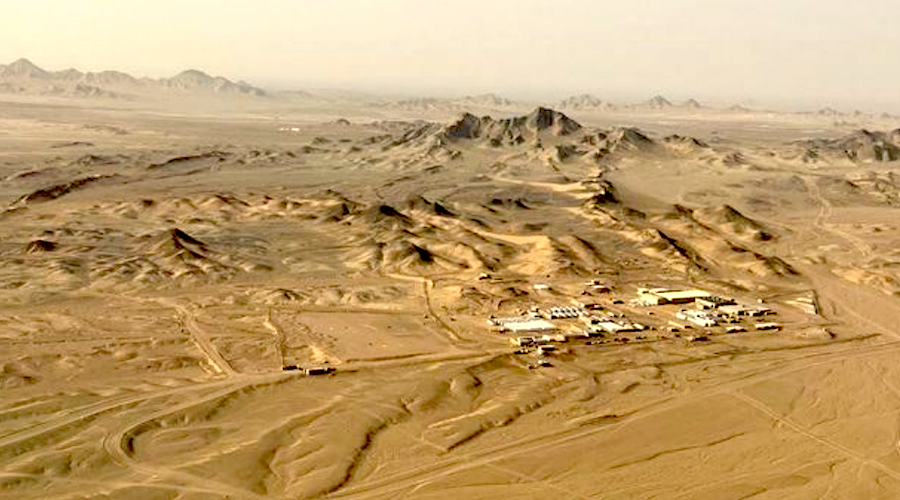
    At least 200 artisanal miners are reported dead after multiple shallow coltan mine shafts collapsed at the Rubaya mining complex in North Kivu, eastern Democratic Republic of the Congo, following heavy rainfall. Local authorities say informal pits on steep, highly weathered slopes failed almost simultaneously, with narrow unsupported stopes and adits giving miners little chance to escape. The incident again exposes the absence of geotechnical design, ground support, drainage control and regulated access in rebel-held artisanal coltan operations across the region.

    Technical Brief

    • Failure mechanism involves progressive roof and sidewall shear in narrow, vertically stacked artisanal stopes.
    • Heavy rainfall likely raised pore pressures in deeply weathered saprolite, sharply reducing effective stress and cohesion.
    • Simultaneous collapse of several adjacent pits suggests coalescing failure surfaces across a shared, oversteepened slope sector.
    • Absence of engineered dewatering or surface drainage would have promoted infiltration, softening lateritic cover and colluvium.
    • Investigation will rely on post-failure mapping, eyewitness timelines, rainfall records and limited shallow subsurface logging.
    • Monitoring in similar districts would centre on simple rainfall thresholds, tension cracks, and visual slope deformation checks.
    • Event reinforces the need for minimum geotechnical oversight and enforceable exclusion zones around informal highwall workings.

    Our Take

    Rubaya’s coltan output sits in the same eastern DRC corridor that appears on the vetted shortlist for US-linked critical mineral investment, which will sharpen scrutiny of safety and traceability in informal and rebel-held operations feeding the same supply chains.

    In our database, coltan appears in only a handful of keyword-matched pieces compared with copper or cobalt, yet incidents like this at Rubaya highlight that safety and governance risks in tantalum supply are at least as acute as in the better-covered battery metals.

    The scale of fatalities at an unregulated coltan site in eastern Democratic Republic of the Congo is likely to complicate ESG due diligence for downstream buyers, who are already under pressure to demonstrate that tantalum sourcing avoids conflict-affected or high-risk mines.

    Geotechnical Software for Modern Teams

    Centralise site data, logs, and lab results with GEODB-io, CMRR-io, and HYDROGEO-io.

    No credit card required.

    • Save and export unlimited calculations
    • Advanced data visualisation
    • Generate professional PDF reports
    • Cloud storage for all your projects

    Prepared by collating external sources, AI-assisted tools, and Geomechanics.io’s proprietary mining database, then reviewed for technical accuracy & edited by our geotechnical team.

    Related Articles

    Global battery demand and Australian lithium: processing shift for mine engineers
    Mining
    about 4 hours ago

    Global battery demand and Australian lithium: processing shift for mine engineers

    Surging global demand for lithium-ion batteries for electric vehicles and grid storage is pushing Australia to move beyond spodumene concentrate exports into domestic refining and cathode‑grade chemical production. Industry proposals centre on converting hard‑rock feed into battery‑grade lithium hydroxide and carbonate in Western Australia, leveraging existing Tier‑1 deposits and port infrastructure but facing high energy costs, skills shortages and permitting timelines. For miners and process engineers, the shift implies greater focus on impurity control, reagent optimisation and integration of hydrometallurgical circuits with upstream mine planning.

    Bengalla growth for New Hope: strip mine sequencing and design notes for planners
    Mining
    about 4 hours ago

    Bengalla growth for New Hope: strip mine sequencing and design notes for planners

    New Hope Group has lifted coal output across its Australian assets and is advancing growth plans at the Bengalla thermal coal mine in the Hunter Valley, where it holds an 80 per cent interest alongside Mitsui, Taipower and J-Power. The open-cut operation, which typically produces export-quality thermal coal for Asian power utilities via the Port of Newcastle, is the company’s key near-term expansion focus. For mine planners and geotechs, any Bengalla growth path will centre on additional strip mining, dragline and truck–shovel sequencing, and associated waste dump and haul road reconfiguration.

    Mining smarter with AI and data: edge network design notes for engineers
    Mining
    about 5 hours ago

    Mining smarter with AI and data: edge network design notes for engineers

    Australian miners are hitting a data wall as high‑bandwidth sensors, autonomous fleets and video streams overwhelm traditional cloud links, pushing operations towards private LTE networks and on‑site edge computing. Vendors such as Vocus are pairing Starlink Business Rural satellite backhaul with 4G/5G private LTE to keep haul trucks, crushers and fixed plant connected in real time, even on remote pits and waste dumps. For engineers, this shift means designing networks and control systems around low‑latency, on‑site processing for fleet dispatch, collision avoidance and condition monitoring rather than centralised data centres.

    Related Industries & Products

    Mining

    Geotechnical software solutions for mining operations including CMRR analysis, hydrogeological testing, and data management.

    CMRR-io

    Streamline coal mine roof stability assessments with our cloud-based CMRR software featuring automated calculations, multi-scenario analysis, and collaborative workflows.

    HYDROGEO-io

    Comprehensive hydrogeological testing platform for managing, analysing, and reporting on packer tests, lugeon values, and hydraulic conductivity assessments.

    GEODB-io

    Centralised geotechnical data management solution for storing, accessing, and analysing all your site investigation and material testing data.