Geomechanics.io

  • Free Tools
Sign UpLog In
Built byBoxcut Studio

Geomechanics.io

Geomechanics, Streamlined.

© 2026 Geomechanics.io. All rights reserved.

Geomechanics.io

CMRR-ioGEODB-ioHYDROGEO-ioQCDB-ioFree Tools & CalculatorsBlogLatest Industry News

Industries

MiningConstructionTunnelling

Company

Terms of UsePrivacy PolicyLinkedIn
    Projects
    Contract Award

    Rio Tinto’s Nemaska control and US$300M spend: project notes for mine planners

    February 19, 2026|

    Reviewed by Joe Ashwell

    Rio Tinto’s Nemaska control and US$300M spend: project notes for mine planners

    First reported on MINING.com

    30 Second Briefing

    Rio Tinto has taken control of Nemaska Lithium with a 53.9% stake and plans to invest more than US$300 million in Quebec in 2026, alongside up to US$200 million in new equity from the provincial government. Capital will advance Nemaska’s 32,000 t/y lithium hydroxide plant at Bécancour, now about 60% complete, and the Whabouchi spodumene mine in the James Bay region, with commissioning at Bécancour targeted for 2026 and first production in 2028. Rio is also assessing feed from its Galaxy mine and Whabouchi to optimise spodumene supply to the plant.

    Technical Brief

    • Equity structure now 53.9% Rio Tinto and 46.1% Quebec government, affecting control and funding decisions.
    • Bécancour lithium hydroxide plant was ~60% complete at end-2025, indicating remaining construction and commissioning scope.
    • Nemaska’s Whabouchi project and Bécancour plant form an integrated mine-to-chemical supply chain within Quebec.
    • Nemaska previously entered creditor protection in 2019 after cost overruns, implying elevated cost-control scrutiny on current capex.
    • Rio acquired its initial 50% Nemaska stake via the ~US$6.7 billion purchase of Arcadium Lithium.
    • Group-wide, Rio has flagged US$1 billion per year over three years to expand lithium output in Canada and Argentina, signalling multi-asset pipeline development.

    Our Take

    Within our 1058 Mining stories, lithium pieces linked to Canada and Argentina increasingly feature multi-asset spending plans, so Rio Tinto’s $1 billion-per-year allocation signals it is positioning Nemaska alongside South American assets rather than as a standalone Quebec bet.

    The 60% completion of the Bécancour lithium hydroxide plant, combined with Quebec’s 46.1% stake in Nemaska, likely strengthens the province’s leverage in downstream processing policy, which has been a recurring theme in our Quebec-tagged project coverage.

    Rubaya’s relatively modest $50–150 million restart cost, compared with the planned $300 million Quebec investment, suggests Rio Tinto may treat the Congo asset as a flexible, lower-capex option to balance supply risk against its higher-profile North American lithium portfolio.

    Geotechnical Software for Modern Teams

    Centralise site data, logs, and lab results with GEODB-io, CMRR-io, and HYDROGEO-io.

    No credit card required.

    • Save and export unlimited calculations
    • Advanced data visualisation
    • Generate professional PDF reports
    • Cloud storage for all your projects

    Prepared by collating external sources, AI-assisted tools, and Geomechanics.io’s proprietary mining database, then reviewed for technical accuracy & edited by our geotechnical team.

    Related Articles
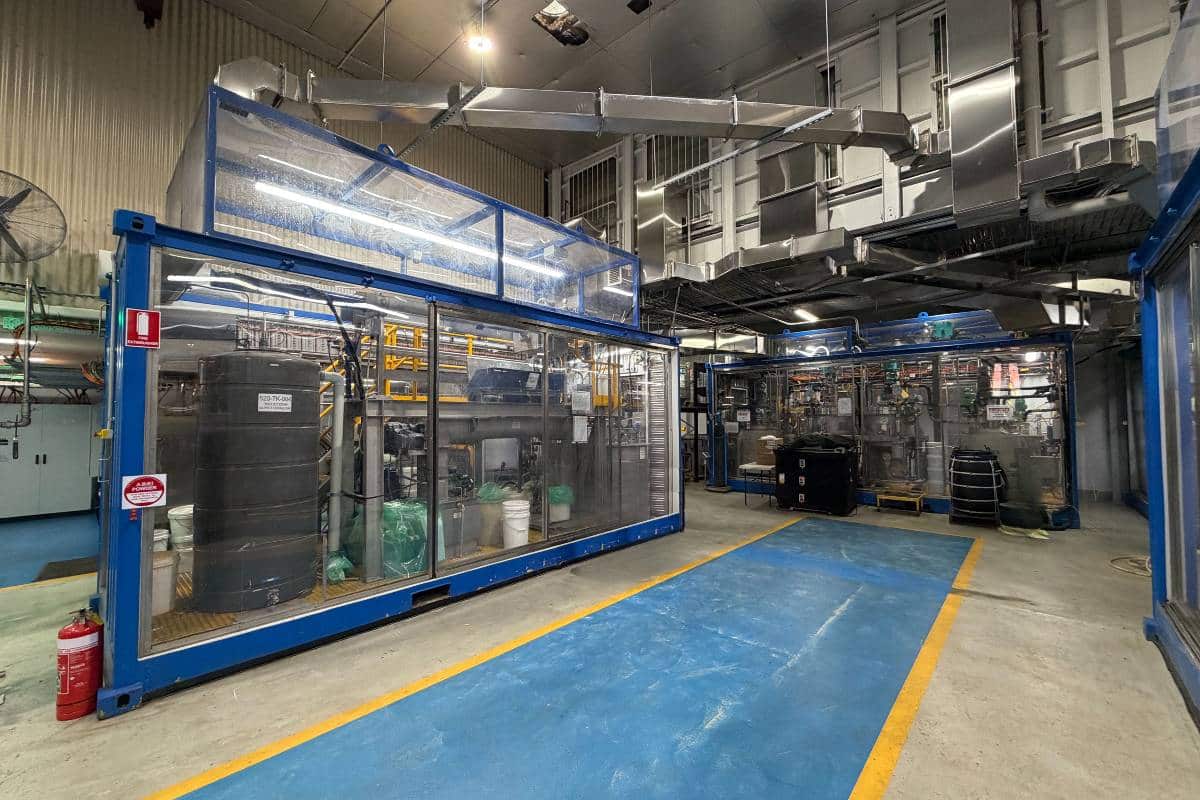
    Fortescue copper–arsenic Toowong Process: project economics lens for mine planners
    Mining
    about 9 hours ago

    Fortescue copper–arsenic Toowong Process: project economics lens for mine planners

    Fortescue has sold more than 40 tonnes of copper concentrate treated with its patented Toowong Process, a low-temperature, low-pressure hydrometallurgical circuit that removes arsenic from copper concentrates. Developed and tested over four years after Fortescue acquired the technology, the process targets a longstanding penalty element constraint that limits saleability of high-arsenic ores. Commercial deployment could materially change project economics for arsenic-rich copper deposits, enabling miners to convert previously marginal or stranded resources into exportable concentrate streams.

    Core’s Finniss lithium: 92 m Blackbeard hit and what it means for mine design
    Mining
    about 9 hours ago

    Core’s Finniss lithium: 92 m Blackbeard hit and what it means for mine design

    Core Lithium has reported its longest mineralised downhole intersection at the Blackbeard prospect within the Finniss lithium operation in the Northern Territory, with diamond drillhole NMRD104 returning 92m at 1.25 per cent Li₂O, including 73m at 1.45 per cent Li₂O. The thick, continuous spodumene-bearing pegmatite materially extends known mineralisation at depth and along strike, improving the potential for larger, more coherent underground or bulk open-pit mine designs. For resource modellers and geotechs, the interval supports tighter geological domaining and may justify updated pit shells and geotechnical slope assessments.

    South32 Australian manganese output lift: throughput takeaways for mine planners
    Mining
    about 9 hours ago

    South32 Australian manganese output lift: throughput takeaways for mine planners

    South32 lifted Australia Manganese saleable output 15 per cent quarter-on-quarter to 902,000 wet metric tonnes in the September 2026 quarter, driven by higher utilisation of the primary processing circuit, while keeping full-year production guidance unchanged across its operations. Alumina production also increased, and the company is continuing capital deployment into base metals growth projects, including copper and zinc developments. For mine planners and process engineers, the numbers signal more stable plant throughput assumptions and sustained demand for processing circuit optimisation and debottlenecking work.

    Related Industries & Products

    Mining

    Geotechnical software solutions for mining operations including CMRR analysis, hydrogeological testing, and data management.

    Construction

    Quality control software for construction companies with material testing, batch tracking, and compliance management.

    CMRR-io

    Streamline coal mine roof stability assessments with our cloud-based CMRR software featuring automated calculations, multi-scenario analysis, and collaborative workflows.

    HYDROGEO-io

    Comprehensive hydrogeological testing platform for managing, analysing, and reporting on packer tests, lugeon values, and hydraulic conductivity assessments.

    GEODB-io

    Centralised geotechnical data management solution for storing, accessing, and analysing all your site investigation and material testing data.

    AllGeotechnicalInfrastructureHazardsEnvironmental