Revival’s Utah Mercur gold mine: drilling, capex and schedule for project teams
Reviewed by Tom Sullivan
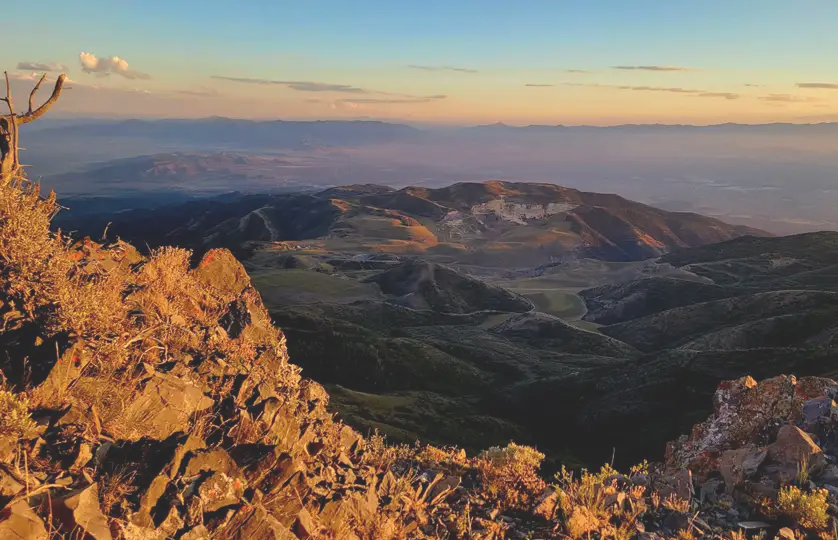
First reported on MINING.com
30 Second Briefing
Revival Gold’s 2025 drilling at the past-producing Mercur gold project in Utah returned one of its strongest South Mercur intercepts to date, with hole RMC25-031 cutting 74 m at 2.8 g/t Au from 91 m downhole, including 13 m at 8 g/t from 13 m depth, and RMC25-032 intersecting 84 m at 1.1 g/t from 14 m. The company, which now owns 100% of Mercur after buying Barrick’s remaining stake, is advancing a heap leach operation based on a PEA outlining US$208 million capex for a 10-year, 95,000 oz/y mine. A 16,000 m follow-up drilling and engineering programme will feed into a pre-feasibility study targeted for Q1 2027, ahead of a potential construction decision in 2028 and first production in 2029.
Technical Brief
- Hole RMC25-172 at Mercur Hill intersected 23 m at 1.8 g/t Au from 102 m downhole.
- Planned follow-up exploration and engineering drilling totals 16,000 m, restarting later this month.
- Mercur property covers ~66 km², located 57 km from Salt Lake City with legacy mine infrastructure.
- Historic operations by Barrick ran from mid‑1980s to 1997, shutting due to low gold prices, not depletion.
- PEA‑stage heap leach restart at Mercur adds to Revival’s portfolio strategy targeting >160,000 oz/y total output.
Our Take
Our database shows multiple 2026 pieces on Revival Gold’s Mercur work, indicating the company is steadily advancing Utah ahead of its Beartrack-Arnett asset in Idaho; that sequencing suggests Mercur’s lower capex profile (about 208 million for a 10‑year life) is being used as the near-term platform to grow the Toronto-listed junior.
Compared with recent Barrick Mining coverage focused on multi‑billion‑dollar copper‑gold builds like Reko Diq, Mercur’s envisioned heap‑leach restart in the western US sits at the opposite end of the capital spectrum, which likely makes it less exposed to the schedule and budget blowouts now affecting very large greenfield projects.
The shallow oxide intercepts at Mercur and the 57 km distance to Salt Lake City, combined with the modest capex, put this gold project in a relatively favourable logistics and permitting context versus many other gold and copper projects in our 1,217‑story mining corpus, where remote access and infrastructure deficits are recurring constraints.
Prepared by collating external sources, AI-assisted tools, and Geomechanics.io’s proprietary mining database, then reviewed for technical accuracy & edited by our geotechnical team.
Related Articles
Related Industries & Products
Mining
Geotechnical software solutions for mining operations including CMRR analysis, hydrogeological testing, and data management.
Construction
Quality control software for construction companies with material testing, batch tracking, and compliance management.
CMRR-io
Streamline coal mine roof stability assessments with our cloud-based CMRR software featuring automated calculations, multi-scenario analysis, and collaborative workflows.
HYDROGEO-io
Comprehensive hydrogeological testing platform for managing, analysing, and reporting on packer tests, lugeon values, and hydraulic conductivity assessments.
GEODB-io
Centralised geotechnical data management solution for storing, accessing, and analysing all your site investigation and material testing data.