Rethinking tailings: design and risk implications for mine engineers
Reviewed by Tom Sullivan
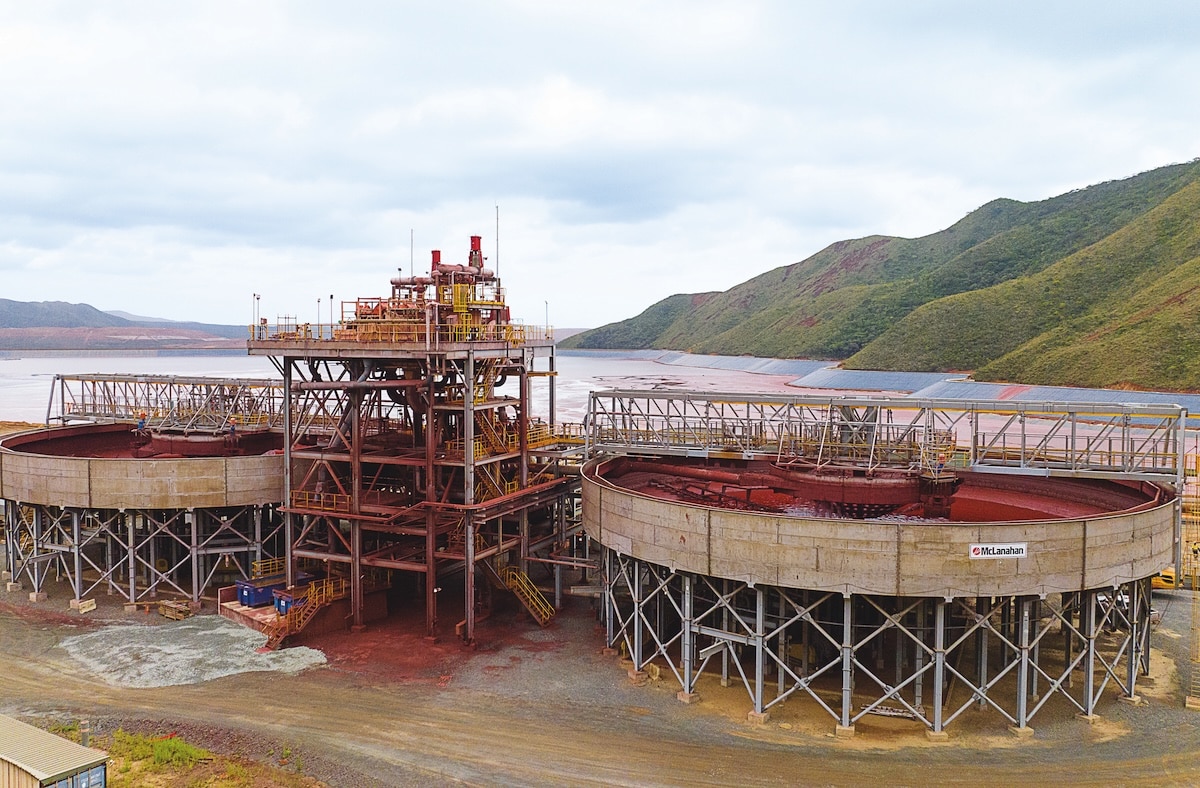
First reported on Australian Mining
30 Second Briefing
Tailings management is moving centre stage as miners seek higher water recovery and lower storage risk from finely ground waste streams that can exceed 90 per cent of processed ore mass. Operators are increasingly deploying high-rate and high-density thickeners for liquid–solid separation, along with paste and filtered tailings systems, to cut decant pond volumes and improve beach slope control. These choices directly affect dam wall loading, seepage behaviour and closure design, forcing closer integration between process engineering, geotechnical design and long-term monitoring.
Technical Brief
- Thickener underflow density is being pushed higher to reduce supernatant pond area and free water inventory.
- Operators are reconfiguring tailings pipelines and pump sizing to handle higher-yield-stress, non-Newtonian slurries.
- Steeper, more stable tailings beaches are being targeted to keep ponded water away from embankment crests.
- Designers are reassessing dam shear strength parameters and pore pressure regimes for denser, lower-void-ratio tailings deposits.
- Closure concepts now assume reduced long-term seepage, altering drain spacing, toe filter design and cover thickness.
- Monitoring plans are expanding to include continuous beach profile surveys and decant pond level tracking for stability control.
- For other mines, similar thickening-driven changes will require updated operational trigger action response plans and emergency spillway sizing.
Our Take
McLanahan’s tailings focus in Australia lines up with its December 2025 push on recessed-plate filter presses and QUICKCHANGE cloth systems, signalling a strategy to retrofit existing plants rather than rely on greenfield TSF redesigns alone.
The patent-pending QUICKCHANGE™ filter press system launched in March 2025 suggests that, for Australian operators, tailings risk management is increasingly being tackled through maintainability and uptime gains rather than purely through larger containment structures.
Within our 2466 tag-matched pieces on Projects, Safety and Sustainability, relatively few are centred on OEM-led tailings process changes in Australia, so this McLanahan–Australian Mining coverage points to equipment suppliers taking a more visible role in tailings governance discussions.
Prepared by collating external sources, AI-assisted tools, and Geomechanics.io’s proprietary mining database, then reviewed for technical accuracy & edited by our geotechnical team.
Related Articles

Related Industries & Products
Mining
Geotechnical software solutions for mining operations including CMRR analysis, hydrogeological testing, and data management.
CMRR-io
Streamline coal mine roof stability assessments with our cloud-based CMRR software featuring automated calculations, multi-scenario analysis, and collaborative workflows.
HYDROGEO-io
Comprehensive hydrogeological testing platform for managing, analysing, and reporting on packer tests, lugeon values, and hydraulic conductivity assessments.
GEODB-io
Centralised geotechnical data management solution for storing, accessing, and analysing all your site investigation and material testing data.