Geomechanics.io

  • Free Tools
Sign UpLog In

Geomechanics.io

Geomechanics, Streamlined.

© 2026 Geomechanics.io. All rights reserved.

Geomechanics.io

CMRR-ioGEODB-ioHYDROGEO-ioQCDB-ioFree Tools & CalculatorsBlogLatest Industry News

Industries

MiningConstructionTunnelling

Company

Terms of UsePrivacy PolicyLinkedIn
    Standard/Guideline
    Projects

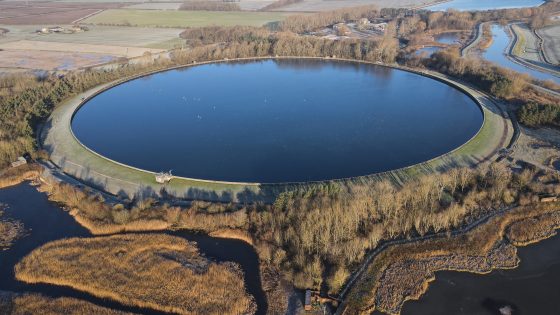
    Rapid consultation on major water assets: delivery impacts for project teams

    June 11, 2026|

    Reviewed by Tom Sullivan

    Rapid consultation on major water assets: delivery impacts for project teams

    First reported on New Civil Engineer

    30 Second Briefing

    The Regulators' Alliance for Progressing Infrastructure Development (Rapid) has opened a consultation on expanding its remit in planning and consenting major water infrastructure in England. Proposals would extend Rapid’s current focus on strategic water resource schemes to a wider range of large-scale assets, potentially including new reservoirs, inter-regional transfer pipelines and associated treatment works. For engineers, a broader Rapid role could change programme risk profiles, front‑end design timelines and regulatory interfaces for multi‑billion‑pound water projects in AMP9 and beyond.

    Technical Brief

    • Scope expansion would formally bring treatment works into the same regulatory programme as storage and transfer assets.
    • A single multi-regulator interface could rationalise overlapping planning, environmental permitting and economic regulation gateways.
    • Earlier cross-regulator input is likely to influence optioneering for reservoir siting, embankment zoning and abstraction points.
    • Geotechnical investigation phasing may need aligning with Rapid’s stage-gate approvals rather than individual company timetables.
    • Inter-regional transfer pipelines considered under Rapid would drive coordinated wayleave, crossing and tunnelling strategies across company boundaries.
    • A wider remit could standardise expectations for carbon, biodiversity and resilience metrics embedded in outline design submissions.

    Our Take

    Within our 161 Policy stories, England-focused pieces on water infrastructure regulation are relatively sparse compared with energy and transport, so Rapid’s consultation signals regulators are now giving water delivery frameworks similar procedural attention.

    Because Rapid is a cross-regulator alliance in the United Kingdom, its evolving role will likely shape how project approvals, environmental assessments and economic regulation are sequenced for major water schemes, which can materially affect programme risk profiles for civil contractors.

    Geotechnical Software for Modern Teams

    Centralise site data, logs, and lab results with GEODB-io, CMRR-io, and HYDROGEO-io.

    No credit card required.

    • Save and export unlimited calculations
    • Advanced data visualisation
    • Generate professional PDF reports
    • Cloud storage for all your projects

    Prepared by collating external sources, AI-assisted tools, and Geomechanics.io’s proprietary mining database, then reviewed for technical accuracy & edited by our geotechnical team.

    Related Articles

    Critical minerals diplomacy surge: project finance and offtake gaps for engineers
    Policy
    about 16 hours ago

    Critical minerals diplomacy surge: project finance and offtake gaps for engineers

    More than 70 critical minerals agreements have been signed since 2021, but over 60% are non‑binding frameworks without concrete investment, production, procurement or financing commitments, leaving China’s 60–90% control of rare earths refining and other midstream capacity largely unchallenged. The US has inked over 20 deals in 18 months and launched initiatives such as FORGE and the US‑EU‑Japan framework, yet only a handful are legally binding, creating a gap between diplomatic ambition and bankable project support. Africa, despite holding over 60% of global cobalt reserves, features in relatively few agreements, with contrasting cases such as a binding US‑DRC cobalt deal and Zambia’s rejection of proposed US conditions signalling producer countries’ growing leverage to demand local processing, infrastructure and policy flexibility.

    WA mining backs clearer cultural heritage rules: schedule and risk notes for projects
    Policy
    about 16 hours ago

    WA mining backs clearer cultural heritage rules: schedule and risk notes for projects

    Western Australia’s mining industry bodies have backed Glen Kelly’s review of the state’s native title and cultural heritage processes, which was tabled in the WA Parliament and targets reduced duplication between the Aboriginal Heritage Act 1972 and Native Title Act 1993 approvals. The review recommends clearer timeframes and a single, streamlined consultation pathway for Traditional Owners and project proponents, replacing overlapping heritage surveys and parallel negotiations. For miners, the changes promise more predictable project schedules and lower legal and compliance risk without removing existing heritage protections.

    US DOMINANCE Act on critical minerals: supply chain takeaways for engineers
    Policy
    1 day ago

    US DOMINANCE Act on critical minerals: supply chain takeaways for engineers

    The US House has passed H.R. 7037, the DOMINANCE (Developing Overseas Mineral Investments and New Allied Networks for Critical Energies) Act, aimed at cutting reliance on China, which currently controls about 90% of global rare earth processing capacity. The legislation focuses on overseas strategic mineral investments with allies, expanded energy diplomacy, and workforce development to support mining, processing, refining, and recycling. Backers include the National Association of Manufacturers, the Information Technology Industry Council, SAFE’s Center for Critical Minerals Strategy, and the US-ASEAN Business Council.

    Related Industries & Products

    Construction

    Quality control software for construction companies with material testing, batch tracking, and compliance management.

    Tunnelling

    Specialised solutions for tunnelling projects including grout mix design, hydrogeological analysis, and quality control.

    QCDB-io

    Comprehensive quality control database for manufacturing, tunnelling, and civil construction with UCS testing, PSD analysis, and grout mix design management.

    AllGeotechnicalMiningInfrastructureMaterialsHazardsEnvironmentalSoftwarePolicy