RAAC‑free St Leonard’s school rebuild: structural lessons for asset owners
Reviewed by Joe Ashwell
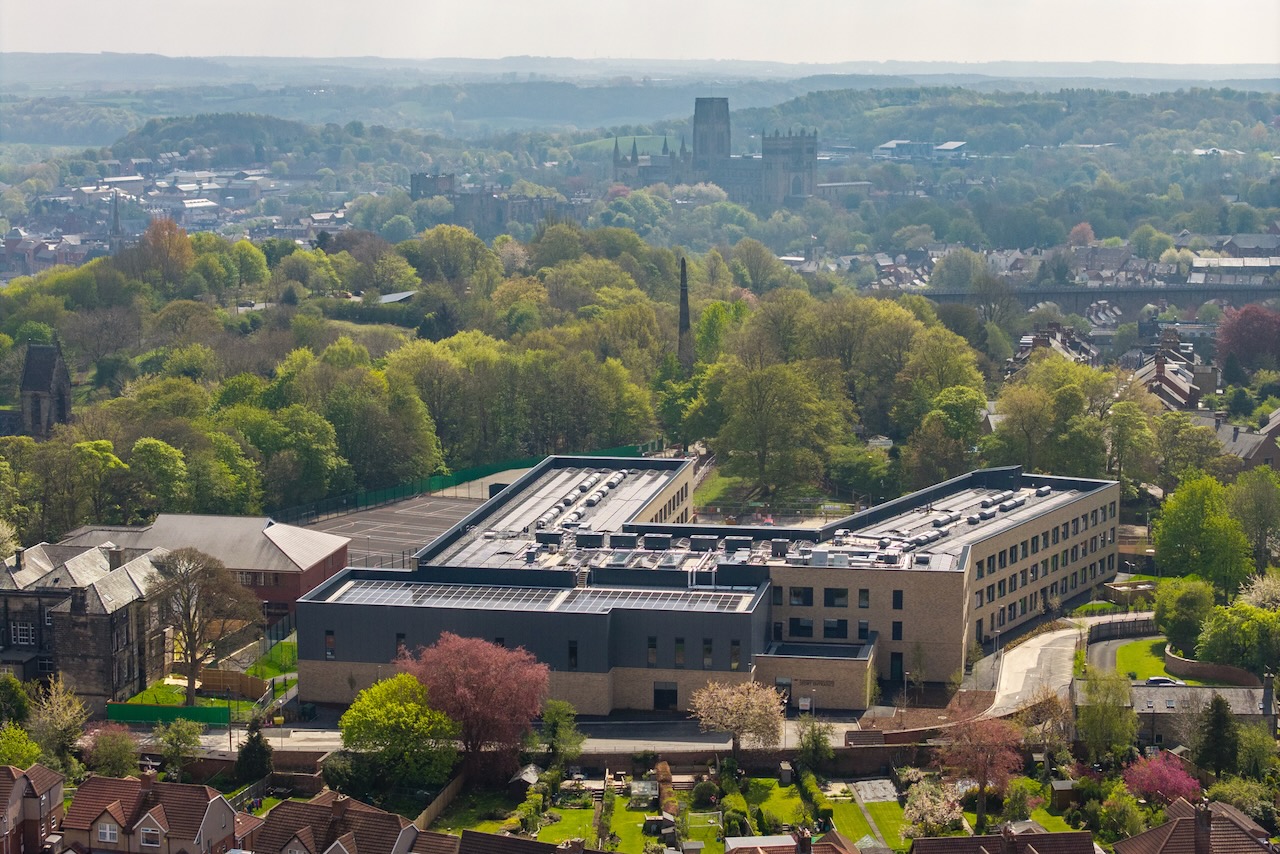
First reported on The Construction Index
30 Second Briefing
Pupils have returned to St Leonard’s Catholic School in Durham after BAM UK & Ireland rebuilt the campus when more than 80% of the original structure was found to contain reinforced autoclaved aerated concrete (RAAC). The rebuild removes RAAC roof and floor planks that had raised structural integrity and long-term durability concerns, replacing them with conventional reinforced concrete and steel-framed elements. For asset owners, the project signals continued large-scale RAAC remediation, with significant implications for lifecycle assessment and structural inspection regimes across similar 1960s–1990s buildings.
Technical Brief
- Structural survey identified RAAC in roof and floor planks across teaching blocks, circulation areas and halls.
- BAM UK & Ireland sequenced demolition and rebuild to maintain partial site operation and safe access routes.
- Temporary accommodation and segregated construction zones were used to meet safeguarding and CDM safety obligations.
- New layout consolidates teaching spaces to reduce corridor lengths, improving supervision and emergency egress management.
- Upgraded fire compartmentation and modern alarm systems address historic RAAC-related concerns about progressive collapse risk.
- Enhanced thermal envelope and services design reduce operational loads, easing future structural and M&E maintenance interventions.
- Long-term monitoring and inspection plans are being updated to reflect removal of RAAC-specific inspection requirements.
Our Take
With more than 80% of the structure affected by RAAC, this Durham school sits at the severe end of the risk spectrum seen in our infrastructure coverage, implying intrusive replacement rather than localised patch repairs and longer programme durations for decant and temporary accommodation.
BAM UK & Ireland’s role here follows recent complex live-environment work such as the Darlington station expansion (27 May 2026), suggesting the contractor is building a niche in high-constraint public-sector refurbishments where safety and continuity of service are both critical.
Prepared by collating external sources, AI-assisted tools, and Geomechanics.io’s proprietary mining database, then reviewed for technical accuracy & edited by our geotechnical team.
Related Articles


Related Industries & Products
Construction
Quality control software for construction companies with material testing, batch tracking, and compliance management.
Mining
Geotechnical software solutions for mining operations including CMRR analysis, hydrogeological testing, and data management.
QCDB-io
Comprehensive quality control database for manufacturing, tunnelling, and civil construction with UCS testing, PSD analysis, and grout mix design management.