PYBAR raiseboring at BHP Prominent Hill: design and stability notes for engineers
Reviewed by Joe Ashwell

First reported on International Mining – News
30 Second Briefing
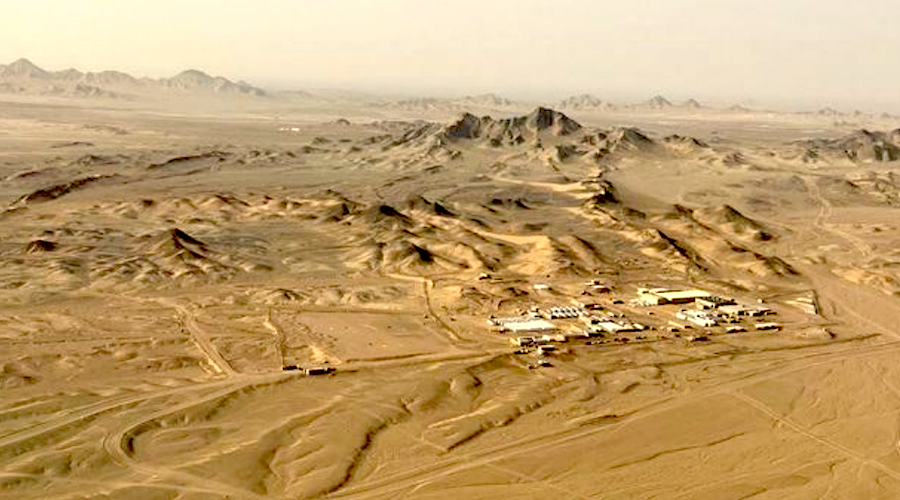
PYBAR’s Raise Bore Division has mobilised to BHP’s Prominent Hill copper-gold mine, 650 km northwest of Adelaide, to construct multiple ventilation raises and inclined ore passes linking the Malu orebody to the new Wira Shaft. The raiseboring programme follows an “innovative study” phase and is aimed at improving ore flow geometry and airflow paths into the shaft infrastructure. Geotechnical and mine planning teams will need to integrate new raise locations with existing stopes and development to manage stability, dilution and long-term ground support demands.
Technical Brief
- Raiseboring is being deployed specifically for both vertical ventilation raises and inclined ore passes, reducing drill-and-blast exposure.
- PYBAR’s dedicated Raise Bore Division is mobilised as a specialist contractor, separating high-risk raise work from general development crews.
- Mechanised reaming and mucking limit personnel entry into newly created raises, improving compliance with remote-working safety principles.
- Purpose-built raiseboring rigs provide controlled breakthrough to existing workings, reducing overbreak and unplanned interaction with adjacent stopes.
- Pre-contract “innovative study” work implies structured geotechnical and constructability reviews before committing to raise locations and diameters.
- Ventilation raises constructed by raiseboring typically deliver smoother walls, lowering rockfall potential and long-term scaling requirements.
- Similar deep underground mines can use specialist raiseboring contracts to de-risk critical ventilation and ore-pass construction phases.
Our Take
PYBAR’s work at Prominent Hill follows its mobilisation to Larvotto’s Hillgrove antimony-gold project in New South Wales, signalling that the contractor is building a track record in complex Australian underground developments that may appeal to majors like BHP.
BHP’s parallel push into AI-supported operations, highlighted in recent coverage of its machine-learning deployments, suggests that raiseboring and shaft work at the Prominent Hill Wira Shaft could increasingly be planned and monitored within a more data-rich, automation-ready environment.
With Prominent Hill sitting in a mature Australian mining jurisdiction 650 km from Adelaide, any productivity or safety gains PYBAR demonstrates on the Malu orebody raiseboring could be quickly benchmarked across other BHP underground assets tracked in our 882 Mining stories database.
Prepared by collating external sources, AI-assisted tools, and Geomechanics.io’s proprietary mining database, then reviewed for technical accuracy & edited by our geotechnical team.
Related Articles


Related Industries & Products
Mining
Geotechnical software solutions for mining operations including CMRR analysis, hydrogeological testing, and data management.
Construction
Quality control software for construction companies with material testing, batch tracking, and compliance management.
CMRR-io
Streamline coal mine roof stability assessments with our cloud-based CMRR software featuring automated calculations, multi-scenario analysis, and collaborative workflows.
HYDROGEO-io
Comprehensive hydrogeological testing platform for managing, analysing, and reporting on packer tests, lugeon values, and hydraulic conductivity assessments.
GEODB-io
Centralised geotechnical data management solution for storing, accessing, and analysing all your site investigation and material testing data.