Geomechanics.io

  • Free Tools
Sign UpLog In

Geomechanics.io

Geomechanics, Streamlined.

© 2026 Geomechanics.io. All rights reserved.

Geomechanics.io

CMRR-ioGEODB-ioHYDROGEO-ioQCDB-ioFree Tools & CalculatorsBlogLatest Industry News

Industries

MiningConstructionTunnelling

Company

Terms of UsePrivacy PolicyLinkedIn
    AllGeotechnicalMiningInfrastructureMaterialsHazardsEnvironmentalSoftwarePolicy
    Projects
    Contract Award

    Midnight Sun in Zambia-DRC Copperbelt: project and logistics lens for mine planners

    February 8, 2026|

    Reviewed by Joe Ashwell

    Midnight Sun in Zambia-DRC Copperbelt: project and logistics lens for mine planners

    First reported on MINING.com

    30 Second Briefing

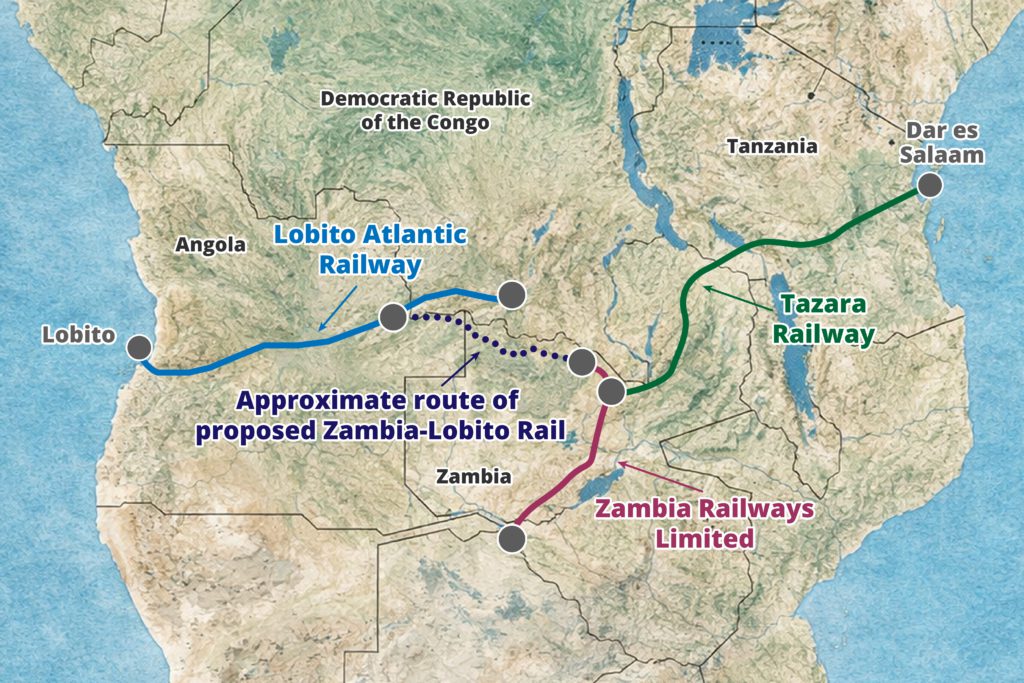
    Midnight Sun Mining has declared an initial resource at the Kazhiba deposit in Zambia’s Domes Region, reporting 2.33 million indicated tonnes at 1.41% Cu (72.4 million lb contained), with mineralisation averaging only 30 metres deep over a 300 m x 350 m footprint less than 10 km from First Quantum’s Kansanshi mill. The company is using potential Kazhiba toll-milling cashflow to fund six-rig drilling along the 20 km Dumbwa anomaly, which samples at 0.73% Cu at surface, under COO Kevin Bonel, who previously led Barrick’s 1.6 Bt Lumwana resource. The project sits in a Copperbelt now framed by competing $2.1 billion Lobito Corridor and $1.4 billion Tanzania–Zambia rail upgrades, intensifying US–China logistics and offtake competition around First Quantum, Barrick and Ivanhoe–Zijin operations.

    Technical Brief

    • The Tanzania–Zambia line provides an alternative eastbound outlet to the Indian Ocean via Dar es Salaam.
    • For regional copper projects, rail capex and routing decisions will materially affect delivered cost, schedule certainty and market access.

    Our Take

    In our database of 936 mining stories, only a small subset of copper and critical minerals pieces combine greenfield exploration like Midnight Sun’s Solwezi project with hard infrastructure commitments on the scale of the US$2.1‑billion Lobito Corridor, which signals unusually strong alignment between geology and logistics in the Zambian–DRC Copperbelt.

    The relatively shallow average maximum depth of mineralisation at Kazhiba (around 30 m) and its proximity to First Quantum’s existing mill suggest that, if commercial terms can be struck, this could evolve into a low-capex, satellite-feed style operation rather than a standalone mine build, a pattern seen in several other Copperbelt assets in our coverage.

    China’s 21% increase in ownership of Africa’s mines and 40% stake in the Kamoa‑Kakula complex, contrasted with US and multilateral financing into the Lobito Atlantic Railway and Angolan rail upgrades, indicates that copper and critical minerals logistics in this corridor are becoming a key arena for competing strategic supply chains rather than just project-by-project investment decisions.

    Geotechnical Software for Modern Teams

    Centralise site data, logs, and lab results with GEODB-io, CMRR-io, and HYDROGEO-io.

    No credit card required.

    • Save and export unlimited calculations
    • Advanced data visualisation
    • Generate professional PDF reports
    • Cloud storage for all your projects

    Prepared by collating external sources, AI-assisted tools, and Geomechanics.io’s proprietary mining database, then reviewed for technical accuracy & edited by our geotechnical team.

    Related Articles

    pH7 Technologies’ closed-loop PGM and chalcopyrite leaching: key notes for mine planners
    Mining
    about 9 hours ago

    pH7 Technologies’ closed-loop PGM and chalcopyrite leaching: key notes for mine planners

    Canadian processor pH7 Technologies is expanding its Vancouver facility, backed by up to C$4 million from NRC IRAP, to scale its organo-electrochemical platform that recovers platinum, palladium and rhodium from secondary materials without toxic reagents or tailings wastewater. The commercial plant already processes spent catalytic converters, producing 30,000–40,000 oz of platinum-equivalent PGMs per year under a tolling and offtake model involving partners such as Mitsubishi. pH7 is now piloting electrochemically generated oxidants to heap leach chalcopyrite and other sulphide ores without cyanide, targeting on-site mine deployment within 1–2 years across South America, Africa and Australia.

    Dellner Bubenzer mining brakes: integrated drivetrain design notes for engineers
    Mining
    about 14 hours ago

    Dellner Bubenzer mining brakes: integrated drivetrain design notes for engineers

    Dellner Bubenzer is supplying a wide range of industrial brakes and couplings for mining hoists, slewing drives and belt conveyors, developed in long-term collaboration with OEMs. The company focuses on both service and emergency braking solutions tailored to heavy-duty mining duty cycles and harsh environments, addressing controlled hoisting, precise slewing and high-tension conveyor stopping. For engineers, the key point is an integrated approach to drivetrain and braking design, rather than bolt-on safety systems, across multiple critical mining applications.

    SKRI ‘phytocapture’ at Raygorodok: dust control performance insights for mine engineers
    Mining
    1 day ago

    SKRI ‘phytocapture’ at Raygorodok: dust control performance insights for mine engineers

    China’s Zijin Mining is expanding RG Gold’s Raygorodok operation in Kazakhstan with a $500 million processing plant while deploying SKRI’s ‘phytocapture’ system, planting over 100,000 Scots pines across more than 20 hectares about 1.7 km downwind of the open pit. Supercomputer modelling using regional wind-rose data sets tree species and spacing to form multilayered vegetative barriers, not simple landscaping. SKRI reports particulate-matter reductions above 40%, with the forest belt expected to capture roughly one-third of dust emissions as mining advances towards the barrier.

    Related Industries & Products

    Mining

    Geotechnical software solutions for mining operations including CMRR analysis, hydrogeological testing, and data management.

    Construction

    Quality control software for construction companies with material testing, batch tracking, and compliance management.

    CMRR-io

    Streamline coal mine roof stability assessments with our cloud-based CMRR software featuring automated calculations, multi-scenario analysis, and collaborative workflows.

    HYDROGEO-io

    Comprehensive hydrogeological testing platform for managing, analysing, and reporting on packer tests, lugeon values, and hydraulic conductivity assessments.

    GEODB-io

    Centralised geotechnical data management solution for storing, accessing, and analysing all your site investigation and material testing data.