M62 Ouse Bridge joint replacement: fatigue and detailing lessons for engineers
Reviewed by Joe Ashwell
First reported on New Civil Engineer
30 Second Briefing
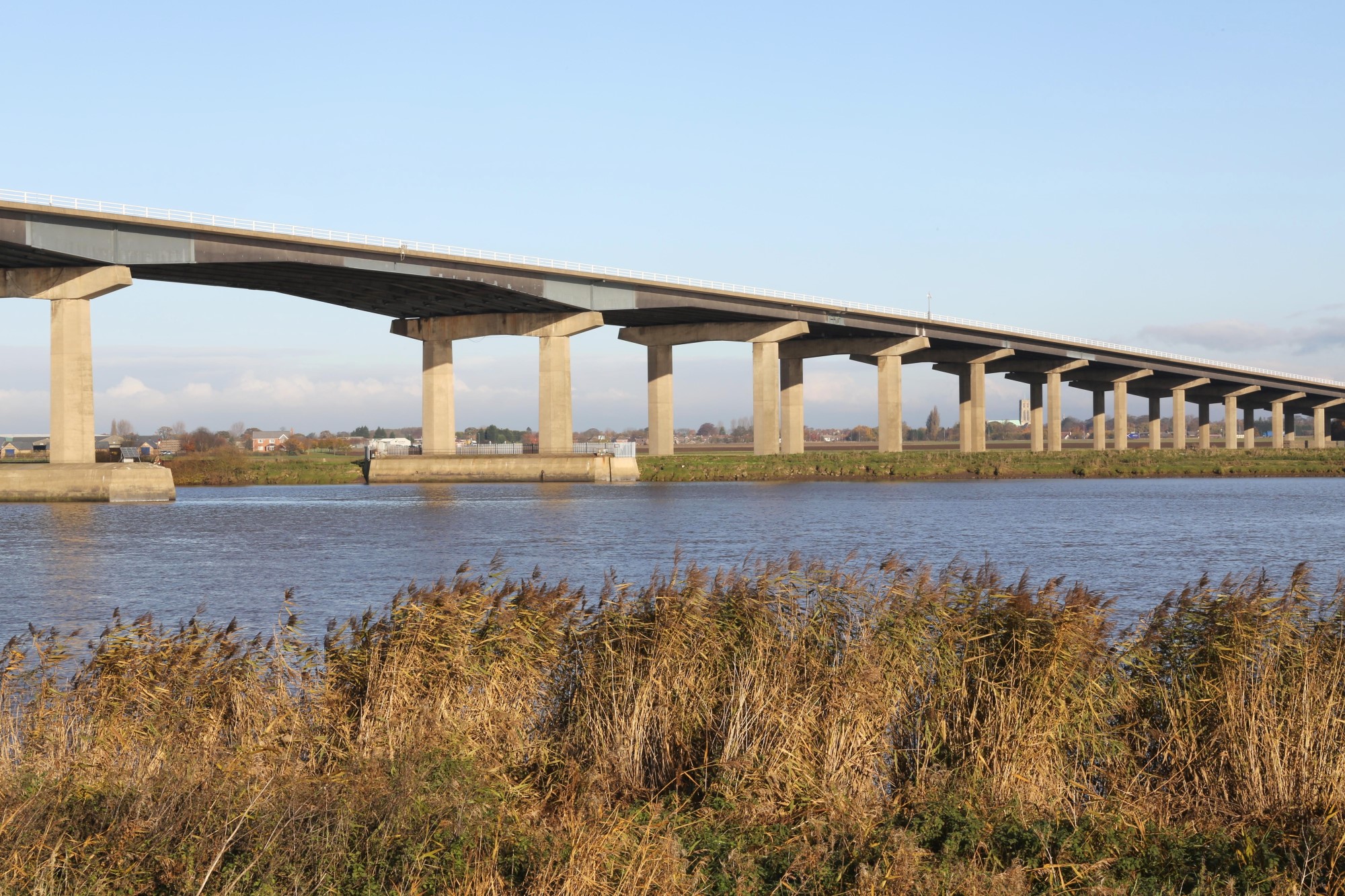
Contractors will return to the M62 Ouse Bridge over the River Ouse this weekend (13–14 December) to replace a damaged expansion joint installed only a couple of years ago, following an unexpected bolt failure earlier this year. National Highways plans to complete the joint replacement under a short-duration closure to minimise disruption on this key trans-Pennine route between junctions 36 and 37. The repeat intervention on a relatively new joint raises questions over detailing, fatigue performance and inspection regimes for heavily trafficked motorway bridges.
Technical Brief
- Investigation likely involves detailed visual inspection, torque checks, non-destructive testing of remaining bolts and review of joint detailing drawings.
- Temporary traffic management and lane closures are required to provide safe access to the joint zone above live carriageways and water.
- Monitoring during and after works will focus on joint movement, bolt relaxation and early signs of fretting or slippage under traffic loading.
- Replacement works provide an opportunity to reassess inspection intervals, bolt-retightening regimes and condition-based monitoring for heavily trafficked motorway bridge joints.
- Similar UK motorway structures with recent joint renewals may face increased scrutiny of bolt detailing, installation records and fatigue design assumptions.
Our Take
Within the 240 Infrastructure stories in our database, only a small subset of UK pieces tagged with both ‘Failure’ and ‘Safety’ involve repeat interventions on the same asset, which suggests the M62 Ouse Bridge case may attract closer scrutiny of inspection and sign-off processes for major structures.
A joint requiring replacement roughly two years after installation on the M62 Ouse Bridge will likely feed into National Highways’ lifecycle cost models, as early-life component failures on strategic routes tend to drive more conservative specifications and tighter contractor performance clauses on subsequent contracts.
Among the 619 tag-matched pieces, bridge-related failures in the United Kingdom often trigger temporary capacity restrictions rather than full closures, so practitioners can expect traffic management and staged works on the M62 Ouse Bridge to be as much a political and public-acceptance issue as a technical repair exercise.
Prepared by collating external sources, AI-assisted tools, and Geomechanics.io’s proprietary mining database, then reviewed for technical accuracy & edited by our geotechnical team.
Related Articles


Related Industries & Products
Mining
Geotechnical software solutions for mining operations including CMRR analysis, hydrogeological testing, and data management.
Construction
Quality control software for construction companies with material testing, batch tracking, and compliance management.
CMRR-io
Streamline coal mine roof stability assessments with our cloud-based CMRR software featuring automated calculations, multi-scenario analysis, and collaborative workflows.
HYDROGEO-io
Comprehensive hydrogeological testing platform for managing, analysing, and reporting on packer tests, lugeon values, and hydraulic conductivity assessments.
GEODB-io
Centralised geotechnical data management solution for storing, accessing, and analysing all your site investigation and material testing data.