Landslide and liquefaction mapping after major quakes: priorities for geotechnical teams
Reviewed by Joe Ashwell
First reported on Geoengineer.org – News
30 Second Briefing
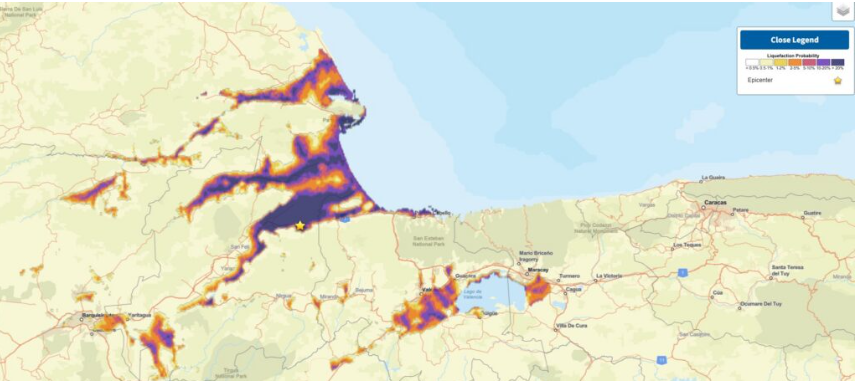
Recent major earthquakes in Venezuela and the southern Philippines have exposed how delayed mapping of landslides and liquefaction can mask the worst damage for days, especially in remote mountain valleys and low-lying coastal plains. Geoscientists are pushing for rapid post-event zonation using satellite interferometry, UAV photogrammetry and pre-existing susceptibility maps to identify blocked river valleys, buried roads and lateral spreading along reclaimed or alluvial ground. For geotechnical teams, this means integrating near-real-time remote sensing with ground reconnaissance to prioritise slope stabilisation, bridge access and lifeline corridor repairs.
Technical Brief
- Emergency teams relied on pre-quake susceptibility maps to prioritise helicopter reconnaissance of likely valley-blocking sites.
Our Take
For projects tagged under Safety in the southern Philippines, operators increasingly face tighter local government scrutiny after failures, so robust microzonation and susceptibility mapping can materially influence permitting timelines and acceptable development densities in valleys and coastal plains.
In Venezuela, where many slopes and urban fringes are informally developed, systematic liquefaction and landslide mapping after major quakes tends to drive retrofitting priorities for transport and lifeline corridors first, which can delay access upgrades for greenfield mining or infrastructure projects in higher-risk zones.
Prepared by collating external sources, AI-assisted tools, and Geomechanics.io’s proprietary mining database, then reviewed for technical accuracy & edited by our geotechnical team.
Related Articles

Related Industries & Products
Mining
Geotechnical software solutions for mining operations including CMRR analysis, hydrogeological testing, and data management.
Construction
Quality control software for construction companies with material testing, batch tracking, and compliance management.
CMRR-io
Streamline coal mine roof stability assessments with our cloud-based CMRR software featuring automated calculations, multi-scenario analysis, and collaborative workflows.
HYDROGEO-io
Comprehensive hydrogeological testing platform for managing, analysing, and reporting on packer tests, lugeon values, and hydraulic conductivity assessments.
GEODB-io
Centralised geotechnical data management solution for storing, accessing, and analysing all your site investigation and material testing data.