Geomechanics.io

  • Free Tools
Sign UpLog In

Geomechanics.io

Geomechanics, Streamlined.

© 2026 Geomechanics.io. All rights reserved.

Geomechanics.io

CMRR-ioGEODB-ioHYDROGEO-ioQCDB-ioFree Tools & CalculatorsBlogLatest Industry News

Industries

MiningConstructionTunnelling

Company

Terms of UsePrivacy PolicyLinkedIn
    AllGeotechnicalMiningInfrastructureMaterialsHazardsEnvironmentalSoftwarePolicy
    Projects
    Research
    Product

    JP Giroud legacy site: key geosynthetics design resources for engineers

    March 13, 2026|

    Reviewed by Joe Ashwell

    JP Giroud legacy site: key geosynthetics design resources for engineers

    First reported on Geoengineer.org – News

    30 Second Briefing

    JP Giroud’s legacy site consolidates more than 400 technical documents, including his 1977 geomembrane liner leakage formulation and 1982 composite liner concept, which underpin modern landfill and heap leach barrier design. The archive spans Terzaghi Lecture materials, ASCE Geo-Institute Hero content, and International Geosynthetics Society presidential work from 1986–1990, plus design charts, case histories, and conference keynotes. Practitioners gain a single reference point for Giroud’s methods on leakage control, stability of geosynthetic-lined slopes, and geosynthetic-reinforced soil structures.

    Technical Brief

    • Archive includes Giroud’s ASCE Geo-Institute Hero materials (2005) and full Terzaghi Lecture documentation from 2008.
    • International Geosynthetics Society presidential papers (1986–1990) capture early standardisation efforts and terminology development for geosynthetics.

    Our Take

    Within our 21-item Geotechnical set, JP Giroud is one of the few individuals whose work spans all three tags here—Projects, Research, and Product—highlighting how geosynthetics moved from niche research to standard design tools in practice.

    The combination of ASCE Geo-Institute recognition (2005) and the 2008 Terzaghi Lecture places Giroud among a very small group in our coverage whose influence bridges classic soil mechanics and modern geosynthetics, which is relevant for practitioners updating older earthwork design methods.

    The International Geosynthetics Society leadership period in the late 1980s coincides with the earliest geosynthetic case histories referenced in several other geotechnical project pieces in our database, so this legacy site can help engineers trace design methods back to their original formulations rather than relying on secondary summaries.

    Geotechnical Software for Modern Teams

    Centralise site data, logs, and lab results with GEODB-io, CMRR-io, and HYDROGEO-io.

    No credit card required.

    • Save and export unlimited calculations
    • Advanced data visualisation
    • Generate professional PDF reports
    • Cloud storage for all your projects

    Prepared by collating external sources, AI-assisted tools, and Geomechanics.io’s proprietary mining database, then reviewed for technical accuracy & edited by our geotechnical team.

    Related Articles
    Long Baseline Neutrino Facility caverns: geotechnical design notes for engineers
    Geotechnical
    about 18 hours ago

    Long Baseline Neutrino Facility caverns: geotechnical design notes for engineers

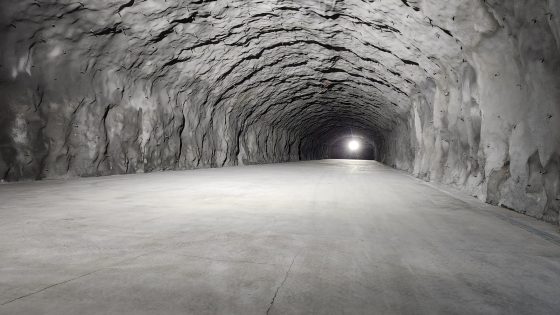
    Excavation is under way 1.5km below ground at the Long Baseline Neutrino Facility in South Dakota to create three caverns, each roughly cathedral-sized, to house the Deep Underground Neutrino Experiment’s liquid-argon detectors. The 1,300km-long beamline from Fermilab to the former Homestake gold mine demands tight control of rock mass behaviour, with extensive pre-grouting, cable bolting and shotcrete linings in complex, stressed Precambrian formations. Construction sequencing, spoil handling through deep shafts and long-term groundwater management are central geotechnical risks for the multi-year programme.

    Aging behaviour of helical anchors and piles: design and safety notes for engineers
    Geotechnical
    about 22 hours ago

    Aging behaviour of helical anchors and piles: design and safety notes for engineers

    Immediate load capacity of helical anchors and piles at installation is being challenged by data showing significant “aging” effects, with shaft resistance and overall capacity increasing measurably over days to months in clays and some sands. The discussion contrasts torque-correlated design methods with time-dependent capacity gains, referencing field load tests where post-installation capacity growth alters factor-of-safety assumptions and serviceability performance. For practitioners, the key issue is whether to rely solely on installation torque or to incorporate waiting periods and ageing factors into design for temporary works, tiebacks and lightly loaded foundations.

    Britain’s first continuous geothermal plant in Cornwall: design lessons for engineers
    Geotechnical
    20 days ago

    Britain’s first continuous geothermal plant in Cornwall: design lessons for engineers

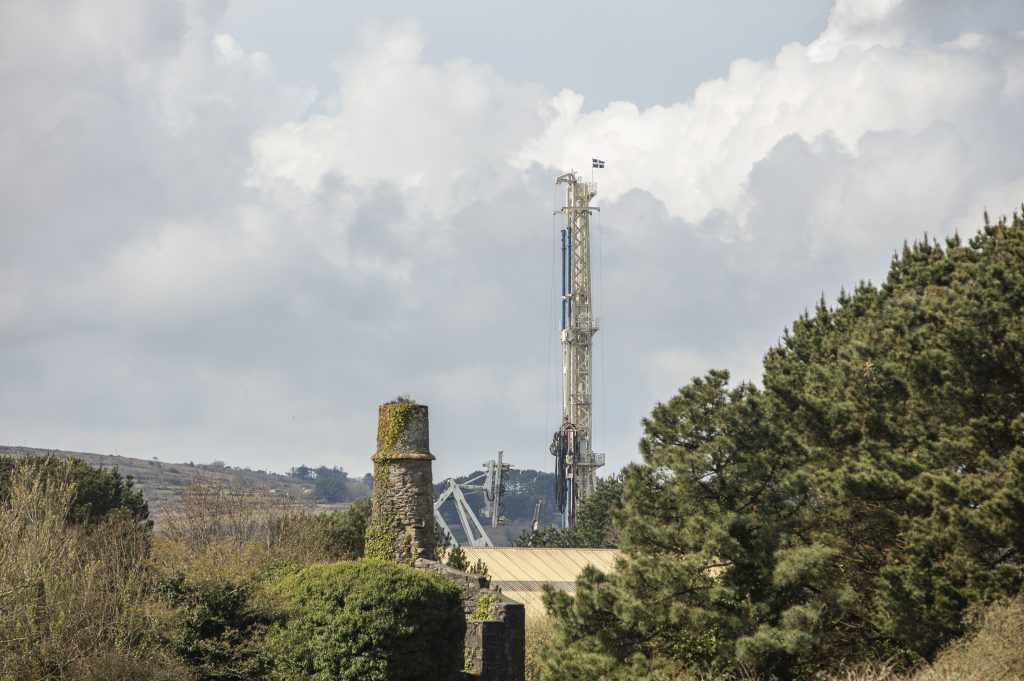
    Britain’s first continuous geothermal power plant has begun commercial operation in Cornwall, supplying baseload electricity to the grid for 24/7 generation rather than heat-only or pilot‑scale output. The project uses deep geothermal wells drilled several kilometres into hot granite, circulating water through a closed-loop system to drive a surface power plant via binary-cycle technology. For civil and geotechnical engineers, the scheme tests high‑temperature casing design, long‑term borehole stability in fractured rock, and integration of geothermal infrastructure with existing grid and planning frameworks in the UK.

    Related Industries & Products

    Mining

    Geotechnical software solutions for mining operations including CMRR analysis, hydrogeological testing, and data management.

    CMRR-io

    Streamline coal mine roof stability assessments with our cloud-based CMRR software featuring automated calculations, multi-scenario analysis, and collaborative workflows.

    HYDROGEO-io

    Comprehensive hydrogeological testing platform for managing, analysing, and reporting on packer tests, lugeon values, and hydraulic conductivity assessments.

    GEODB-io

    Centralised geotechnical data management solution for storing, accessing, and analysing all your site investigation and material testing data.