ISA seabed mining rules: benefit-sharing deadlock explained for project teams
Reviewed by Joe Ashwell
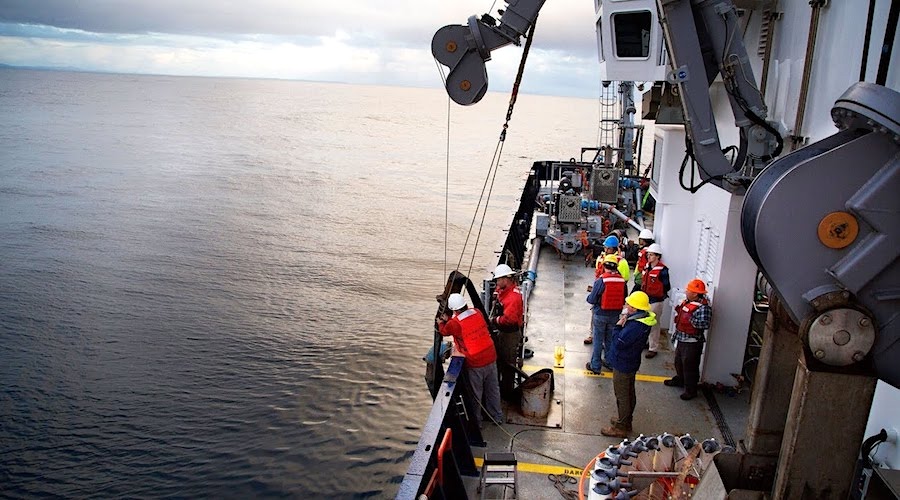
First reported on MINING.com
30 Second Briefing
Deep seabed mining remains legally blocked after legal scholars Aline Jaeckel and Erik van Doorn argued that the International Seabed Authority cannot approve exploitation in areas like the Clarion-Clipperton Zone until separate benefit-sharing regulations, controlled by the ISA Assembly, are adopted. The ISA’s Finance Committee only produced a first draft benefit-sharing framework in 2024, centred on a Common Heritage Fund, while about 40 countries now support a moratorium and African states oppose using shared funds for remediation. Companies including The Metals Company, Impossible Metals and Lockheed Martin are advancing CCZ plans despite this regulatory deadlock.
Technical Brief
- UNCLOS assigns benefit-sharing rulemaking to the ISA Assembly, separating it procedurally from exploitation regulations.
- Benefit-sharing rules cannot be applied provisionally, unlike other ISA regulations, creating a hard legal bottleneck.
- Without adopted benefit-sharing criteria, states cannot legally assess whether mining serves “humankind as a whole”.
- African states stress that any regime must avoid repeating historic extractive patterns favouring industrialised economies.
- Environmental trials cited show steep, long-term reductions in benthic fauna abundance and diversity after nodule disturbance.
- Norway has paused deep-sea mining plans following domestic and international pushback over environmental and governance gaps.
- For project developers, the split Council/Assembly authority implies dual-track regulatory risk beyond standard exploitation permitting.
Our Take
With about 40 countries backing a moratorium as of December 2025, deep-sea battery metals from the Clarion-Clipperton Zone look increasingly unlikely to relieve near-term supply pressure, which keeps land-based copper, nickel and manganese projects in Africa and Latin America central in our critical minerals coverage.
The US absence from UNCLOS, despite historical corporate interest via Lockheed Martin, leaves Pacific seabed battery metals governance dominated by ISA member states such as Nauru and South Korea, which in turn gives investors like Korea Zinc more direct regulatory influence than US-listed peers.
The long-dated NovaAndino Litio agreement running to 2060 underlines that onshore lithium and other critical minerals in Latin America are still attracting multi-decade commitments, suggesting that operators are not yet banking project pipelines on Clarion-Clipperton Zone production being available or politically acceptable within typical mine life horizons.
Prepared by collating external sources, AI-assisted tools, and Geomechanics.io’s proprietary mining database, then reviewed for technical accuracy & edited by our geotechnical team.
Related Articles



Related Industries & Products
Mining
Geotechnical software solutions for mining operations including CMRR analysis, hydrogeological testing, and data management.
CMRR-io
Streamline coal mine roof stability assessments with our cloud-based CMRR software featuring automated calculations, multi-scenario analysis, and collaborative workflows.
HYDROGEO-io
Comprehensive hydrogeological testing platform for managing, analysing, and reporting on packer tests, lugeon values, and hydraulic conductivity assessments.
GEODB-io
Centralised geotechnical data management solution for storing, accessing, and analysing all your site investigation and material testing data.