Geomechanics.io

  • Free Tools
Sign UpLog In

Geomechanics.io

Geomechanics, Streamlined.

© 2026 Geomechanics.io. All rights reserved.

Geomechanics.io

CMRR-ioGEODB-ioHYDROGEO-ioQCDB-ioFree Tools & CalculatorsBlogLatest Industry News

Industries

MiningConstructionTunnelling

Company

Terms of UsePrivacy PolicyLinkedIn
    Projects
    Sustainability
    Product

    Hydrogen‑baked bricks at Wienerberger Denton: process and retrofit notes for engineers

    March 25, 2026|

    Reviewed by Joe Ashwell

    Hydrogen‑baked bricks at Wienerberger Denton: process and retrofit notes for engineers

    First reported on The Construction Index

    30 Second Briefing

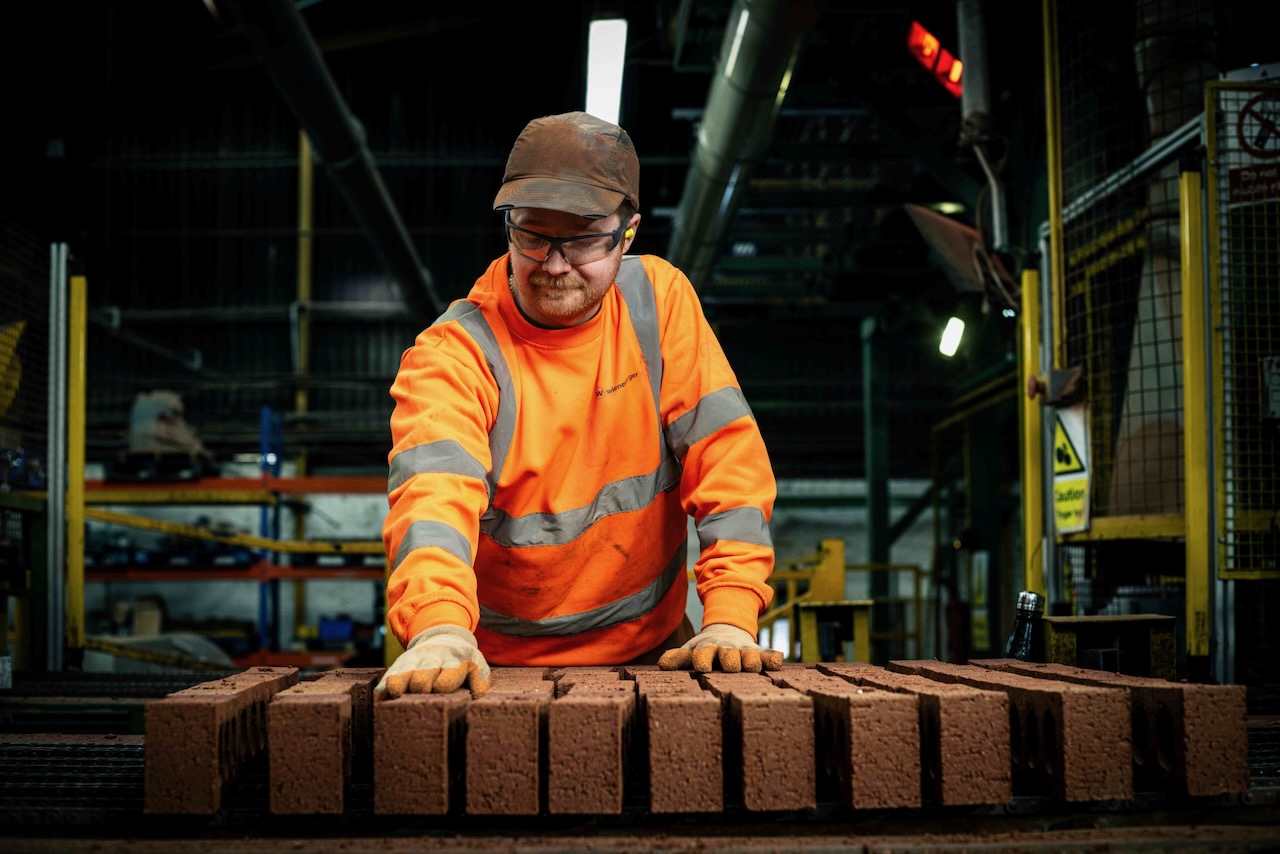
    Wienerberger’s Denton brickworks will become the world’s first commercial‑scale hydrogen‑fired brick plant after securing UK Industrial Energy Transformation Fund backing for a £6m retrofit of two tunnel kilns from natural gas to 100% green hydrogen. The project will replace 224 gas burners, add dedicated hydrogen offloading and pressure‑reduction infrastructure supplied for 15 years by Trafford Green Hydrogen via tube trailers, and upgrade electrical and control systems without altering kiln structures. One fully converted kiln, or two partially converted, is targeted by autumn 2027, with full hydrogen firing from 2028 cutting CO₂ by over 11,600 tonnes per year (around 9% of Wienerberger Limited’s Scope 1 and 2 emissions).

    Technical Brief

    • Retrofit scope explicitly excludes any modification to kiln structural integrity or refractory envelope.
    • Hydrogen supply is tied to UK Hydrogen Allocation Rounds (HAR) support mechanisms for low‑carbon production.
    • Trafford Green Hydrogen, developed by Carlton Power and Schroders Greencoat, will be the dedicated hydrogen supplier.
    • Fuel will arrive in tube trailers, requiring on‑site offloading bays and high‑to‑low pressure reduction skid.
    • Conversion programme is partially funded by the UK Industrial Energy Transformation Fund, de‑risking capex for process change.
    • Denton is positioned as a ceramics‑sector demonstrator, intended as a standardised retrofit template for other Wienerberger plants.
    • Previous UK kiln hydrogen trials include Tarmac’s Tunstead lime kilns under a BEIS‑backed scheme using up to 100% H₂.
    • Heidelberg’s Criggion quarry asphalt plant hydrogen firing trial provides a parallel high‑temperature process reference for performance and control.
    • National roll‑out hinges on future decisions over repurposing gas networks for hydrogen versus full electrification of domestic heating.
    • Co‑location of hydrogen production with materials plants is constrained by geological siting of clay, limestone and aggregate resources.

    Our Take

    A £6M kiln conversion at Wienerberger’s Denton brickworks sits at the smaller end of UK Government-backed industrial decarbonisation support in our database, but the 9% cut in Scope 1 and 2 emissions suggests hydrogen switching is being targeted first at relatively concentrated, high-temperature loads where impact per pound of capex is highest.

    Linking Denton’s hydrogen-fired bricks to Trafford Green Hydrogen and the Hydrogen Allocation Rounds implies brick and lime assets such as Tunstead and Criggion quarry could become anchor offtakers for regional hydrogen hubs, which in turn de-risks upstream projects like Carlton Power and Schroders Greencoat’s Trafford scheme.

    Geotechnical Software for Modern Teams

    Centralise site data, logs, and lab results with GEODB-io, CMRR-io, and HYDROGEO-io.

    No credit card required.

    • Save and export unlimited calculations
    • Advanced data visualisation
    • Generate professional PDF reports
    • Cloud storage for all your projects

    Prepared by collating external sources, AI-assisted tools, and Geomechanics.io’s proprietary mining database, then reviewed for technical accuracy & edited by our geotechnical team.

    Related Articles

    Martin Casey to head cement lobby: import, kiln and carbon risks for UK engineers
    Materials
    about 8 hours ago

    Martin Casey to head cement lobby: import, kiln and carbon risks for UK engineers

    The Mineral Products Association has appointed former Cemex communications and public affairs director Martin Casey as senior director for cement and lime, succeeding Diana Casey after more than 20 years with the producer and a year consulting for the MPA on government engagement. His appointment comes as UK cement imports have tripled in two decades while domestic output has fallen to a 75‑year low, intensifying pressure on local kilns and clinker capacity. New EU carbon border charges this year are expected to divert more global cement shipments towards the UK, sharpening competitiveness and carbon‑policy risks for domestic producers.

    Carbon-catching concrete: Paebbl’s CO₂ mineralisation explained for engineers
    Materials
    2 days ago

    Carbon-catching concrete: Paebbl’s CO₂ mineralisation explained for engineers

    Nordic–Dutch startup Paebbl is producing an olivine-based cement substitute via accelerated CO2 mineralisation in low-energy reactors, claiming a net negative footprint of –14.4kg CO2‑equivalent per tonne (cradle-to-gate) and storage of about 21kg CO2 per m³ of concrete at typical replacement rates. The material has moved from gramme-scale tests to an operational pilot in 18 months and has already been used in a Rotterdam quay wall grout by Hakkers, the 1917 Veerhuis restoration, and a 7m-span “carbon-neutral” concrete footbridge by Heijmans. Classified as CCUS, the process permanently binds captured industrial CO2 into stable carbonate minerals that remain locked in even after demolition, offering structural-grade, carbon-storing concrete mixes rather than purely low-embodied-carbon variants.

    Turning sawdust into fire‑resistant boards: design notes for materials engineers
    Materials
    6 days ago

    Turning sawdust into fire‑resistant boards: design notes for materials engineers

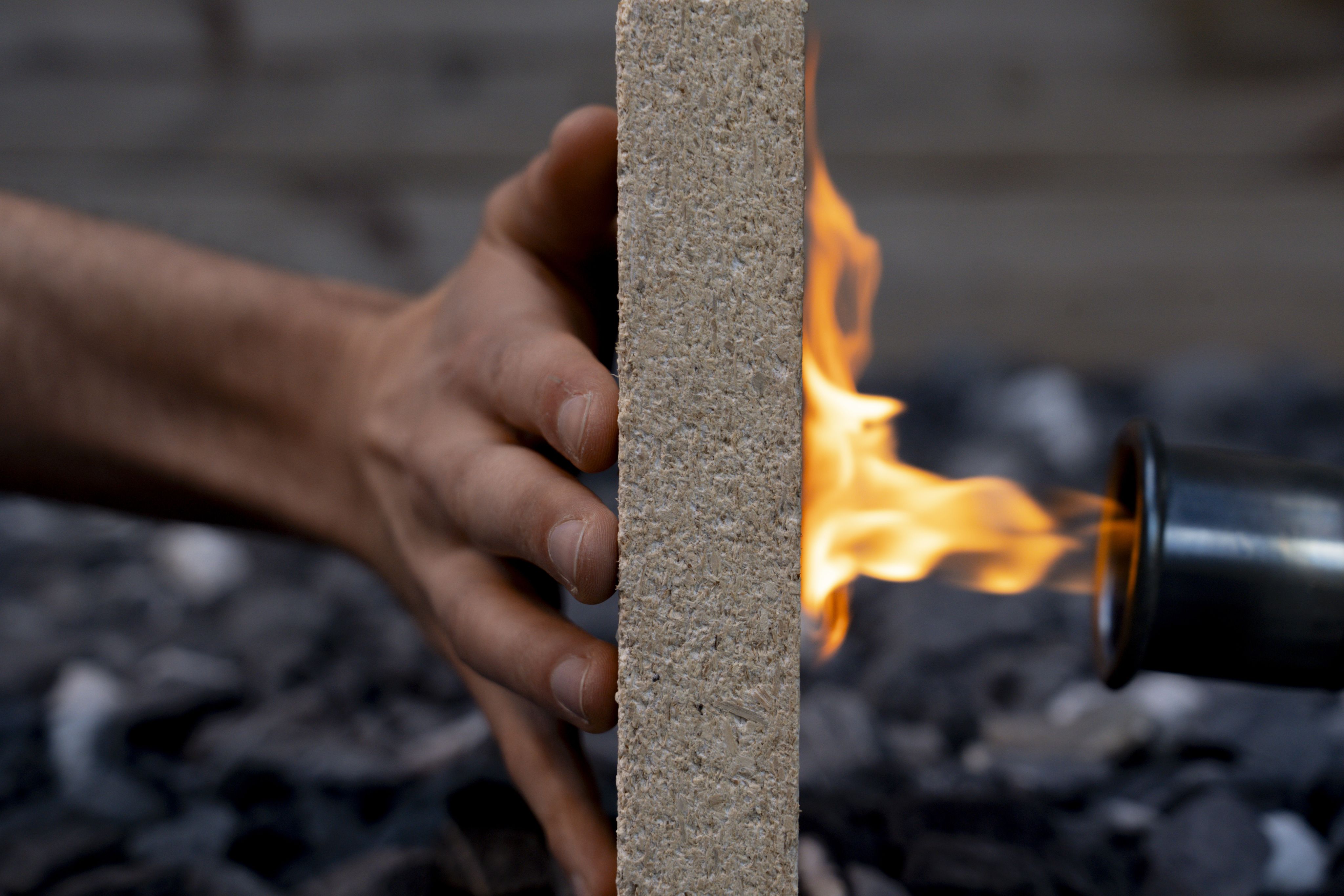
    Researchers at ETH Zurich and Empa have developed a recyclable sawdust–struvite composite board that is stronger in compression perpendicular to grain than spruce and shows cone calorimeter ignition times of 45 seconds, around three times longer than untreated timber. The material uses an enzyme from watermelon seeds to control crystallisation of struvite from newberyite, forming large crystals that infill voids between sawdust particles and act as an inorganic flame retardant, potentially matching cement‑bonded particleboard fire classes with only 40% binder by weight. Panels can be mechanically ground, heated to just over 100°C to release ammonia, and fully separated for reuse or as a phosphorus fertiliser, with future cost reductions possible by sourcing struvite from sewage treatment plant deposits.

    Related Industries & Products

    Mining

    Geotechnical software solutions for mining operations including CMRR analysis, hydrogeological testing, and data management.

    Construction

    Quality control software for construction companies with material testing, batch tracking, and compliance management.

    CMRR-io

    Streamline coal mine roof stability assessments with our cloud-based CMRR software featuring automated calculations, multi-scenario analysis, and collaborative workflows.

    HYDROGEO-io

    Comprehensive hydrogeological testing platform for managing, analysing, and reporting on packer tests, lugeon values, and hydraulic conductivity assessments.

    GEODB-io

    Centralised geotechnical data management solution for storing, accessing, and analysing all your site investigation and material testing data.

    AllGeotechnicalMiningInfrastructureMaterialsHazardsEnvironmentalSoftwarePolicy