Hecla to sell Casa Berardi mine to Orezone: project economics and mine plan lens
Reviewed by Joe Ashwell
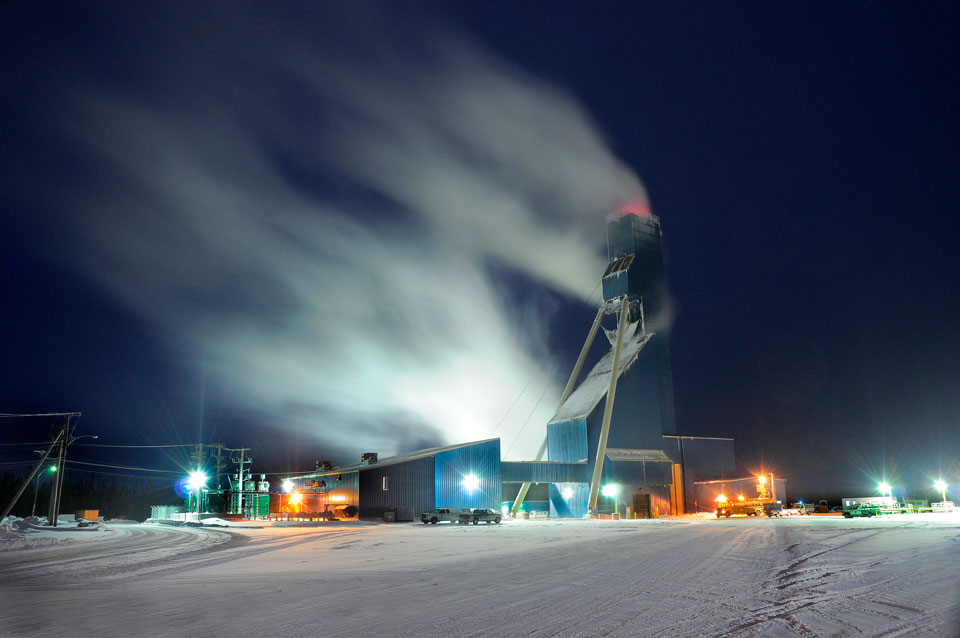
First reported on MINING.com
30 Second Briefing
Hecla Mining is selling the Casa Berardi gold mine and nearby Quebec exploration ground to Orezone Gold for up to $593 million, comprising $160 million cash at closing, about 65.7 million Orezone shares, deferred payments and royalties, to refocus capital on high‑grade silver and gold projects in Alaska, Yukon and Nevada. Casa Berardi currently hosts 14.4 million proven and probable tonnes at 2.79 g/t Au (1.3 Moz contained) plus 2.4 million inferred tonnes at 6.01 g/t Au (0.5 Moz) and is forecast to generate $425 million free cash flow over 2026–27 at $5,000/oz gold. Orezone will fund the upfront cash via a $100 million gold stream with Franco‑Nevada, delivering 1,625 oz/quarter for five years then 5% of production, while targeting underground extensions, new open pits and satellite deposits along 37 km of the Casa Berardi fault.
Technical Brief
- A subsequent 4–5 year permitting gap is anticipated before any new open pits can start.
- Hecla had previously scheduled underground mining cessation by mid‑2025 due to declining grades and high unit costs.
- Record gold prices recently justified continuation of underground stoping rather than a full shift to surface-only mining.
- Casa Berardi has produced more than 3.2 million oz gold since 1988, with consistent resource replacement.
Our Take
Hecla Mining’s pivot towards silver assets like Greens Creek and Keno Hill aligns with our database pattern that most recent silver-focused pieces involve North American underground operations, suggesting the company is concentrating on jurisdictions and ore types where it already has a strong cost and technical track record.
For Orezone Gold, adding a Canadian asset such as Casa Berardi to its existing West Africa exposure diversifies jurisdictional risk; in our coverage, relatively few gold developers straddle both West African and Canadian assets, which can be viewed favourably by lenders and streamers when negotiating terms like the Franco-Nevada gold stream.
The sizeable proven and probable inventory at Casa Berardi, combined with a 37 km strike length under tenure, implies that the 4–5 year permitting hiatus could be used to re-optimise mine design and mill utilisation; in other Canadian gold stories in our database, similar pauses have often preceded a shift from underground-heavy to more blended or open-pit-centric mine plans.
Prepared by collating external sources, AI-assisted tools, and Geomechanics.io’s proprietary mining database, then reviewed for technical accuracy & edited by our geotechnical team.
Related Articles
Related Industries & Products
Mining
Geotechnical software solutions for mining operations including CMRR analysis, hydrogeological testing, and data management.
Tunnelling
Specialised solutions for tunnelling projects including grout mix design, hydrogeological analysis, and quality control.
CMRR-io
Streamline coal mine roof stability assessments with our cloud-based CMRR software featuring automated calculations, multi-scenario analysis, and collaborative workflows.
HYDROGEO-io
Comprehensive hydrogeological testing platform for managing, analysing, and reporting on packer tests, lugeon values, and hydraulic conductivity assessments.
GEODB-io
Centralised geotechnical data management solution for storing, accessing, and analysing all your site investigation and material testing data.