Ground view Kazakhstan at Qarmet mines: safety, control and data lessons for engineers
Reviewed by Joe Ashwell
First reported on MINING.com
30 Second Briefing
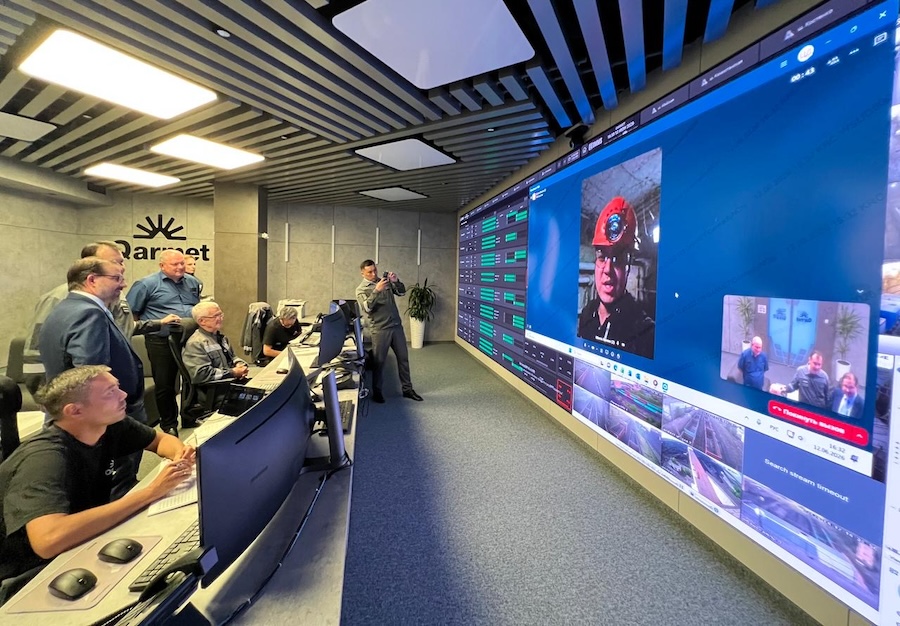
Kazakh steel and mining company Qarmet has installed an almost total underground visibility system at its eight former ArcelorMittal coal mines in Karaganda, combining helmet‑mounted cameras with live location tracking of every miner on a central control‑room schematic. Pre‑shift “health booths” at the portal process about 50 workers per hour, checking blood pressure, pulse, eye fatigue and alcohol, with roughly 1% barred from descending, and all footage stored on 1 TB helmet units and uploaded after each shift. The in‑house system, developed by teams of about 30 per mine, is paired with a privately funded medical centre delivering around 200 check‑ups a day, but raises unresolved questions about consent and long‑term use of pervasive surveillance in a company town setting.
Technical Brief
- Methane explosion at Kostenko mine on 28 October 2023 killed 46 workers in a single event.
- Across ArcelorMittal’s tenure (1995–2023), more than 180 workers died in around 18 major accidents at these Karaganda coal mines.
- State response included terminating investment cooperation with ArcelorMittal and transferring the assets to state fund ownership, rebranded as Qarmet.
- Operational control shifted to a domestic group led by Andrey Lavrentiev, with a new CEO appointed directly by President Tokayev, signalling political accountability for safety.
- Qarmet’s underground monitoring and control system was developed largely in‑house, using teams of about 30 specialists per mine across eight mines.
- Central control room can initiate live video calls to individual miners underground within seconds, using company-issued phones integrated with the tracking system.
- A privately funded on-site medical centre with 22 doctors conducts roughly 200 medical examinations per day, with at least annual check‑ups for every miner.
Our Take
ArcelorMittal’s record C$100 million environmental fine in Canada and its extended iron ore rights in Liberia show regulators and host governments scrutinising the group’s operations globally, which likely informed Kazakhstan’s tougher stance on legacy safety performance at coal assets in Karaganda and Temirtau.
Within our 1188 Mining stories and 2339 tag-matched pieces, there are relatively few that combine coal, uranium and AI/remote‑monitoring themes, so Qarmet’s kilometre‑deep visibility and medical screening regime positions Kazakhstan as an early adopter of high‑tech safety systems in traditionally high‑risk underground coal districts.
The deployment of helmet cameras with terabyte‑scale storage across eight Qarmet mines echoes digital fleet‑monitoring moves seen in other coverage (for example Weir Group’s Fast2Mine platform), signalling that Kazakh underground coal operations are converging towards the same data‑rich operating model already common in large open‑pit iron ore operations linked to ArcelorMittal and others.
Prepared by collating external sources, AI-assisted tools, and Geomechanics.io’s proprietary mining database, then reviewed for technical accuracy & edited by our geotechnical team.
Related Articles


Related Industries & Products
Mining
Geotechnical software solutions for mining operations including CMRR analysis, hydrogeological testing, and data management.
Tunnelling
Specialised solutions for tunnelling projects including grout mix design, hydrogeological analysis, and quality control.
CMRR-io
Streamline coal mine roof stability assessments with our cloud-based CMRR software featuring automated calculations, multi-scenario analysis, and collaborative workflows.
HYDROGEO-io
Comprehensive hydrogeological testing platform for managing, analysing, and reporting on packer tests, lugeon values, and hydraulic conductivity assessments.
GEODB-io
Centralised geotechnical data management solution for storing, accessing, and analysing all your site investigation and material testing data.