Geomechanics.io

  • Free Tools
Sign UpLog In

Geomechanics.io

Geomechanics, Streamlined.

© 2026 Geomechanics.io. All rights reserved.

Geomechanics.io

CMRR-ioGEODB-ioHYDROGEO-ioQCDB-ioFree Tools & CalculatorsBlogLatest Industry News

Industries

MiningConstructionTunnelling

Company

Terms of UsePrivacy PolicyLinkedIn
    AllGeotechnicalMiningInfrastructureMaterialsHazardsEnvironmentalSoftwarePolicy
    Projects
    Safety

    Global Atomic class action bid: Dasa uranium capex and risk takeaways for engineers

    February 26, 2026|

    Reviewed by Tom Sullivan

    Global Atomic class action bid: Dasa uranium capex and risk takeaways for engineers

    First reported on MINING.com

    30 Second Briefing

    Global Atomic is facing a proposed securities class action in the Ontario Superior Court alleging “misrepresentations” by the company and CEO Stephen Roman in public disclosures between 10 November 2023 and 23 January 2025, with no damages figure yet specified and no court certification or leave under Section 138.8 obtained. The claim centres on a potential US$295 million debt facility from the US International Development Finance Corporation intended to fund 60% of capex for the Dasa uranium project in Niger, described as Africa’s highest-grade uranium deposit. Law firm Berger Montague alleges Global Atomic did not fully disclose loan pre-conditions and geopolitical risks, including deteriorating US–Niger relations and the junta’s mining-sector overhaul.

    Technical Brief

    • Statement of claim has been filed in the Ontario Superior Court of Justice but not yet certified.
    • Leave under Section 138.8 of Ontario’s Securities Act has not been granted, so proceedings cannot commence.
    • Alleged misrepresentations relate to public disclosures over a defined period: 10 November 2023–23 January 2025.
    • DFC debt facility under scrutiny is sized at US$295 million and remains under review.
    • Niger’s junta, in power since July 2023, has already seized a major Orano-operated uranium mine.

    Our Take

    With uranium featuring in 33 keyword-matched pieces in our database, Global Atomic’s Dasa exposure in Niger sits in a riskier jurisdictional bucket than many of the recent uranium items, which are skewed toward Canada, the US and Australia.

    The potential US International Development Finance Corporation debt facility covering about 60% of Dasa’s build costs suggests that any delay or uncertainty around this financing could materially affect project execution sequencing and contractor commitments for Global Atomic.

    The reference to Section 138.8 of Ontario’s Securities Act signals that Global Atomic, as a Canada-listed uranium developer, now faces the same style of secondary market liability actions that have previously hit other TSX mining issuers, often resulting in more conservative forward-looking disclosure on political and permitting risk.

    Geotechnical Software for Modern Teams

    Centralise site data, logs, and lab results with GEODB-io, CMRR-io, and HYDROGEO-io.

    No credit card required.

    • Save and export unlimited calculations
    • Advanced data visualisation
    • Generate professional PDF reports
    • Cloud storage for all your projects

    Prepared by collating external sources, AI-assisted tools, and Geomechanics.io’s proprietary mining database, then reviewed for technical accuracy & edited by our geotechnical team.

    Related Articles
    pH7 Technologies’ closed-loop PGM and chalcopyrite leaching: key notes for mine planners
    Mining
    about 19 hours ago

    pH7 Technologies’ closed-loop PGM and chalcopyrite leaching: key notes for mine planners

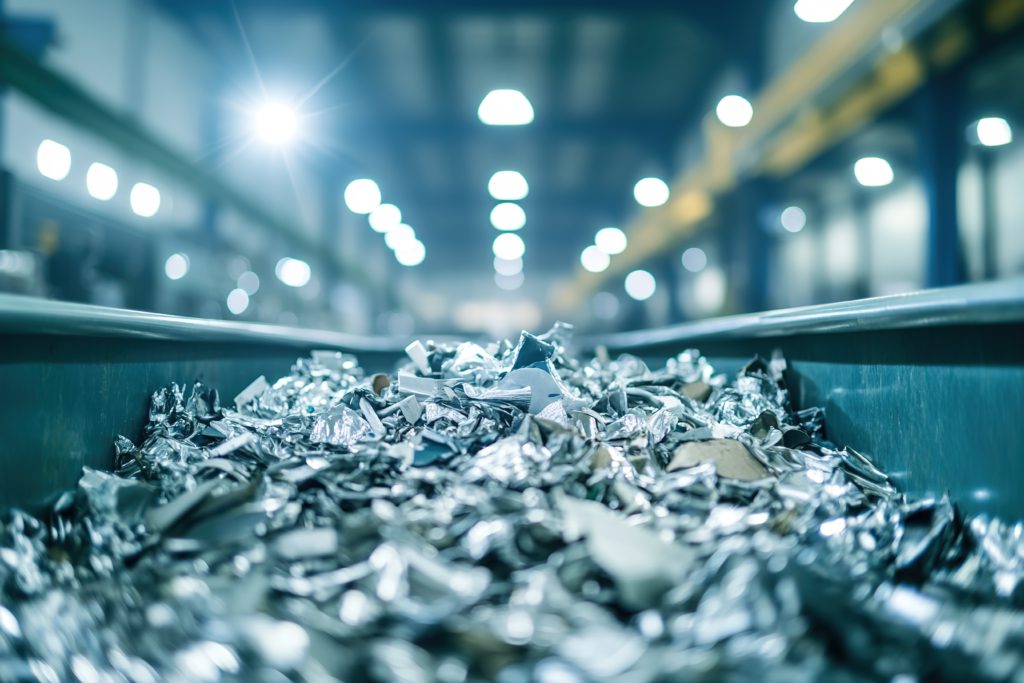
    Canadian processor pH7 Technologies is expanding its Vancouver facility, backed by up to C$4 million from NRC IRAP, to scale its organo-electrochemical platform that recovers platinum, palladium and rhodium from secondary materials without toxic reagents or tailings wastewater. The commercial plant already processes spent catalytic converters, producing 30,000–40,000 oz of platinum-equivalent PGMs per year under a tolling and offtake model involving partners such as Mitsubishi. pH7 is now piloting electrochemically generated oxidants to heap leach chalcopyrite and other sulphide ores without cyanide, targeting on-site mine deployment within 1–2 years across South America, Africa and Australia.

    Dellner Bubenzer mining brakes: integrated drivetrain design notes for engineers
    Mining
    about 23 hours ago

    Dellner Bubenzer mining brakes: integrated drivetrain design notes for engineers

    Dellner Bubenzer is supplying a wide range of industrial brakes and couplings for mining hoists, slewing drives and belt conveyors, developed in long-term collaboration with OEMs. The company focuses on both service and emergency braking solutions tailored to heavy-duty mining duty cycles and harsh environments, addressing controlled hoisting, precise slewing and high-tension conveyor stopping. For engineers, the key point is an integrated approach to drivetrain and braking design, rather than bolt-on safety systems, across multiple critical mining applications.

    SKRI ‘phytocapture’ at Raygorodok: dust control performance insights for mine engineers
    Mining
    1 day ago

    SKRI ‘phytocapture’ at Raygorodok: dust control performance insights for mine engineers

    China’s Zijin Mining is expanding RG Gold’s Raygorodok operation in Kazakhstan with a $500 million processing plant while deploying SKRI’s ‘phytocapture’ system, planting over 100,000 Scots pines across more than 20 hectares about 1.7 km downwind of the open pit. Supercomputer modelling using regional wind-rose data sets tree species and spacing to form multilayered vegetative barriers, not simple landscaping. SKRI reports particulate-matter reductions above 40%, with the forest belt expected to capture roughly one-third of dust emissions as mining advances towards the barrier.

    Related Industries & Products

    Mining

    Geotechnical software solutions for mining operations including CMRR analysis, hydrogeological testing, and data management.

    CMRR-io

    Streamline coal mine roof stability assessments with our cloud-based CMRR software featuring automated calculations, multi-scenario analysis, and collaborative workflows.

    HYDROGEO-io

    Comprehensive hydrogeological testing platform for managing, analysing, and reporting on packer tests, lugeon values, and hydraulic conductivity assessments.

    GEODB-io

    Centralised geotechnical data management solution for storing, accessing, and analysing all your site investigation and material testing data.