Geomechanics.io

  • Free Tools
Sign UpLog In

Geomechanics.io

Geomechanics, Streamlined.

© 2026 Geomechanics.io. All rights reserved.

Geomechanics.io

CMRR-ioGEODB-ioHYDROGEO-ioQCDB-ioFree Tools & CalculatorsBlogLatest Industry News

Industries

MiningConstructionTunnelling

Company

Terms of UsePrivacy PolicyLinkedIn
    AllGeotechnicalMiningInfrastructureMaterialsHazardsEnvironmentalSoftwarePolicy
    Projects
    Sustainability

    Glencore’s Horne smelter 2027 closure risk: investment and emissions lens for engineers

    February 3, 2026|

    Reviewed by Joe Ashwell

    Glencore’s Horne smelter 2027 closure risk: investment and emissions lens for engineers

    First reported on MINING.com

    30 Second Briefing

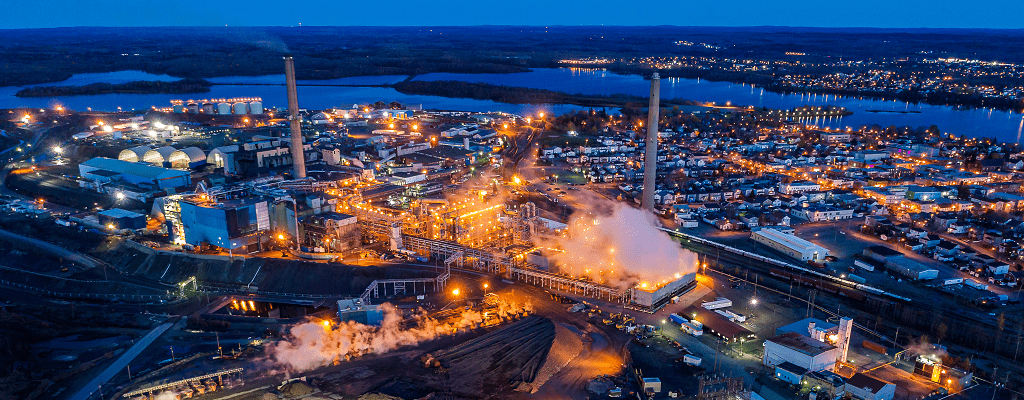
    Glencore has frozen nearly C$1 billion of planned investment at its 100‑year‑old Horne copper smelter in Rouyn‑Noranda, including C$300 million earmarked for emissions‑reduction upgrades, after failing to secure a regulatory framework with the Quebec government. Without these projects, the smelter will be unable to meet new emissions limits taking effect from March 2027, forcing a review of the site’s future and signalling a potential closure. Capital spending at Glencore’s CCR copper refinery in Montreal will also be scaled back over the medium term.

    Technical Brief

    • Glencore said it was prepared to invest almost C$1 billion at Horne over five years, including C$300 million for emissions reduction.
    • Despite sustained negotiations with Quebec dating back to mid-2025, the regulatory framework needed to justify the planned investments is “not sufficiently in place,” Glencore said.
    • Without completing the planned investments, it will become impossible for the smelter to meet certain emissions targets that come into effect starting in March 2027, Glencore said.
    • Investments at Glencore’s CCR copper refinery in Montreal will also be scaled back over the medium term, the company said.
    • Management messaging focuses on job protection and continuity of operations, subject to an acceptable regulatory agreement.

    Our Take

    The standoff over the Horne copper smelter comes just days after coverage of Glencore’s 11% drop in 2025 copper output, suggesting closure in Quebec would further tighten a portfolio already under grade and operational pressure.

    In our database, the earlier 30 January piece on Horne highlighted Quebec’s strict arsenic limits, so any failure to reach a deal by the March 2027 emissions deadline would signal to other Canadian base‑metal operators that legacy plants face limited regulatory forbearance.

    With copper one of the most frequently flagged commodities in recent Mining coverage, the potential loss of a Canadian smelting and refining route at Horne and CCR could push more North American concentrates and scrap into longer export chains, raising logistics and ESG costs for regional miners and recyclers.

    Geotechnical Software for Modern Teams

    Centralise site data, logs, and lab results with GEODB-io, CMRR-io, and HYDROGEO-io.

    No credit card required.

    • Save and export unlimited calculations
    • Advanced data visualisation
    • Generate professional PDF reports
    • Cloud storage for all your projects

    Prepared by collating external sources, AI-assisted tools, and Geomechanics.io’s proprietary mining database, then reviewed for technical accuracy & edited by our geotechnical team.

    Related Articles

    OSMRE’s $120m US coal mine grants: design and risk notes for reclamation teams
    Mining
    about 11 hours ago

    OSMRE’s $120m US coal mine grants: design and risk notes for reclamation teams

    OSMRE has awarded nearly $120 million in FY2026 fee‑based Abandoned Mine Land grants (reduced to just over $113 million after a mandatory 5.7% sequestration) to 24 US coal‑producing states and two tribal programmes to tackle legacy coal sites, including an estimated 500,000 abandoned mines. Wyoming receives $21.8 million, Pennsylvania $18.9 million and West Virginia $13.7 million, with the Navajo Nation and Crow Tribe allocated $411,589 and $28,154 respectively. Projects will target open shafts, unstable highwalls, subsidence and polluted mine water threatening homes, roads and other infrastructure.

    Queensland 2025 Resources Awards for Women: workforce lessons for mine operators
    Mining
    about 12 hours ago

    Queensland 2025 Resources Awards for Women: workforce lessons for mine operators

    Queensland’s 2025 Resources Awards for Women have named 18 finalists spanning roles from engineering superintendent and diesel fitter to dragline operator and chief operating officer across coal, metals and quarrying operations. Nominees include frontline trades, site-based supervisors and corporate leaders from major producers and contractors, with categories covering technical excellence, safety leadership and gender diversity initiatives. For mine operators, the awards signal growing recognition of women in production-critical roles and may influence recruitment, apprenticeship intake and retention strategies on remote sites.

    Tungsten Mining’s $53m critical minerals raise: project pipeline signals for engineers
    Mining
    about 12 hours ago

    Tungsten Mining’s $53m critical minerals raise: project pipeline signals for engineers

    Tungsten Mining has raised $53 million via a placement after being listed in the Australian Critical Minerals Prospectus, bolstering funding for its tungsten-focused project pipeline. The capital injection strengthens the company’s balance sheet for advancing drilling, resource definition and feasibility work on Australian tungsten deposits, a metal critical for hardmetals, drill bits and high-temperature alloys. For mining engineers and project developers, the raise signals continued investor appetite for domestic critical minerals projects despite limited public detail on specific mine capacities or development timelines.

    Related Industries & Products

    Mining

    Geotechnical software solutions for mining operations including CMRR analysis, hydrogeological testing, and data management.

    CMRR-io

    Streamline coal mine roof stability assessments with our cloud-based CMRR software featuring automated calculations, multi-scenario analysis, and collaborative workflows.

    HYDROGEO-io

    Comprehensive hydrogeological testing platform for managing, analysing, and reporting on packer tests, lugeon values, and hydraulic conductivity assessments.

    GEODB-io

    Centralised geotechnical data management solution for storing, accessing, and analysing all your site investigation and material testing data.