Geomechanics.io

  • Free Tools
Sign UpLog In

Geomechanics.io

Geomechanics, Simplified.

© 2026 Geomechanics.io. All rights reserved.

Geomechanics.io

CMRR-ioGEODB-ioHYDROGEO-ioQCDB-ioFree Tools & CalculatorsBlogLatest Industry News

Industries

MiningConstructionTunnelling

Company

Terms of UsePrivacy PolicyLinkedIn
    AllGeotechnicalMiningInfrastructureMaterialsHazardsEnvironmentalSoftwarePolicy
    Projects
    Research

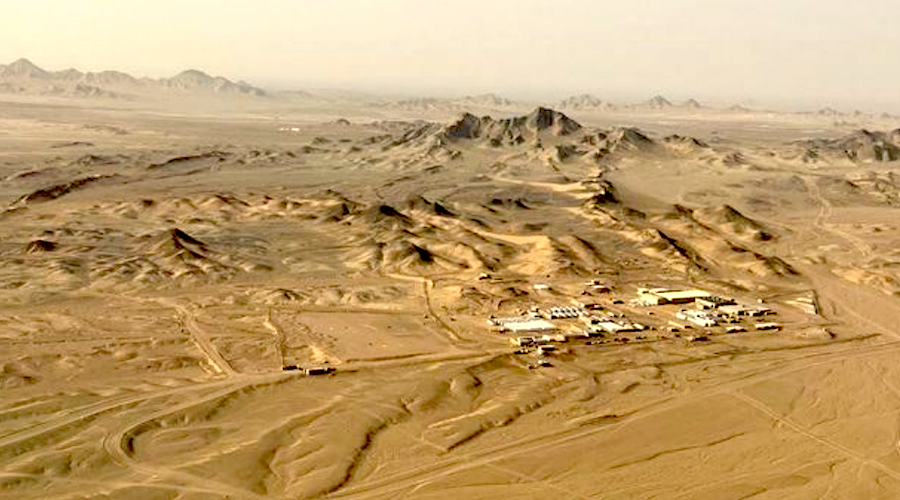
    Geoscience Australia’s 3023 m salt hole: targeting insights for exploration teams

    December 10, 2025|

    Reviewed by Tom Sullivan

    Geoscience Australia’s 3023 m salt hole: targeting insights for exploration teams

    First reported on Australian Mining

    30 Second Briefing

    Geoscience Australia has drilled a 3023‑metre stratigraphic hole in the South Nicholson Basin, pushing national pre‑competitive geoscience to new depths in the hunt for salt and critical minerals. Core and downhole geophysics from the ultra‑deep bore will refine basin architecture, fluid pathways and evaporite distribution models that guide potash, lithium brine and sediment‑hosted base metal exploration. For miners and consultants, the dataset should tighten depth predictions, reduce drilling risk and sharpen targeting in underexplored central Australian basins.

    Technical Brief

    • Continuous core recovery enables detailed lithological, structural and alteration logging through previously unsampled basin intervals.
    • Downhole geophysics (e.g. gamma, resistivity, sonic) were acquired to correlate physical properties with core stratigraphy.
    • Data will calibrate regional seismic and potential-field interpretations, tightening depth conversion and basin architecture models.
    • Hydrogeological information from the hole supports characterisation of deep fluid flow regimes and basin-scale brine plumbing.
    • Results are intended to refine models for evaporite distribution and associated critical mineral systems across central Australia.
    • Pre‑competitive datasets from this hole can de‑risk early‑stage targeting before miners commit to costly deep drilling.
    • Scope is regional and stratigraphic; it does not provide deposit‑scale resource definition or geotechnical design parameters.

    Our Take

    In our mining coverage, Australia dominates the 'critical minerals' keyword set, signalling that Geoscience Australia's deeper drilling work is likely to feed directly into domestic supply‑security and onshoring debates rather than purely academic research.

    Reaching over 3000 metres depth for salt and critical minerals suggests potential to de‑risk very deep sedimentary or basin‑hosted targets, which could open up new project concepts beyond the shallow brine and evaporite systems that most current salt operations rely on.

    Among the 538 tag‑matched Projects/Research pieces, only a small subset involve such deep drill testing, so this programme will probably become a reference dataset for other Australian explorers calibrating geophysical models at depth for critical mineral targeting.

    Geotechnical Software for Modern Teams

    Centralise site data, logs, and lab results with GEODB-io, CMRR-io, and HYDROGEO-io.

    No credit card required.

    • Save and export unlimited calculations
    • Advanced data visualisation
    • Generate professional PDF reports
    • Cloud storage for all your projects

    Prepared by collating external sources, AI-assisted tools, and Geomechanics.io’s proprietary mining database, then reviewed for technical accuracy & edited by our geotechnical team.

    Related Articles

    Mining
    about 17 hours ago

    Tapojärvi at Sotkamo Silver mine: continuity and risk notes for production engineers

    Tapojärvi has restarted as main mining contractor at Sotkamo Silver’s underground silver mine in Finland, resuming a role it previously held from 2018 to 2023 under a new agreement signed in June 2025. The contract covers full-scale production mining services, including drilling, blasting, loading and haulage in a familiar orebody and infrastructure, allowing rapid ramp-up using existing site knowledge and established operating procedures. For geotechnical and production engineers, continuity in contractor, ground control methods and equipment fleet should reduce interface risk and support stable output planning.

    STRACON’s Los Bronces tailings dam contract: lifecycle model insights for engineers
    Mining
    about 24 hours ago

    STRACON’s Los Bronces tailings dam contract: lifecycle model insights for engineers

    STRACON has secured an integrated engineering, construction, financing and long-term operations and maintenance contract for the Pérez Caldera Tailings Dam at Anglo American Sur’s Los Bronces copper operation in Chile’s Lo Barnechea district. The scope combines dam design and build with funding and multi-year O&M, signalling a bundled delivery model for critical tailings infrastructure rather than separate EPC and operator contracts. For geotechnical and tailings engineers, this points to growing demand for contractors capable of lifecycle stewardship under Chile’s stringent post-Brumadinho regulatory environment.

    Metso’s third orders for Almalyk copper smelter: design and ramp-up notes for engineers
    Mining
    2 days ago

    Metso’s third orders for Almalyk copper smelter: design and ramp-up notes for engineers

    Metso has booked the third tranche of orders for JSC Almalyk Mining and Metallurgical Complex’s copper smelter project in Uzbekistan, following equipment and project services contracts announced on 9 August 2024. The first two tranches, totalling €146 million, were booked in Q4 2024, with the latest booking covering additional core process equipment and associated services for the greenfield smelter complex. The staged order intake signals a multi-phase build-out where process design, commissioning support and long-lead items will be critical for throughput, energy performance and sulphur capture compliance.

    Related Industries & Products

    Mining

    Geotechnical software solutions for mining operations including CMRR analysis, hydrogeological testing, and data management.

    CMRR-io

    Streamline coal mine roof stability assessments with our cloud-based CMRR software featuring automated calculations, multi-scenario analysis, and collaborative workflows.

    HYDROGEO-io

    Comprehensive hydrogeological testing platform for managing, analysing, and reporting on packer tests, lugeon values, and hydraulic conductivity assessments.

    GEODB-io

    Centralised geotechnical data management solution for storing, accessing, and analysing all your site investigation and material testing data.