Genesis–Vault merger: production scale, capex synergies and risks for mine planners
Reviewed by Tom Sullivan
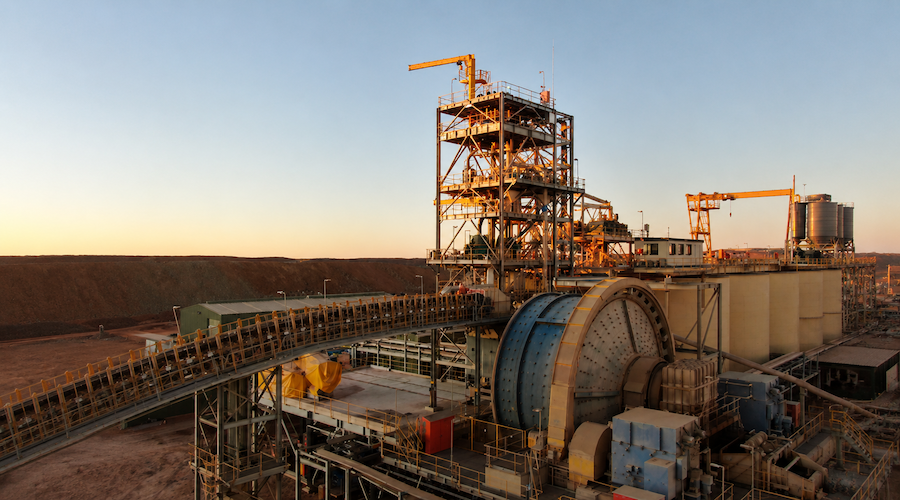
First reported on MINING.com
30 Second Briefing
Genesis Minerals’ proposed merger with Vault Minerals will create a Western Australian-focused gold producer targeting 600,000–700,000 oz/year, with 33.6 Moz in resources and 9.4 Moz in reserves, and a pro-forma market capitalisation of about A$12.6 billion. The A$5.6 billion cash-and-scrip deal, giving Vault shareholders 0.7629 Genesis shares plus A$0.475 per share and 40.2% of the combined entity, is forecast to deliver A$2 billion in synergies over 10 years, including A$715 million in avoided growth capital by processing Tower Hill ore through Vault’s King of the Hills mill. Pro-forma net cash of A$611 million, liquidity of A$1.4 billion and >A$200 million quarterly cash flow are expected to support further brownfields optimisation and portfolio review, with integration and a new corporate plan targeted by H1 2027.
Technical Brief
- Ore from Genesis’ Tower Hill project will be trucked ~35 km to Vault’s King of the Hills mill, avoiding new plant construction.
- Processing Tower Hill ore through existing infrastructure avoids an estimated A$715 million in growth capex.
- About A$1.5 billion of the A$2 billion synergy estimate is explicitly attributed to asset proximity in the Leonora–Laverton district.
- Genesis’ prior A$669 million acquisition of Magnetic Resources adds the 2.2 Moz Lady Julie deposit into the enlarged production pipeline.
- Combined pro-forma balance sheet is expected to carry A$611 million net cash and A$1.4 billion total liquidity at completion.
- Underlying quarterly operating cash flow for the merged group is projected to exceed A$200 million, supporting brownfields optimisation and debottlenecking.
- Transaction is unanimously recommended by the Vault board, with completion targeted for November and an updated corporate plan by H1 2027.
Our Take
With Regis Resources stepping aside after its earlier all‑stock scheme with Vault Minerals, as covered in our 13 July items, Genesis Minerals effectively removes a key regional competitor for scale in the Leonora-Laverton district and consolidates bidding power for future gold assets there.
The combined 33.6Moz of gold resources and A$1.4 billion liquidity puts Genesis Minerals into the same financial conversation as Northern Star Resources and Evolution Mining in our database, which is likely to reshape contractor and mill‑access negotiations around assets such as King of the Hills and Laverton.
Genesis’ prior EPC contract award for the Tower Hill project near Leonora, reported on 21 May, means project engineering and execution frameworks are already in place in Western Australia, so the 35km proximity of flagship assets could translate into relatively rapid re‑optimisation of mine plans and processing routes post‑merger.
Prepared by collating external sources, AI-assisted tools, and Geomechanics.io’s proprietary mining database, then reviewed for technical accuracy & edited by our geotechnical team.
Related Articles


Related Industries & Products
Mining
Geotechnical software solutions for mining operations including CMRR analysis, hydrogeological testing, and data management.
Construction
Quality control software for construction companies with material testing, batch tracking, and compliance management.
CMRR-io
Streamline coal mine roof stability assessments with our cloud-based CMRR software featuring automated calculations, multi-scenario analysis, and collaborative workflows.
HYDROGEO-io
Comprehensive hydrogeological testing platform for managing, analysing, and reporting on packer tests, lugeon values, and hydraulic conductivity assessments.
GEODB-io
Centralised geotechnical data management solution for storing, accessing, and analysing all your site investigation and material testing data.