First Phosphate C$16.7M grant: flowsheet and LFP circuit notes for mine planners
Reviewed by Tom Sullivan
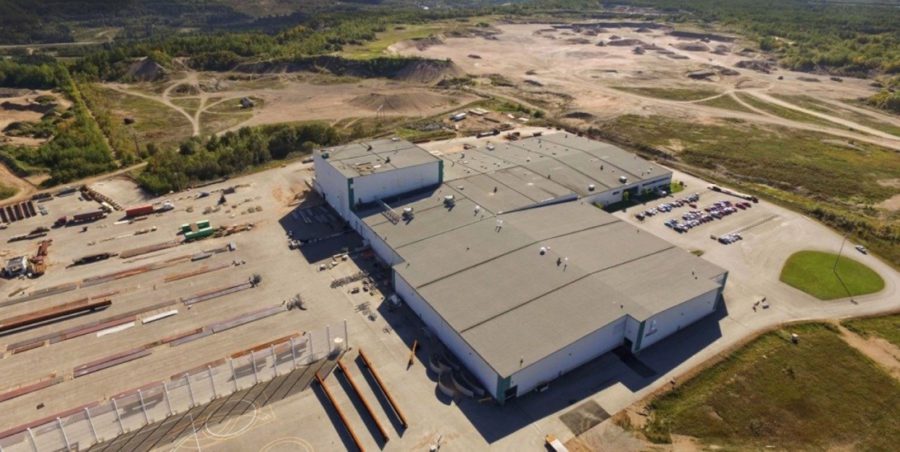
First reported on MINING.com
30 Second Briefing
First Phosphate has secured conditional approval for a non-repayable contribution of up to C$16.7 million from Natural Resources Canada’s Global Partnerships Initiative to advance engineering and processing circuit studies for LFP-grade phosphate concentrate at its integrated Saguenay-Lac-Saint-Jean project in Quebec. The work will focus on validating flowsheets and equipment to convert ore from the Bégin-Lamarche deposit, which hosts 41.5 million indicated tonnes at 6.49% P2O5 plus 214 million inferred tonnes at 6.01% P2O5, into high-purity phosphoric acid (PPA) and iron phosphate. First Phosphate also plans a 10,000 t/y iron phosphate plant 20 km from the deep-sea port of Saguenay, targeting a vertically integrated LFP cathode materials supply chain.
Technical Brief
- Non-repayable NRCan contribution covers engineering and processing-circuit studies through to 2028 under a formal agreement.
- Funding scope explicitly includes equipment selection and configuration to meet LFP-grade concentrate specifications.
- Work centres on an integrated phosphate concentrate project footprint in the Saguenay–Lac-Saint-Jean region of Québec.
- Bégin-Lamarche resource includes pit-constrained Mountain zone: 3 Mt indicated at 8.19% P2O5, 6.8 Mt inferred at 8.57%.
- Planned 10,000 t/y iron phosphate plant is sited ~20 km from the deep-sea port of Saguenay.
- Development programme explicitly targets validation of LFP application requirements and specific offtaker expectations.
Our Take
Within our 1106 Mining stories, phosphate and lithium iron phosphate feature in only a small subset of energy-transition pieces, so First Phosphate’s Quebec plans position Saguenay-Lac-Saint-Jean as one of the more visible emerging LFP hubs in our database rather than just another bulk fertiliser play.
The relatively high P2O5 grades reported for the Mountain zone at Bégin-Lamarche, combined with the 20 km haul to the deep-sea port of Saguenay, suggest a potentially competitive cost base for battery-grade phosphate versus lower-grade, inland deposits that dominate much of our phosphate coverage.
The Brazil rare earths project’s 75% resource increase to 70.91 Mt, mentioned alongside this Canadian LFP initiative, signals that operators tied into NRCan’s critical mineral agenda are increasingly trying to secure both phosphate and rare earths exposure, likely to appeal to OEMs seeking diversified, non-Asian supply chains.
Prepared by collating external sources, AI-assisted tools, and Geomechanics.io’s proprietary mining database, then reviewed for technical accuracy & edited by our geotechnical team.
Related Articles
Related Industries & Products
Mining
Geotechnical software solutions for mining operations including CMRR analysis, hydrogeological testing, and data management.
CMRR-io
Streamline coal mine roof stability assessments with our cloud-based CMRR software featuring automated calculations, multi-scenario analysis, and collaborative workflows.
HYDROGEO-io
Comprehensive hydrogeological testing platform for managing, analysing, and reporting on packer tests, lugeon values, and hydraulic conductivity assessments.
GEODB-io
Centralised geotechnical data management solution for storing, accessing, and analysing all your site investigation and material testing data.