Environment Agency £6.6bn framework: delivery and risk notes for flood engineers
Reviewed by Joe Ashwell
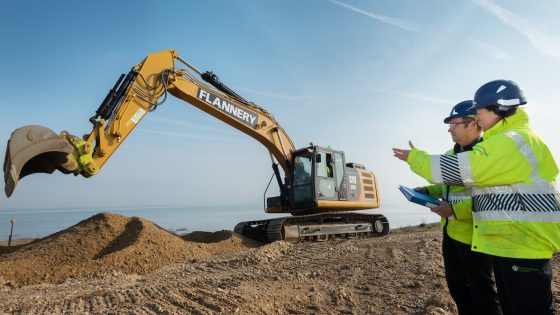
First reported on New Civil Engineer
30 Second Briefing
The Environment Agency has launched procurement for a £6.6bn, 10‑year engineering and environmental works framework to deliver flood risk, coastal defence and asset management projects across England. The programme will cover design and construction of hard defences such as embankments, flood walls and culverts, alongside nature‑based solutions including wetlands and river restoration, under multiple regional and national lots. Contractors will be expected to manage long‑term asset performance, integrate carbon‑reduction measures and work within live operational environments and constrained urban floodplains.
Technical Brief
- Framework value is £6.6bn including VAT, indicating substantial multi‑year capex allocation.
- Duration is set at 10 years, enabling long‑term programming of flood and coastal schemes.
- Scope explicitly includes “engineering and environmental asset work”, covering both new build and existing assets.
- National coverage is England‑wide, allowing cross‑catchment standardisation of design and delivery approaches.
- Procurement is framed as a “major exercise”, signalling multiple lots and a sizeable contractor pool.
- Framework scale suggests alignment with the Environment Agency’s multi‑cycle capital investment planning.
- Similar long‑horizon frameworks typically drive standard details, repeatable solutions and shared risk registers.
Our Take
Within our 723-item Infrastructure corpus, few UK public-sector frameworks match the Environment Agency’s decade-long scope, signalling that this programme is likely to shape workload pipelines for most major civils and flood-risk contractors operating in England.
For England-based schemes, a multi-year framework of this scale typically becomes the default delivery route for flood defences, river engineering and climate-resilience works, so firms not securing a place may find it harder to access publicly funded water-related projects over the next decade.
Given the Sustainability tagging and the Environment Agency’s remit, bidders can expect higher weighting on whole-life carbon, nature-based solutions and adaptive design than in standard highways or building frameworks in our database, which may favour contractors with in-house environmental and digital modelling capability.
Prepared by collating external sources, AI-assisted tools, and Geomechanics.io’s proprietary mining database, then reviewed for technical accuracy & edited by our geotechnical team.


