Denison’s Phoenix ISR uranium mine: design, capex and risk notes for engineers
Reviewed by Tom Sullivan
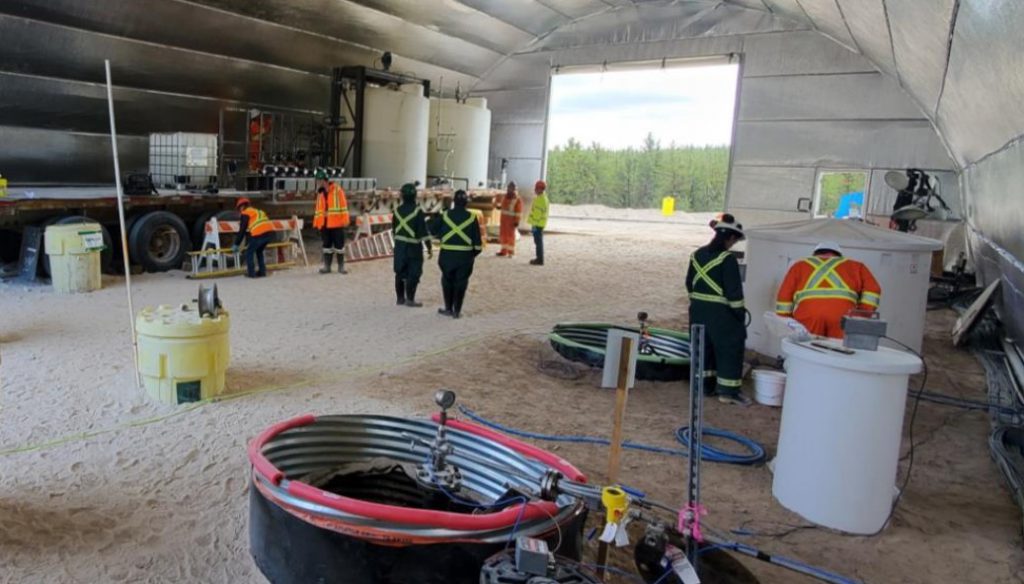
First reported on MINING.com
30 Second Briefing
Denison Mines will begin construction in March on the C$419 million Phoenix uranium mine in Saskatchewan’s southeast Athabasca basin, Canada’s first in-situ recovery (ISR) uranium operation, targeting first production by mid-2028. The Wheeler River project’s Phoenix deposit carries proven reserves of 6,300 tonnes at 24.5% U3O8 and probable reserves of 212,700 tonnes at 11.4% U3O8, with a 2023 feasibility study giving a post-tax NPV of C$1.16 billion and 90% IRR over a 10-year life. ISR wellfields will eliminate pits, ore handling, crushing and grinding, reducing surface disturbance and tailings compared with conventional underground plans at the adjacent Gryphon deposit.
Technical Brief
- ISR mining at Phoenix injects leaching solution via wells, mobilising uranium and pumping pregnant liquor to surface.
- Elimination of pits and waste rock handling sharply reduces tailings volume and surface disturbance versus hard‑rock methods.
- Shorter construction schedule is enabled by omitting ore handling, crushing and grinding plant from the flowsheet.
- Federal environmental assessment and associated licences were granted only days before the C$419 million build decision.
- Phoenix lies ~550 km north of Regina in the southeast Athabasca basin, influencing logistics and power‑supply planning.
- Denison operates Wheeler River with a 90% interest; JCU (Canada) Exploration holds the remaining 10%.
- Adjacent Gryphon deposit is planned as a conventional underground mine, giving a hybrid ISR–underground district development.
Our Take
With a post-tax NPV of C$1.16 billion and an internal rate of return of 90% over a 10-year mine life, Wheeler River sits at the very top end of project economics in our uranium database, which is likely to sharpen competitive pressure on higher-cost Athabasca basin developments such as NexGen’s Rook I and Fission’s Patterson Lake South.
The recent CNSC licence decision and the appointment of Wood Canada Limited as construction manager, both covered in related February 2026 items, indicate that Denison Mines has already de-risked the regulatory and execution fronts more than many peer uranium projects in northern Saskatchewan at a similar capex scale of around C$419 million.
Denison’s 90% interest in Phoenix/Wheeler River, with JCU (Canada) Exploration at 10%, gives it unusually concentrated exposure to high-grade uranium compared with several other Athabasca basin JVs in our coverage, which often dilute operators’ upside across more fragmented ownership structures.
Prepared by collating external sources, AI-assisted tools, and Geomechanics.io’s proprietary mining database, then reviewed for technical accuracy & edited by our geotechnical team.
Related Articles



Related Industries & Products
Mining
Geotechnical software solutions for mining operations including CMRR analysis, hydrogeological testing, and data management.
Construction
Quality control software for construction companies with material testing, batch tracking, and compliance management.
CMRR-io
Streamline coal mine roof stability assessments with our cloud-based CMRR software featuring automated calculations, multi-scenario analysis, and collaborative workflows.
HYDROGEO-io
Comprehensive hydrogeological testing platform for managing, analysing, and reporting on packer tests, lugeon values, and hydraulic conductivity assessments.
GEODB-io
Centralised geotechnical data management solution for storing, accessing, and analysing all your site investigation and material testing data.