Geomechanics.io

  • Free Tools
Sign UpLog In

Geomechanics.io

Geomechanics, Streamlined.

© 2026 Geomechanics.io. All rights reserved.

Geomechanics.io

CMRR-ioGEODB-ioHYDROGEO-ioQCDB-ioFree Tools & CalculatorsBlogLatest Industry News

Industries

MiningConstructionTunnelling

Company

Terms of UsePrivacy PolicyLinkedIn
    AllGeotechnicalMiningInfrastructureMaterialsHazardsEnvironmentalSoftwarePolicy
    Projects
    Sustainability

    Denison Mines’ Phoenix ISR grid tie-in: execution and permitting notes for planners

    January 8, 2026|

    Reviewed by Joe Ashwell

    Denison Mines’ Phoenix ISR grid tie-in: execution and permitting notes for planners

    First reported on International Mining – News

    30 Second Briefing

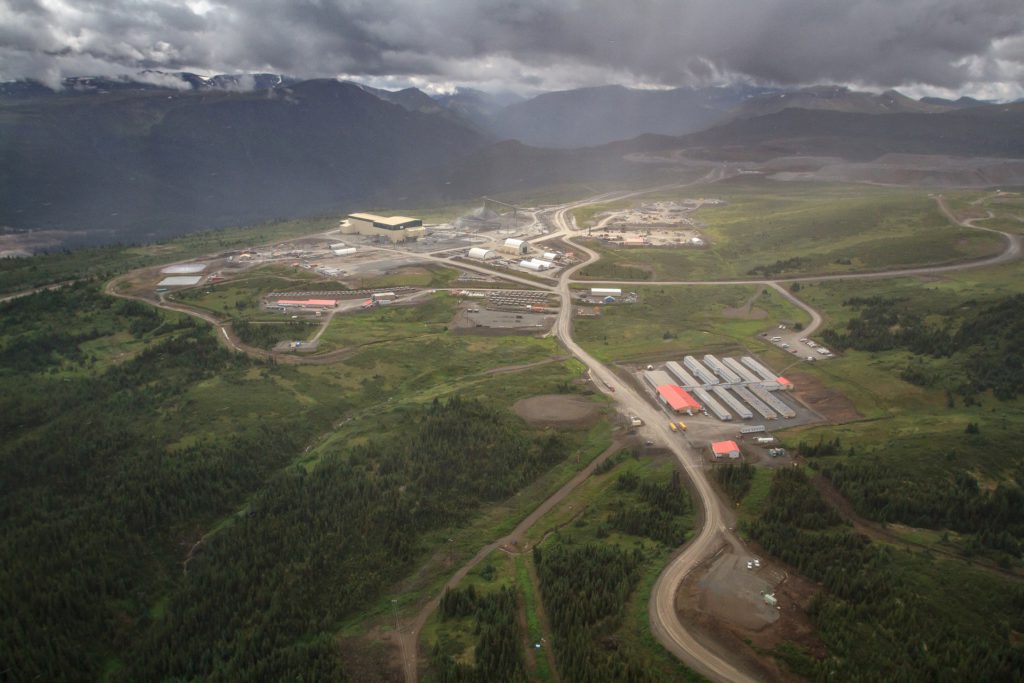
    Grid power from SaskPower is now available at Denison Mines’ planned Phoenix in-situ recovery (ISR) uranium project in the Athabasca Basin after installation of a new 138 kV transmission line to site. The connection removes reliance on diesel generation for construction power, supporting the project’s low-carbon ISR design and simplifying permitting linked to emissions and noise. For mine planners, firm grid access at this stage reduces execution risk around wellfield drilling, freeze wall installation and long-term pumping and processing loads.

    Technical Brief

    • Connection to SaskPower allows permanent electrical infrastructure to be designed around stable grid voltage and frequency.
    • Grid tie-in enables earlier deployment of high-power drilling rigs and freeze-plant compressors without temporary upgrades.
    • Electrical supply security reduces contingency requirements for duplicate diesel gensets and on-site fuel storage capacity.
    • Reduced on-site combustion simplifies mine ventilation design, particularly for construction headings and enclosed plant areas.
    • Noise and vibration from large diesel units are largely eliminated, easing compliance with environmental approval conditions.
    • Long-term pumping and processing equipment can be specified for continuous grid duty rather than cyclic diesel operation.

    Our Take

    With uranium also prominent in recent coverage of Sprott Physical Uranium Trust’s stockpiling and investor surveys on AI-driven power demand, Denison Mines’ Phoenix ISR project is advancing into a market where long-term nuclear fuel demand expectations are being reinforced rather than questioned.

    Grid connection via SaskPower at the Phoenix site positions Denison Mines differently from ISR peers like Boss Energy’s Honeymoon project in South Australia, which has had to revisit its development plan, suggesting that secure, utility-scale power is becoming a key de-risking lever for ISR uranium developments.

    Among the uranium-tagged pieces in our database, several focus on US and Australian assets, so Phoenix’s progress under a Canadian provincial utility framework gives operators a comparative case study in how established grid infrastructure and regulatory regimes can support low-carbon uranium projects.

    Geotechnical Software for Modern Teams

    Centralise site data, logs, and lab results with GEODB-io, CMRR-io, and HYDROGEO-io.

    No credit card required.

    • Save and export unlimited calculations
    • Advanced data visualisation
    • Generate professional PDF reports
    • Cloud storage for all your projects

    Prepared by collating external sources, AI-assisted tools, and Geomechanics.io’s proprietary mining database, then reviewed for technical accuracy & edited by our geotechnical team.

    Related Articles

    Meta and Sprott in nuclear revival: demand signals and risks for uranium projects
    Mining
    41 minutes ago

    Meta and Sprott in nuclear revival: demand signals and risks for uranium projects

    Meta has signed nuclear power deals with Vistra, TerraPower and Oklo for up to 6.6 GW of capacity by 2035 to run its US data centres and the Prometheus AI supercluster in Ohio, adding to a 20‑year, 1.12 GW offtake from Constellation’s Clinton plant. In parallel, the Sprott Physical Uranium Trust has bought 300,000 lb of U₃O₈ in a week, lifting holdings to about 75.2 million lb worth US$6.17 billion, as spot prices hover around US$82/lb. For miners and project developers, this combination of long‑term nuclear PPAs and aggressive physical uranium accumulation signals firmer demand visibility despite persistent SMR cost and schedule risk.

    Mining
    about 12 hours ago

    Derrick Experience Center: fine screening test gains and risks for plant engineers

    Derrick Corporation has opened its Derrick Experience Center (DEX Center) in January 2026 to mark its 75th anniversary, creating a dedicated test hub for advanced fine screening technology. The “first-of-its-kind” facility is designed for current and prospective customers to run full-scale trials on Derrick high-frequency screens and Polyweb® urethane panels under controlled conditions, rather than relying solely on on-site pilots. The centre is intended to shorten test campaigns, de-risk screen selection, and optimise cut size and throughput for fine coal, iron ore, base metals and industrial minerals circuits.

    University of Arizona mine waste project: key processing insights for engineers
    Mining
    1 day ago

    University of Arizona mine waste project: key processing insights for engineers

    A $3.6 million Arbor-funded University of Arizona Tailings Center project, led by mining engineer Dr Isabel Barton, is evaluating whether 17.5 billion tons of historic copper tailings in Arizona—growing by ~100 million tonnes per year—can be reprocessed to recover critical minerals and reduce environmental risk. The team is combining statewide and UAV-based remote sensing, industry tailings datasets, drilling and surface sampling, mineralogical characterisation and techno-economic analysis using magnetic separation and basic leaching. Early work has identified unexpected mineral occurrences, including arsenic, zinc and possibly tungsten, which could justify flowsheet changes to keep these elements out of future tailings.

    Related Industries & Products

    Mining

    Geotechnical software solutions for mining operations including CMRR analysis, hydrogeological testing, and data management.

    Construction

    Quality control software for construction companies with material testing, batch tracking, and compliance management.

    CMRR-io

    Streamline coal mine roof stability assessments with our cloud-based CMRR software featuring automated calculations, multi-scenario analysis, and collaborative workflows.

    HYDROGEO-io

    Comprehensive hydrogeological testing platform for managing, analysing, and reporting on packer tests, lugeon values, and hydraulic conductivity assessments.

    GEODB-io

    Centralised geotechnical data management solution for storing, accessing, and analysing all your site investigation and material testing data.