Geomechanics.io

  • Free Tools
Sign UpLog In

Geomechanics.io

Geomechanics, Streamlined.

© 2026 Geomechanics.io. All rights reserved.

Geomechanics.io

CMRR-ioGEODB-ioHYDROGEO-ioQCDB-ioFree Tools & CalculatorsBlogLatest Industry News

Industries

MiningConstructionTunnelling

Company

Terms of UsePrivacy PolicyLinkedIn
    Projects
    Sustainability

    Conservatives’ North Sea expansion: design and ESG takeaways for engineers

    March 31, 2026|

    Reviewed by Tom Sullivan

    Conservatives’ North Sea expansion: design and ESG takeaways for engineers

    First reported on New Civil Engineer

    30 Second Briefing

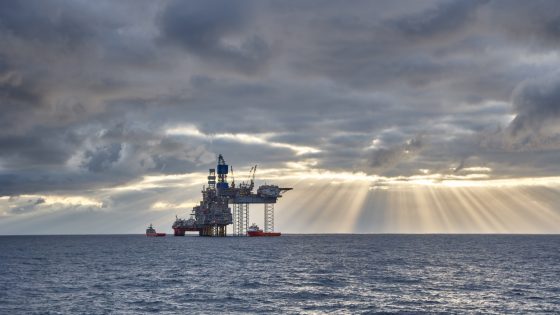
    Conservative Party leaders have launched a campaign to expand North Sea oil and gas production by issuing more exploration and production licences and backing new offshore platforms and subsea tie-backs. Environmental groups and some devolved administrations are attacking the plan over lifecycle emissions and stranded-asset risk, warning that new fixed and floating installations could lock in fossil infrastructure beyond 2050 net-zero targets. For civil and marine engineers, the policy signals potential demand for new jacket foundations, subsea pipelines and onshore terminal upgrades, but with heightened regulatory and ESG scrutiny on design and decommissioning strategies.

    Technical Brief

    • Fixed and floating offshore structures would fall under evolving UK offshore safety case and decommissioning regulations.
    • Expanded drilling and subsea works would intensify demand for geophysical surveys, geohazard mapping and foundation design studies.
    • Additional offshore infrastructure implies more export routes, requiring capacity checks on existing landfalls and onshore terminals.
    • Decommissioning liabilities for any new jackets, floaters and pipelines would need early cost provisioning in project economics.
    • For similar UKCS projects, bankability is likely to hinge on robust net‑zero alignment and decommissioning plans.

    Our Take

    North Sea oil and gas items in our coverage often feed directly into UK infrastructure debates, and New Civil Engineer’s broader policy and awards coverage suggests that any Conservative-backed expansion is likely to be framed around supply-chain stability and jobs for civil and offshore engineering contractors.

    With oil and gas repeatedly surfacing alongside AI and digital themes in our keyword-matched pieces, operators in the North Sea can expect that any new production push will come with pressure to demonstrate emissions reductions and operational efficiency through data-led monitoring and automation rather than purely conventional project delivery.

    Geotechnical Software for Modern Teams

    Centralise site data, logs, and lab results with GEODB-io, CMRR-io, and HYDROGEO-io.

    No credit card required.

    • Save and export unlimited calculations
    • Advanced data visualisation
    • Generate professional PDF reports
    • Cloud storage for all your projects

    Prepared by collating external sources, AI-assisted tools, and Geomechanics.io’s proprietary mining database, then reviewed for technical accuracy & edited by our geotechnical team.

    Related Articles

    Ground Data for Growth Bill: geotechnical data sharing explained for project teams
    Policy
    about 7 hours ago

    Ground Data for Growth Bill: geotechnical data sharing explained for project teams

    Ground Data for Growth Bill proposes mandatory sharing and standardisation of subsurface investigation data, turning borehole logs, CPT results and geophysical surveys from individual project assets into a national digital resource. By reducing duplicated ground investigations and improving access to historic GI records, the bill aims to cut early-stage geotechnical uncertainty, programme risk and contingency allowances on major schemes such as HS2-scale corridors and urban tunnelling. For practitioners, this signals stronger emphasis on interoperable formats, metadata quality and long-term stewardship of ground models.

    New laws on critical minerals and fuel security: key signals for mine planners
    Policy
    about 20 hours ago

    New laws on critical minerals and fuel security: key signals for mine planners

    Australia’s Federal Parliament has passed legislation to create a national strategic reserve for critical minerals and fuels, formalising government powers to stockpile commodities such as lithium, rare earths and diesel. The laws enable the Commonwealth to acquire, store and release these materials to manage supply disruptions, with storage expected across multiple secure facilities rather than a single central depot. For miners and processors, the framework signals stronger federal backing for domestic offtake, long-term contracts and potential co‑investment in downstream refining capacity.

    Torness nuclear station’s £2bn saving: policy and design notes for engineers
    Policy
    1 day ago

    Torness nuclear station’s £2bn saving: policy and design notes for engineers

    Scotland’s ban on new nuclear build is under renewed pressure after Nuclear Industry Association analysis found EDF’s 1.36GW Torness AGR station has saved Britain’s power system about £2bn since 2021 by displacing gas-fired generation. The NIA argues that, with Torness scheduled to close by 2028 and Hunterston B already offline, Scotland risks losing firm low‑carbon capacity that stabilises grid frequency and reduces reliance on interconnectors. For civil and nuclear engineers, the debate centres on whether to extend existing reactor lifetimes or plan replacement baseload capacity in parallel with offshore wind expansion.

    Related Industries & Products

    Construction

    Quality control software for construction companies with material testing, batch tracking, and compliance management.

    Mining

    Geotechnical software solutions for mining operations including CMRR analysis, hydrogeological testing, and data management.

    CMRR-io

    Streamline coal mine roof stability assessments with our cloud-based CMRR software featuring automated calculations, multi-scenario analysis, and collaborative workflows.

    HYDROGEO-io

    Comprehensive hydrogeological testing platform for managing, analysing, and reporting on packer tests, lugeon values, and hydraulic conductivity assessments.

    GEODB-io

    Centralised geotechnical data management solution for storing, accessing, and analysing all your site investigation and material testing data.

    AllGeotechnicalMiningInfrastructureMaterialsHazardsEnvironmentalSoftwarePolicy