Conflict coltan from Congo: supply chain risk lessons for project teams
Reviewed by Joe Ashwell
First reported on MINING.com
30 Second Briefing
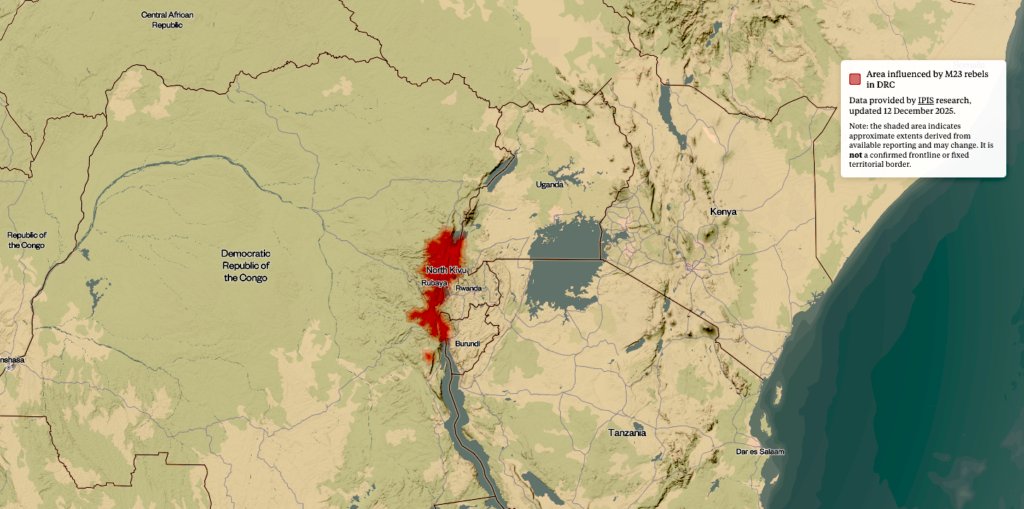
Coltan smuggled from M23-controlled mines in Rubaya, North Kivu – a region supplying roughly 15% of global coltan output – has entered Rwandan export streams feeding supply chains for Sony, Microsoft, Nvidia, Amazon, LG Display, Ericsson, Toyota and Vodafone, according to Global Witness. The investigation links conflict material to five of Rwanda’s seven largest coltan exporters and alleges laundering through the ITSCI traceability scheme, with possible leakage into the Better Mining system and RMI-audited smelters. Disputed by several firms and scheme operators, the findings signal higher compliance risk for downstream manufacturers relying on third-party audits for “conflict-free” certification.
Technical Brief
- Global Witness links conflict coltan to five of Rwanda’s seven largest coltan exporters via Rubaya sourcing.
- Investigation timeframe spans 2023 to September 2025, combining trade data with 70+ field interviews.
- ITSCI traceability tags are alleged to have been reused or misapplied to launder smuggled material.
- Conflict-affected ore is also suspected of entering the Better Mining system despite on-site monitoring claims.
- RMI “conflict-free” smelter audits are accused of missing substantial conflict-linked volumes in upstream flows.
- Corporate responses focus on supplier due diligence and adherence to RMI requirements rather than direct mine-level verification.
- Rubaya’s estimated 15% share of global coltan output magnifies systemic risk if traceability controls fail.
- For mine operators and auditors, the case underlines the need for independent field checks beyond paper-based chain-of-custody systems.
Our Take
With Rubaya accounting for an estimated 15% of global coltan output, any compliance-driven disruption there would have a much sharper impact on downstream electronics and EV supply chains than the copper or lithium supply issues that dominate most of our 1191 Mining stories.
The presence of Glencore in both this piece and several recent copper and battery-materials market items in our database underlines that large traders and miners are exposed on two fronts: price upside from tight cobalt/coltan markets and heightened scrutiny over how those units are sourced from Central Africa.
For OEMs like Sony, Microsoft, Nvidia and Toyota, the investigation’s 2023–2025 time window overlaps with the AI- and EV-driven demand surge seen in our copper and battery-material coverage, suggesting that rapid volume growth has outpaced the effectiveness of existing schemes such as RMI and ITSCI in filtering out high-risk coltan flows.
Prepared by collating external sources, AI-assisted tools, and Geomechanics.io’s proprietary mining database, then reviewed for technical accuracy & edited by our geotechnical team.
Related Articles
Related Industries & Products
Mining
Geotechnical software solutions for mining operations including CMRR analysis, hydrogeological testing, and data management.
CMRR-io
Streamline coal mine roof stability assessments with our cloud-based CMRR software featuring automated calculations, multi-scenario analysis, and collaborative workflows.
HYDROGEO-io
Comprehensive hydrogeological testing platform for managing, analysing, and reporting on packer tests, lugeon values, and hydraulic conductivity assessments.
GEODB-io
Centralised geotechnical data management solution for storing, accessing, and analysing all your site investigation and material testing data.