Central Nevada Gold’s Mule Canyon mine restart: key planning notes for engineers
Reviewed by Joe Ashwell
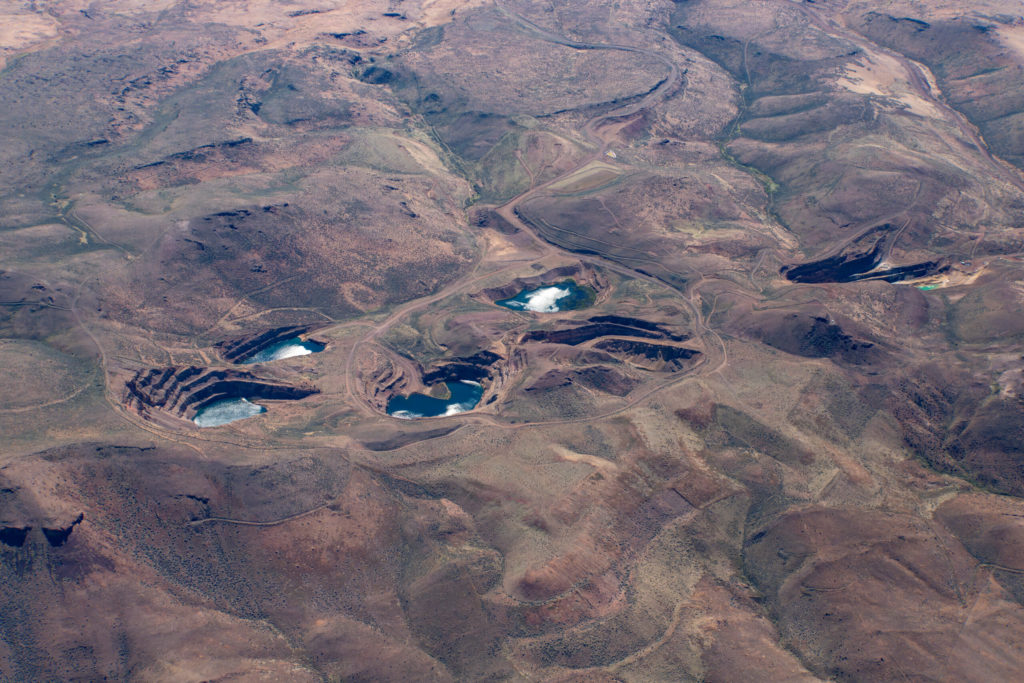
First reported on MINING.com
30 Second Briefing
Central Nevada Gold plans to restart the past-producing Mule Canyon mine in Nevada’s Argenta district after acquiring it from Newmont, targeting a 2027 production decision backed by an active plan of operations, existing water rights and grid power on site. The brownfield project hosts six mineralised zones over 2.5 km, with historical data indicating 8.2 million tonnes of open-pittable ore at 3.81 g/t Au, average head grade of 3.8 g/t and about 94% metallurgical recovery, plus a 41.1 m intercept grading 24.8 g/t Au. Pre-feasibility, mine planning and permitting are underway, supported by a 2,149-hole, 335,000 m drilling database and a planned IPO.
Technical Brief
- Historical mine design and permits contemplated 7–10 million short tons of ore throughput.
- Nevada Division of Environmental Protection records 4.1 million tons of low‑grade oxide ore for cyanide heap leaching.
- Newmont’s 1996–2000 operation produced about 500,000 oz Au before shutdown on price, not resource, grounds.
- Only two of six identified mineralised zones were historically mined, leaving four zones unexploited.
- Subsequent drilling defined six zones over a 2.5 km strike, with 8.2 Mt open‑pittable at 3.81 g/t Au.
- Discovery drilling includes a 41.1 m intercept grading 24.8 g/t Au, indicating high‑grade shoots within the system.
- Project database totals 2,149 drill holes and >335,000 m, providing dense support for new resource modelling and pit optimisation.
- Historical operating data report average head grade of 3.8 g/t Au and ~94% gold recovery in processing.
- Existing plan of operations, water rights and on‑site grid power materially reduce lead time for construction mobilisation.
- Brownfield Nevada gold assets with legacy permits and infrastructure, such as Mule Canyon, are being favoured over greenfield builds for schedule compression.
Our Take
With only two of six mineralised zones historically mined at Mule Canyon and open-pittable ore previously defined at grades above 3.8 g/t gold, Central Nevada Gold is effectively treating this as a brownfield exploration play, which can materially shorten timelines to a 2027 production decision compared with a greenfield Nevada project.
Historical metallurgical recoveries of about 94% at Mule Canyon put this USA gold asset at the higher end of heap-leach performance in our database, which could help offset inflationary Nevada operating costs if similar performance is confirmed in new testwork.
Newmont’s presence in both this Mule Canyon history and in recent large-scale projects such as the Red Chris block cave expansion in Canada suggests that any future success at this Central Nevada gold–silver property may attract interest from majors already active in high-grade or technically complex gold systems.
Prepared by collating external sources, AI-assisted tools, and Geomechanics.io’s proprietary mining database, then reviewed for technical accuracy & edited by our geotechnical team.
Related Articles


Related Industries & Products
Mining
Geotechnical software solutions for mining operations including CMRR analysis, hydrogeological testing, and data management.
Construction
Quality control software for construction companies with material testing, batch tracking, and compliance management.
CMRR-io
Streamline coal mine roof stability assessments with our cloud-based CMRR software featuring automated calculations, multi-scenario analysis, and collaborative workflows.
HYDROGEO-io
Comprehensive hydrogeological testing platform for managing, analysing, and reporting on packer tests, lugeon values, and hydraulic conductivity assessments.
GEODB-io
Centralised geotechnical data management solution for storing, accessing, and analysing all your site investigation and material testing data.