Caldwell Construction collapse: supply chain and risk lessons for civils teams
Reviewed by Tom Sullivan
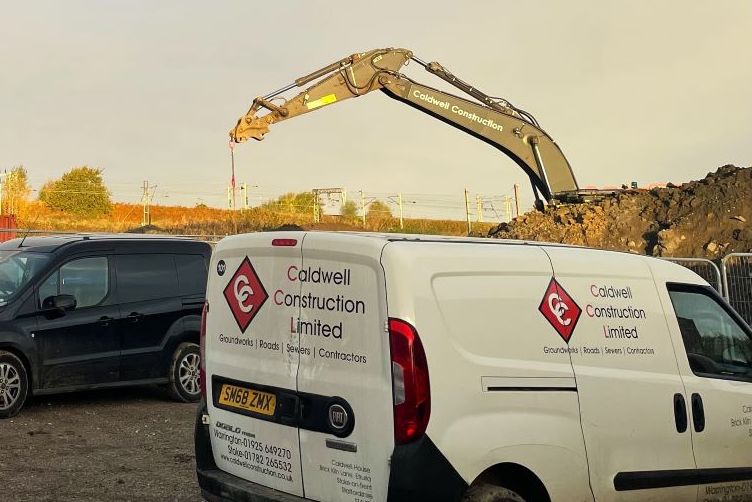
First reported on The Construction Index
30 Second Briefing
Midlands groundworks contractor Caldwell Construction, a Stoke-on-Trent firm specialising in new infrastructure, carriageways and footpaths, has entered administration with PKF Littlejohn Advisory appointed on 15 January 2025. The company reported £58m turnover but only £131,000 pre-tax profit for the year to 31 March 2025, operating with an average of 49 staff from bases in Stoke-on-Trent and Warrington. Administrators cite rising input costs, scheme delays and cash flow strain, signalling further risk for civils supply chains relying on small, low-margin groundworks specialists.
Technical Brief
- Failure mechanism is financial insolvency rather than physical collapse, driven by cost escalation and programme delays.
- Immediate investigation focus is on contract pipeline, WIP positions and outstanding payment certificates to assess recoverable value.
- Monitoring and remediation on live groundworks schemes now depend on principal contractors’ contingency plans and CDM dutyholder arrangements.
- Sector-wide, similar small groundworks firms on delayed civils frameworks face elevated insolvency and site-safety continuity risk.
Our Take
Within our 460 Infrastructure stories, contractor failures tagged to the United Kingdom have increasingly involved mid-sized firms in the £40–£80m turnover band, suggesting operators like Caldwell Construction are most exposed when main contractors and public clients tighten payment terms.
For Midlands and North of England groundworks, the loss of a 49-person specialist such as Caldwell Construction typically forces tier‑one contractors to lean harder on national civils groups or labour-only subcontractors, which can raise interface risk on safety-critical temporary works.
PKF Littlejohn Advisory’s appointment on a regional civils contractor echoes other recent UK ‘Failure’ items in our database where administrators have had to manage partially complete infrastructure sites, often leading to short-notice re-procurement and gaps in CDM duty-holder coverage that clients need to plan for contractually.
Prepared by collating external sources, AI-assisted tools, and Geomechanics.io’s proprietary mining database, then reviewed for technical accuracy & edited by our geotechnical team.


