Geomechanics.io

  • Free Tools
Sign UpLog In

Geomechanics.io

Geomechanics, Streamlined.

© 2026 Geomechanics.io. All rights reserved.

Geomechanics.io

CMRR-ioGEODB-ioHYDROGEO-ioQCDB-ioFree Tools & CalculatorsBlogLatest Industry News

Industries

MiningConstructionTunnelling

Company

Terms of UsePrivacy PolicyLinkedIn
    AllGeotechnicalMiningInfrastructureMaterialsHazardsEnvironmentalSoftwarePolicy
    Projects
    Sustainability
    Safety

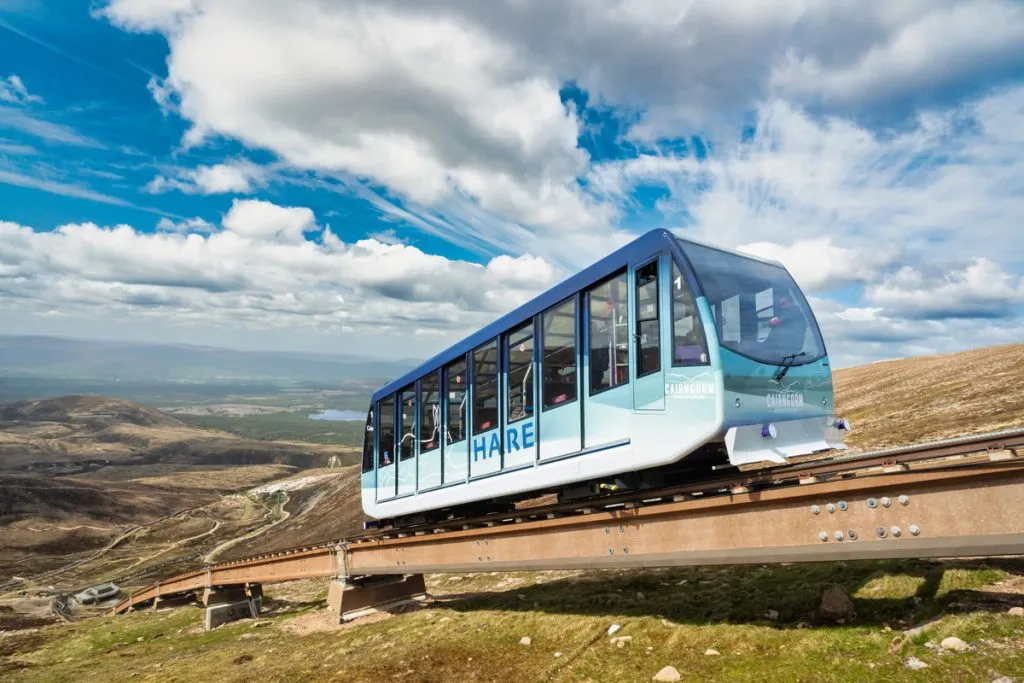
    Cairngorm funicular: public cost concerns and lifecycle risks for project teams

    February 27, 2026|

    Reviewed by Tom Sullivan

    Cairngorm funicular: public cost concerns and lifecycle risks for project teams

    First reported on New Civil Engineer

    30 Second Briefing

    Concerns over the long-term financial and operational sustainability of the Cairngorm funicular railway have been raised by the Scottish Parliament’s Public Audit Committee after an extended inquiry into Highlands and Islands Enterprise’s (HIE) management of the asset. The committee warns that ongoing capital works, maintenance and operating subsidies could leave the cost to the public purse outweighing transport, tourism and local economic benefits. Members also questioned the performance and resilience of the current operating company under winter-weather, reliability and demand uncertainties.

    Technical Brief

    • Committee scrutiny focused on HIE’s engineering decisions around repair, maintenance and structural remediation of the funicular.
    • Members examined whether inspection, monitoring and maintenance regimes meet current rail and cableway safety standards.
    • Winter operating conditions on Cairngorm were probed, including resilience of braking, control and evacuation systems in severe weather.
    • The performance of the current operator was questioned in terms of incident response, contingency planning and safety management systems.
    • Oversight arrangements between HIE, the operator and regulators were reviewed for clarity of safety responsibilities and reporting.
    • MSPs queried whether historic design and construction defects have been fully rectified and independently verified for long-term integrity.
    • Risk of prolonged unplanned closures was considered, including implications for passenger safety, emergency access and controlled shutdown.
    • For other mountain railways and aerial ropeways, the inquiry underlines the need for robust lifecycle safety governance.

    Our Take

    Among the 756 Infrastructure stories in our database, only a small subset involve legacy assets like the Cairngorm funicular railway being repeatedly refurbished rather than replaced, which typically signals difficult trade-offs between sunk public cost and long-term safety and sustainability obligations.

    For United Kingdom infrastructure pieces tagged to Sustainability and Safety, scrutiny by bodies such as the Scottish Parliament’s Public Audit Committee often precedes tighter governance on state agencies like Highlands and Islands Enterprise, which can slow approvals but also reduce future remediation liabilities.

    Compared with other UK mountain or coastal infrastructure in our coverage, the Cairngorm funicular railway stands out as a tourism-dependent asset where climate and snow reliability risks directly affect the cost–benefit case for continued public support, a factor increasingly highlighted in recent sustainability-tagged items.

    Geotechnical Software for Modern Teams

    Centralise site data, logs, and lab results with GEODB-io, CMRR-io, and HYDROGEO-io.

    No credit card required.

    • Save and export unlimited calculations
    • Advanced data visualisation
    • Generate professional PDF reports
    • Cloud storage for all your projects

    Prepared by collating external sources, AI-assisted tools, and Geomechanics.io’s proprietary mining database, then reviewed for technical accuracy & edited by our geotechnical team.

    Related Articles

    National Grid TBM under the Thames: tunnelling design and risk notes for engineers
    Infrastructure
    in 8 months

    National Grid TBM under the Thames: tunnelling design and risk notes for engineers

    A 271.5‑tonne Herrenknecht Mixshield TBM, Caroline, has started driving a 2.2km electricity cable tunnel with a 4m internal diameter beneath the River Thames in Essex for National Grid’s Grain to Tilbury project, delivered by the Ferrovial BEMO joint venture. The drive will pass through variable Thames estuary ground conditions between 35m‑deep launch and reception shafts of 15m and 12m diameter, with tunnelling continuing into 2026 and overall scheme completion targeted for 2029. The new tunnel will replace the 1969 Thames Cable Tunnel and carry new high‑voltage circuits between Grain and Tilbury substations.

    Panama Canal Mixshield undercrossing: design and tunnelling lessons for engineers
    Infrastructure
    in 8 months

    Panama Canal Mixshield undercrossing: design and tunnelling lessons for engineers

    A 13.46m diameter Herrenknecht Mixshield TBM has broken through into the future Balboa station on Panama Metro Line 3 after completing the first-ever TBM undercrossing of the Panama Canal at depths exceeding 60m below sea level. The 5,600kW, 26,616kNm machine, fitted with an accessible cutterhead and more than 4,500 sensors linked via the Herrenknecht.Connected platform, has achieved peak advance of 150 segment rings (about 300m) per month through mixed sandstone, tuff, breccias and basalt. Around 1.5km of the 4.5km twin-track tunnel remains to final breakthrough.

    Hudson Tunnel funding deadline: schedule and risk takeaways for project teams
    Infrastructure
    in 7 months

    Hudson Tunnel funding deadline: schedule and risk takeaways for project teams

    Federal funding for New York’s US$16bn Hudson Tunnel Project has been frozen, forcing the Gateway Development Commission to suspend works from 6 February after spending over US$1bn and employing about 1,000 site workers. A Manhattan federal judge has issued a temporary restraining order, giving the administration until 5 p.m. on 12 February to restore reimbursements or appeal, while contractors warn that demobilisation, resequencing and remobilisation will add cost and delay. Sites are now in “safe-pause” mode, with dewatering, ground support and environmental monitoring maintained, and assembly of two Herrenknecht TBMs in New Jersey likely to slip beyond the planned spring 2026 launch without funding certainty.

    Related Industries & Products

    Construction

    Quality control software for construction companies with material testing, batch tracking, and compliance management.

    Mining

    Geotechnical software solutions for mining operations including CMRR analysis, hydrogeological testing, and data management.

    QCDB-io

    Comprehensive quality control database for manufacturing, tunnelling, and civil construction with UCS testing, PSD analysis, and grout mix design management.