Geomechanics.io

  • Free Tools
Sign UpLog In
Built byBoxcut Studio

Geomechanics.io

Geomechanics, Streamlined.

© 2026 Geomechanics.io. All rights reserved.

Geomechanics.io

CMRR-ioGEODB-ioHYDROGEO-ioQCDB-ioFree Tools & CalculatorsBlogLatest Industry News

Industries

MiningConstructionTunnelling

Company

Terms of UsePrivacy PolicyLinkedIn
    Projects

    BRICS+ holding 17% of world gold: reserve trends and supply notes for miners

    April 8, 2026|

    Reviewed by Joe Ashwell

    BRICS+ holding 17% of world gold: reserve trends and supply notes for miners

    First reported on MINING.com

    30 Second Briefing

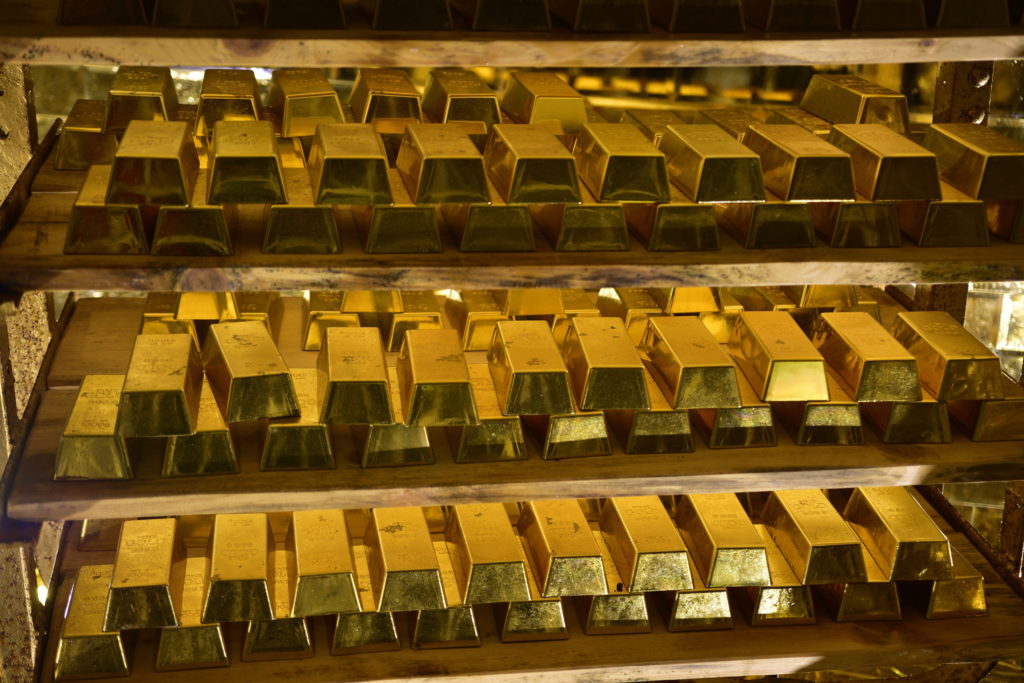
    BRICS+ central banks now hold about 6,000 tonnes of gold, or 17.4% of global reserves, up from 11.2% in 2019, with Russia (2,336 tonnes), China (2,298 tonnes) and India (880 tonnes) the largest holders. Annual official-sector gold buying has averaged roughly 1,000 tonnes over the past four years, doubling after 2022 sanctions on Russia, and BRICS+ countries accounted for more than half of purchases between 2020 and 2024. The report flags Saudi Arabia as a potential “wild card”, noting that a shift to a 5% gold allocation could alone match projected total central bank demand for 2026.

    Technical Brief

    • IMF COFER data show the US dollar’s reserve share fell from 71% (1999) to ~57% (end‑2025).
    • Dollar‑denominated reserve holdings have been essentially flat since 2014, despite overall reserve growth.
    • Gold’s share of official reserve assets has risen from <10% in 2015 to >23% today.
    • World Gold Council’s 2025 survey: 73% of central bankers expect further dollar share declines within five years.
    • Same survey: 43% of central banks plan to increase gold holdings, both record‑high sentiment readings.
    • EBC notes Saudi Arabia adopting a 5% gold allocation would match projected total 2026 central‑bank demand.

    Our Take

    First Quantum’s Cobre Panama copper-gold mine, shuttered in 2023 and now expected to restart with stockpile processing in 2026 per our coverage, illustrates how supply disruptions in BRICS-adjacent Latin America can tighten physical markets just as BRICS+ central banks are absorbing over half of new official-sector gold demand.

    India’s 880 t of gold reserves sit within a wider pattern in our database where Asian and Middle Eastern BRICS+ members, notably China and Saudi Arabia, are repeatedly cited as marginal buyers, which tends to underpin long-term floor prices that copper-gold project developers such as Eldorado Gold and Foran can use in financing cases.

    With 73% of surveyed central bankers expecting further dollar reserve-share erosion and 43% planning to add gold, the reserve-shift dynamic captured here is increasingly referenced in our 560 keyword-matched gold and copper pieces as a strategic backdrop for M&A decisions, particularly for assets in Africa and Latin America where BRICS+ capital is active.

    Geotechnical Software for Modern Teams

    Centralise site data, logs, and lab results with GEODB-io, CMRR-io, and HYDROGEO-io.

    No credit card required.

    • Save and export unlimited calculations
    • Advanced data visualisation
    • Generate professional PDF reports
    • Cloud storage for all your projects

    Prepared by collating external sources, AI-assisted tools, and Geomechanics.io’s proprietary mining database, then reviewed for technical accuracy & edited by our geotechnical team.

    Related Articles

    Buffalo Potash permit at Disley: design, risk and process notes for mine engineers
    Mining
    about 1 hour ago

    Buffalo Potash permit at Disley: design, risk and process notes for mine engineers

    Buffalo Potash has secured Saskatchewan approval to complete construction and operate its Disley initial production module, a 125,000 t/y soluble-grade potash facility 50 km northwest of Regina using a patented horizontal line-drive brine circulation method through parallel horizontal wells. The C$41.5 million module will test selective underground dissolution of potassium chloride with sodium-chloride-saturated brine and supply local agriculture, drilling-fluid markets and potassium-chloride brine for regional oilfields, ahead of planned 500,000 t/y Disley East and West expansions to about 1.13 Mt/y. The permit, which runs to 30 April and excludes future modules, requires groundwater characterisation, air-quality compliance and financial assurance, while the project proceeds without a feasibility study or declared reserves, elevating technical and economic risk.

    Exiro-led takeover of Vale’s Manitoba nickel complex: key points for mine planners
    Mining
    about 1 hour ago

    Exiro-led takeover of Vale’s Manitoba nickel complex: key points for mine planners

    Exiro Minerals, Orion Resource Partners and Canada Growth Fund have acquired an 81.1% stake in Vale’s Thompson nickel operations in northern Manitoba, committing up to US$200 million to sustain and develop the six-decade-old complex. The new vehicle, Exiro Nickel, takes over day-to-day control of two operating underground mines, the adjacent concentrator and exploration ground along the 135 km Thompson Nickel Belt, while Vale Base Metals retains an 18.9% interest. A multi-year offtake agreement keeps Vale buying nickel concentrate from the Thompson mill, providing a defined outlet for future production.

    Mining
    25 minutes ago

    Moeve–Emerita 100% renewable diesel deal in Spain: decarbonisation notes for mines

    Moeve and Emerita Resources have signed Spain’s first mining-sector agreement to deploy 100% renewable diesel (HVO) at industrial scale, designating Moeve as preferred supplier of this second-generation biofuel. The HVO, derived from waste and residue feedstocks rather than food crops, is claimed to cut lifecycle CO2 emissions by up to 90% compared with conventional diesel. For mine operators, the drop-in fuel compatibility with existing diesel engines offers a near-term route to decarbonise haul trucks and auxiliary fleets without major equipment changes.

    Related Industries & Products

    Mining

    Geotechnical software solutions for mining operations including CMRR analysis, hydrogeological testing, and data management.

    CMRR-io

    Streamline coal mine roof stability assessments with our cloud-based CMRR software featuring automated calculations, multi-scenario analysis, and collaborative workflows.

    HYDROGEO-io

    Comprehensive hydrogeological testing platform for managing, analysing, and reporting on packer tests, lugeon values, and hydraulic conductivity assessments.

    GEODB-io

    Centralised geotechnical data management solution for storing, accessing, and analysing all your site investigation and material testing data.

    AllGeotechnicalInfrastructureHazardsEnvironmental