Geomechanics.io

  • Free Tools
Sign UpLog In

Geomechanics.io

Geomechanics, Streamlined.

© 2026 Geomechanics.io. All rights reserved.

Geomechanics.io

CMRR-ioGEODB-ioHYDROGEO-ioQCDB-ioFree Tools & CalculatorsBlogLatest Industry News

Industries

MiningConstructionTunnelling

Company

Terms of UsePrivacy PolicyLinkedIn
    AllGeotechnicalMiningInfrastructureMaterialsHazardsEnvironmentalSoftwarePolicy
    Projects

    BHP’s Slattery on BCA board: policy and approvals lens for project teams

    January 19, 2026|

    Reviewed by Joe Ashwell

    BHP’s Slattery on BCA board: policy and approvals lens for project teams

    First reported on Australian Mining

    30 Second Briefing

    BHP president Australia Geraldine Slattery has been appointed to the Business Council of Australia (BCA) board, adding a major iron ore, metallurgical coal, copper and nickel producer’s operational perspective to national policy debates. Her role at BHP spans large-scale open-pit and underground operations in Western Australia, Queensland and South Australia, including long-life assets such as Pilbara iron ore hubs and Olympic Dam. The appointment signals closer input from bulk commodities and critical minerals operators into discussions on emissions policy, approvals reform and long-term energy and infrastructure planning.

    Technical Brief

    • Appointment places a major Tier-1 mine operator directly in BCA board-level policy deliberations.
    • BHP’s Australian portfolio includes complex brownfield expansions, giving board discussions direct exposure to approvals bottlenecks.
    • Long-life assets under Slattery’s remit involve multi-decade tailings, waste and water management strategies.
    • Her operational scope spans both open-pit and underground geotechnical risk environments across multiple jurisdictions.
    • Input is likely to reflect constraints of remote bulk haulage, port capacity and rail corridor planning.
    • Emissions policy debates will now include perspectives from large-scale diesel fleets and fixed-plant electrification.
    • Approvals reform discussions gain insight from major mine closure, rehabilitation and post-mining land-use obligations.
    • For infrastructure planning, she brings experience with high-MW mine power demand and grid-connection challenges.

    Our Take

    BHP features across multiple recent items in our database, from Pilbara iron ore collaboration with Rio Tinto to South Australian copper export strength, so Geraldine Slattery’s presence on the Business Council of Australia board gives heavyweight mining a more direct line into national policy debates captured in our 82 Policy stories.

    The BHP–Rio Tinto joint Pilbara iron ore development reported on 15 January 2026 underscores how Western Australian project decisions hinge on federal and state policy settings, an area where BCA board input from a major operator like BHP can shape approvals, infrastructure and decarbonisation frameworks.

    With Australian Mining repeatedly covering BHP’s role in both iron ore and copper growth, Slattery’s appointment signals that the BCA is likely to hear more assertive arguments around long‑life resource projects’ role in Australia’s export mix and in managing any future structural changes such as coal spin‑offs seen in the Rio Tinto–Glencore discussions.

    Geotechnical Software for Modern Teams

    Centralise site data, logs, and lab results with GEODB-io, CMRR-io, and HYDROGEO-io.

    No credit card required.

    • Save and export unlimited calculations
    • Advanced data visualisation
    • Generate professional PDF reports
    • Cloud storage for all your projects

    Prepared by collating external sources, AI-assisted tools, and Geomechanics.io’s proprietary mining database, then reviewed for technical accuracy & edited by our geotechnical team.

    Related Articles
    Canadian Infrastructure Bank’s critical minerals pivot: funding lens for project teams
    Policy
    about 6 hours ago

    Canadian Infrastructure Bank’s critical minerals pivot: funding lens for project teams

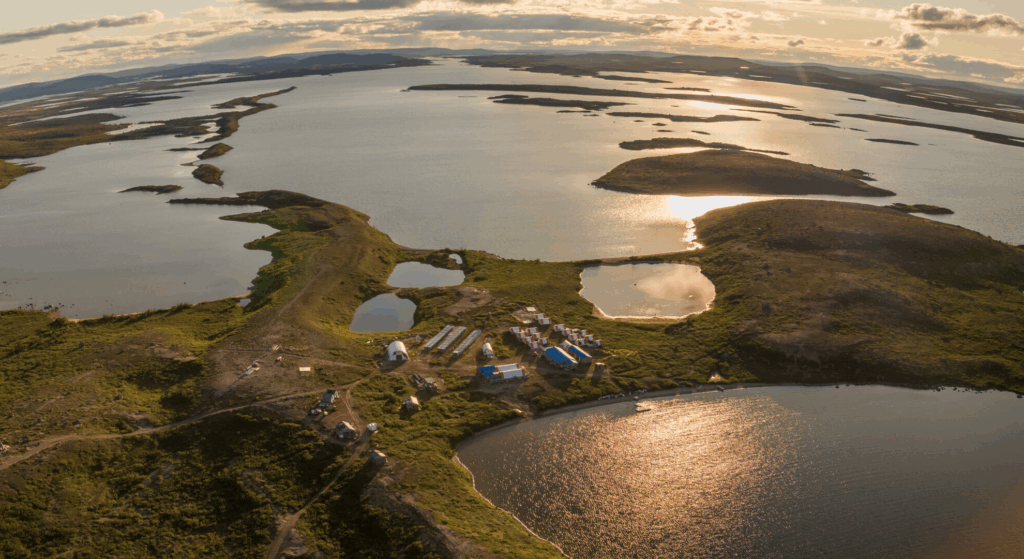
    The Canadian Infrastructure Bank is shifting its C$18 billion mandate towards critical minerals, starting with a C$55 million bridge loan and a potential C$500 million follow-on facility for Torngat Metals’ C$2 billion Strange Lake rare earths project in remote Nunavik, Quebec. The bank plans to co-invest in transport and power infrastructure and may use contracts for difference and offtake-backed structures to de-risk revenue for feasibility-stage projects across Canada’s 34 listed critical minerals. Memoranda of understanding in Manitoba, British Columbia’s Golden Triangle and Saguenay target integrated road, rail, port and industrial hub planning with Indigenous and provincial partners.

    ICE Council 2026: strategic influence on standards and resilience for engineers
    Policy
    about 14 hours ago

    ICE Council 2026: strategic influence on standards and resilience for engineers

    New members are being sought for the Institution of Civil Engineers (ICE) Council for the session starting in November 2026, with elected members helping to set policy on infrastructure, professional standards and climate resilience. Council members typically influence guidance on areas such as geotechnical risk management, asset resilience for bridges and tunnels, and the adoption of digital design and construction methods. Chartered and incorporated engineers considering standing should assess the time commitment for attending Council meetings in London and contributing to technical and regional committees.

    Mining’s top ten ESG trends for 2026: risk and compliance lens for project teams
    Policy
    3 days ago

    Mining’s top ten ESG trends for 2026: risk and compliance lens for project teams

    Mining companies in 2026 face ESG risk dominated by geopolitical fragmentation, with Russia’s war in Ukraine, Middle East conflict and African coups driving sanctions exposure, trade route disruption and board‑level scenario planning on supply chains and project delivery. Tailings governance is shifting from voluntary to quasi‑regulatory, as ICMM reports 67% GISTM conformance, the UK High Court’s Samarco ruling widens negligence exposure, and the World Mine Tailings Failures database projects 13 catastrophic failures by 2029. Simultaneously, ISSB IFRS S2 climate disclosure, GRI 14: Mining Sector 2024 and TNFD uptake by 730+ organisations, including 179 financial institutions with $22 trillion in assets, are turning climate, water, land disturbance and biodiversity into hard conditions for capital and permitting.

    Related Industries & Products

    Mining

    Geotechnical software solutions for mining operations including CMRR analysis, hydrogeological testing, and data management.

    Construction

    Quality control software for construction companies with material testing, batch tracking, and compliance management.

    CMRR-io

    Streamline coal mine roof stability assessments with our cloud-based CMRR software featuring automated calculations, multi-scenario analysis, and collaborative workflows.

    HYDROGEO-io

    Comprehensive hydrogeological testing platform for managing, analysing, and reporting on packer tests, lugeon values, and hydraulic conductivity assessments.

    GEODB-io

    Centralised geotechnical data management solution for storing, accessing, and analysing all your site investigation and material testing data.