Ascension’s deep-underground critical minerals tech: process insights for mine planners
Reviewed by Tom Sullivan
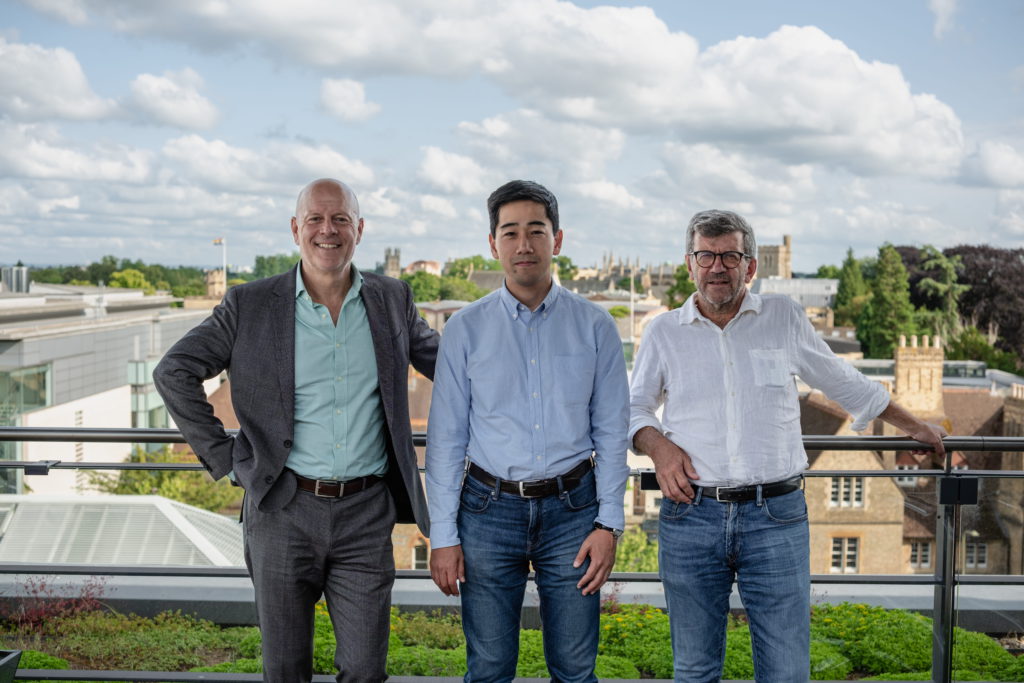
First reported on MINING.com
30 Second Briefing
Oxford University spinout Ascension has raised £1.7 million in new funding, combining a £670,490 Innovate UK Growth Catalyst grant with £1 million from UKI2S, Oxford Science Enterprises and East X, bringing total capital raised to £6.2 million. The company’s Selective Recovery programme targets rare earths and other critical minerals in deep volcanic glass, aiming to separate metals in situ and cut surface processing stages. Ascension’s process uses natural geothermal heat in volcanic rock deposits, avoiding excavation, high-temperature surface processing and associated land disturbance.
Technical Brief
- Selective Recovery is being advanced specifically for volcanic glass deposits formed by historic eruptions, not conventional ores.
- Process design relies on in situ geothermal heat within volcanic rock, avoiding ex situ thermal plants.
- Target commodities explicitly include rare earth elements plus other defence- and EV-relevant critical minerals.
- Innovate UK Growth Catalyst support totals £670,490, matched by £1 million private capital in this round.
- Total equity and grant funding now stands at £6.2 million, providing runway towards field-scale validation trials.
- Strategic driver is diversification from geographically concentrated rare earth supply, reducing UK and allied supply-chain exposure.
Our Take
Within our 1226 Mining stories, only a small subset focus on UK-based critical minerals and rare earth elements, so Ascension’s UK-centred approach signals that domestic deep-underground supply concepts are starting to move beyond policy talk into funded technology plays.
The presence of Innovate UK and the UK Innovation & Science Seed Fund alongside private backers suggests this sits in the UK’s quasi-strategic innovation bucket, which can make it easier for future pilots to access public test sites and government-supported industrial partners in Europe.
A total capital raised of $6.2 million for a deep-subsurface ‘Selective Recovery’ programme is modest compared with hard‑rock mine development in our database, implying the near‑term pathway is likely service or licensing into existing operations rather than building and operating standalone extraction projects.
Prepared by collating external sources, AI-assisted tools, and Geomechanics.io’s proprietary mining database, then reviewed for technical accuracy & edited by our geotechnical team.
Related Articles


Related Industries & Products
Mining
Geotechnical software solutions for mining operations including CMRR analysis, hydrogeological testing, and data management.
Tunnelling
Specialised solutions for tunnelling projects including grout mix design, hydrogeological analysis, and quality control.
CMRR-io
Streamline coal mine roof stability assessments with our cloud-based CMRR software featuring automated calculations, multi-scenario analysis, and collaborative workflows.
HYDROGEO-io
Comprehensive hydrogeological testing platform for managing, analysing, and reporting on packer tests, lugeon values, and hydraulic conductivity assessments.
GEODB-io
Centralised geotechnical data management solution for storing, accessing, and analysing all your site investigation and material testing data.