A96 dualling in phases: design, safety and traffic staging notes for engineers
Reviewed by Tom Sullivan
First reported on New Civil Engineer
30 Second Briefing
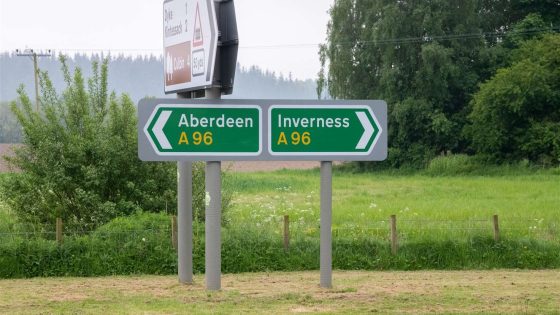
The Scottish Government has restated its plan to fully dual the A96 trunk road between Inverness and Aberdeen but will deliver the upgrade in phases due to current budget constraints. The 160km corridor, a key link for HGVs and regional freight, is expected to see staged design and construction packages rather than a single continuous programme. Phasing will affect timing of junction upgrades, overtaking provision and safety improvements, which will be critical for designers planning earthworks, structures and drainage around existing live traffic.
Technical Brief
- Phased dualling will require repeated traffic management switch-overs, increasing complexity of temporary works and staging.
- Staggered junction upgrades will complicate drainage tie-ins and require interim outfall and attenuation solutions.
- Earthworks will be sequenced in discrete packages, affecting haul routes, spoil balance and temporary stockpile locations.
- Structures design must anticipate future widening, with initial phases likely using part-width decks and foundations.
- Safety interventions (overtaking lanes, median separation) will need interim layouts compatible with later full dualling.
- Contract packaging will influence risk allocation for utilities diversions, particularly where services cross multiple phases.
- For other long trunk-road upgrades, phased delivery similarly tends to increase interface and traffic-management risk.
Our Take
Within our 632 Infrastructure stories, Scottish trunk road schemes like the A96 sit alongside other phased dualling and upgrade programmes, suggesting Transport Scotland is normalising incremental delivery to manage budget and political risk.
For safety‑tagged projects in the United Kingdom, our coverage often shows that committing to full corridor upgrades, even on a phased basis, tends to unlock interim junction and overtaking-lane works that can be justified on casualty-reduction grounds ahead of full dualling.
A96 works between Inverness and Aberdeen will intersect with multiple local road and rail interfaces, and in similar UK Projects/Contract Award pieces this has driven complex traffic management and staging requirements that contractors must price and programme carefully over long timeframes.
Prepared by collating external sources, AI-assisted tools, and Geomechanics.io’s proprietary mining database, then reviewed for technical accuracy & edited by our geotechnical team.


