Geomechanics, Streamlined.
© 2026 Geomechanics.io. All rights reserved.
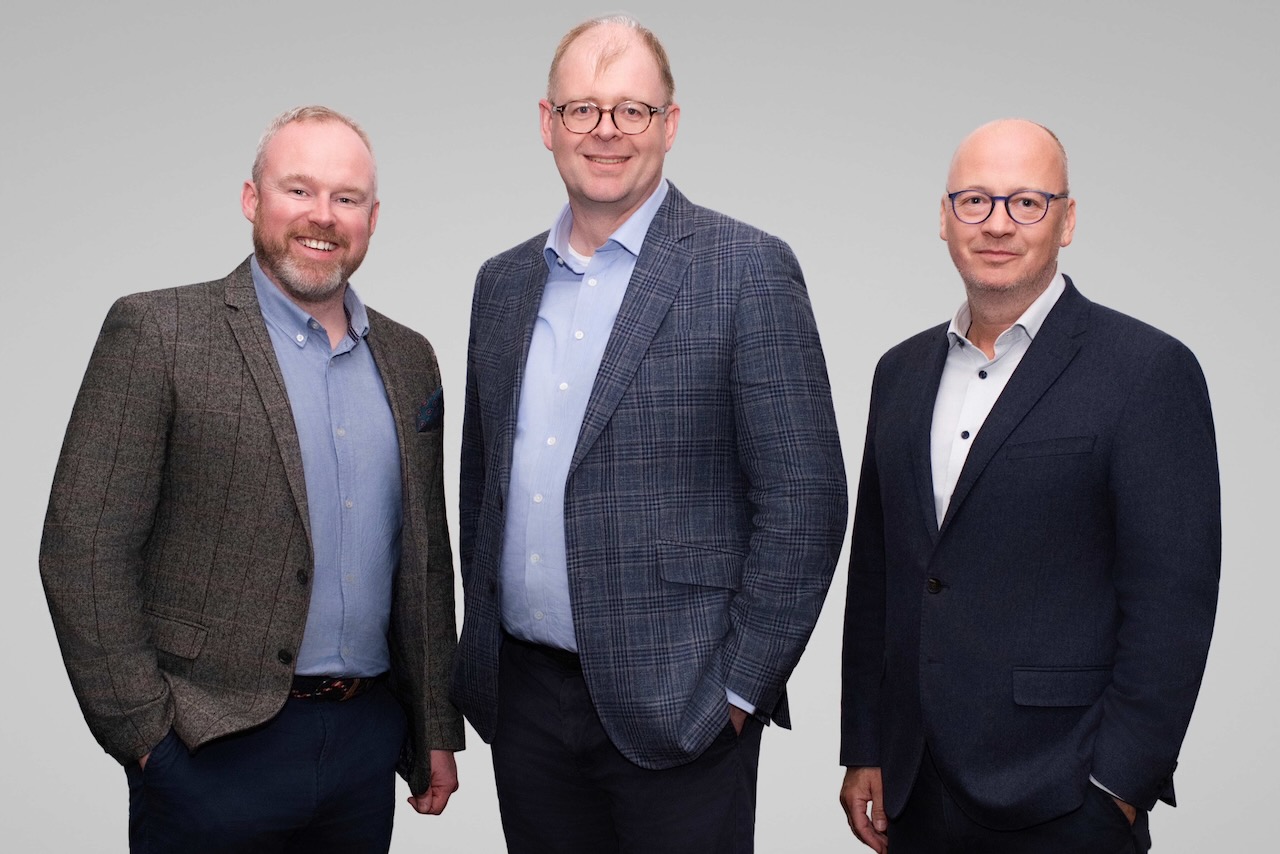
NG Bailey’s power engineering arm Freedom has placed managing director of design and advisory Rob Thompson on the Energy & Utility Skills Partnership CEO Council and digital transformation manager Ross Warne on Nima’s IM4Power Supply Chain Leadership Group. The roles give Freedom direct input into UK-wide initiatives on workforce skills, talent pipelines and digital delivery standards for the power and utilities sector. For contractors and asset owners on major UK energy and infrastructure programmes, this signals more structured guidance on information management, data standards and digitally enabled project delivery.
Metropolitan Police have submitted 20 investigation files on the Grenfell Tower fire to the Crown Prosecution Service, covering 20 companies and organisations and 54 individuals. Potential charges span corporate manslaughter, gross negligence manslaughter, health and safety offences, fraud and fraud-related offences, and misconduct in public office, following work by a 220-strong investigation team. The CPS aims to issue charging decisions by June 2027, the fire’s tenth anniversary, a timetable relevant for dutyholders involved in high-rise cladding, fire safety design and regulatory compliance.
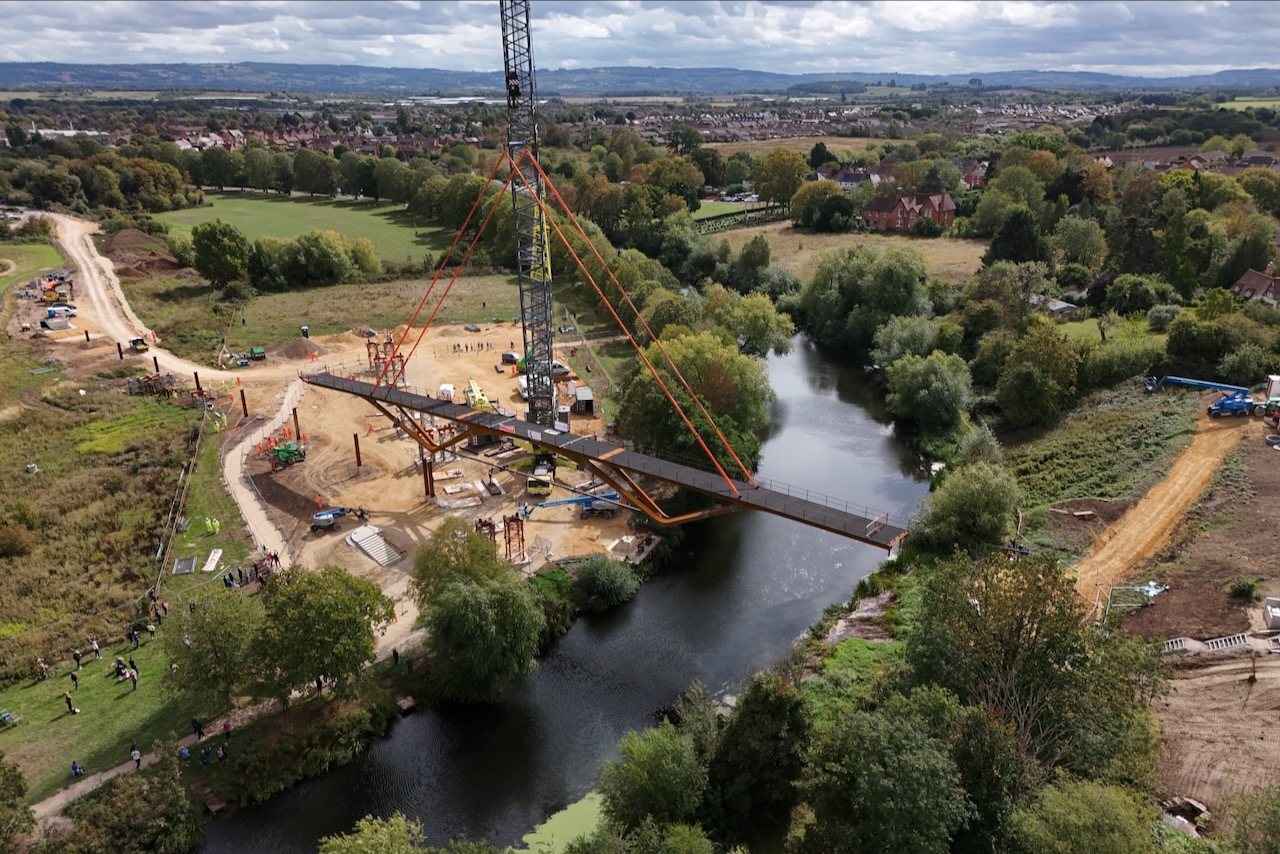
The 210m Hampton Bridge over the River Avon at Evesham has had its 86.5m preassembled main river span lifted into place, forming the core of a new all-weather active travel route across the flood plain for Worcestershire County Council. The 3.5m-wide slender steel structure, designed by Moxon Architects with Burroughs and COWI, uses paired V piers on the steep western bank, H-section columns on the eastern viaduct, and unpainted weathering steel to cut maintenance and minimise floodplain footprint. A 123.5m approach viaduct, raised causeway, drainage and landscaping are now under way, with completion due in 2027.
Frankham Group has strengthened its leadership with three senior hires: Richard West as CFO, Rob Hesmondalgh as CTO, and Dan Quinn as director of fire within its risk management business, following LDC’s recent investment and the transition to new CEO Richard Chitty. The consultancy has also made 28 internal promotions, including four new directors – Holly Watson, Holly Garland, Dawn Barsley-Dale and Paul Marsh – to expand its management capacity. The moves signal a push to grow from a London and South East base to a full national consultancy presence.
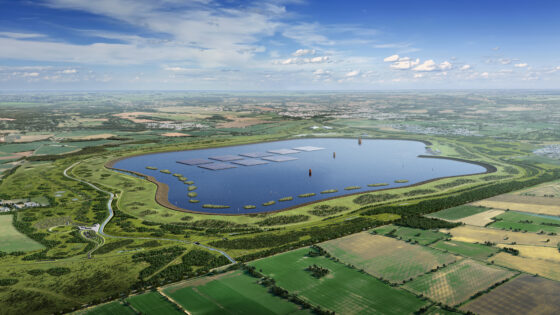
Thames Water has shortlisted three joint ventures to compete for a £5.7bn main works contract to build the proposed White Horse Reservoir near Abingdon, Oxfordshire, a major new strategic storage asset for the Thames catchment. The winning consortium will be responsible for bulk earthworks, dam and embankment construction, intake and outlet structures, and large-diameter raw water and treated water pipelines. Geotechnical and civil teams will face complex foundation design on alluvial and chalk strata, reservoir safety compliance under the UK Reservoirs Act, and long-term seepage and uplift control.
Senior leadership changes across UK civil engineering this September include new appointments at several tier-one contractors and major consultants as firms gear up for HS2, Lower Thames Crossing and nuclear new build work. Key moves centre on programme delivery, digital design and MMC capability, with incoming directors tasked with de-risking complex tunnelling, major earthworks and long-span bridge packages under NEC4 contracts. For geotechnical and infrastructure specialists, the reshuffle signals strong demand for experience in ground risk management, carbon‑optimised materials and data-led asset performance.
Binnies has launched its third structured “returners” programme to bring engineers and environmental professionals back into infrastructure roles after multi-year career breaks. The scheme offers paid placements with mentoring, technical upskilling and project-based work across water, flood risk and environmental infrastructure teams, rather than short-term shadowing. For geotechnical and civil practitioners, it provides a route to regain recent design and site experience on live UK projects while closing skills gaps in areas such as drainage, asset management and climate-resilience schemes.
Jennmar has expanded dynamic ground support testing with the DIT105Z rig, which can load 3 m reinforcement tendons at up to 105 kJ and 8.6 m/s, and the new Alpha Dynamic Test Rig, a multi‑modal system delivering single impacts to 286 kJ under direct impact, momentum transfer and oscillatory loading. Laboratory work now uses standard jumbos for installation and full‑scale mesh tests to better mirror underground variability, feeding into interactive specification databases. These data are driving products such as the Falcon Bolt self‑drilling, fully tensionable, groutable tendon and pumpable resins like J‑Lok P, Marisil Thixo and Jennthix to support highly mechanised, dynamic ground conditions.
Chinese battery-electric mining truck supplier Breton is targeting overseas growth in Latin America, Africa, Southeast Asia and Australia, competing with larger domestic OEMs such as XCMG and SANY. The company is positioning integrated offerings that pair BEV haul trucks with on-site microgrid infrastructure, aiming to supply both mobile equipment and charging/power systems. For mine operators, the move could increase options for high-capacity electric haulage fleets and bundled energy solutions, potentially shifting procurement dynamics away from traditional diesel truck–grid power combinations.
Welsh ministers are urging the UK government to bring forward £1bn of its existing £14bn rail investment package to accelerate upgrades across the Wales and Borders network. The call aims to fast‑track schemes such as track renewals, signalling modernisation and station accessibility works that are currently constrained by multi‑year funding profiles. For civil and rail engineers, earlier release of capital would allow bundling of possessions, more efficient procurement of materials and plant, and reduced cost escalation on deferred renewals.
South West Water has been fined £7.87M after a judge ruled that multiple environmental offences across Devon and Cornwall stemmed from “reckless failures” in its management systems and responses to known pollution risks. The case centres on repeated discharges from wastewater assets, with the court pointing to inadequate operational controls and risk management rather than isolated incidents. For civil and environmental engineers, the ruling signals closer scrutiny of sewerage network operation, monitoring regimes and contingency planning for combined sewer overflows and treatment works.
Geopolitical uncertainty around energy security, supply chains and defence spending is pushing UK construction and engineering clients to demand faster delivery, more offsite manufacture and greater design flexibility. In the latest Engineers Collective podcast, industry leaders discuss how modular bridge systems, standardised tunnel linings and digital twins are being used to cope with volatile materials prices, export controls and labour constraints. For geotechnical and civil practitioners, the message is to prioritise adaptable specifications, alternative material options and designs that can tolerate procurement disruption without major rework.
Prime minister Andy Burnham’s plan to create Great British Grid (GBG) gives the new body access to up to £4bn from within Great British Energy’s existing budget to accelerate strategic electricity transmission upgrades. The move signals central coordination of grid reinforcements needed for large offshore wind zones, new nuclear and widespread heat pump and EV uptake, where current 132–400kV corridors and substation capacity are major bottlenecks. For civil and geotechnical contractors, this points to a pipeline of large-scale cable routes, substation platforms and grid connection works, but with funding ringfenced from other energy spending.
RICS is marking 50 years of its Global Valuation Standard, the Red Book, which underpins consistent asset valuation for infrastructure, property and land across more than 140 countries. The standard sets mandatory requirements for valuation bases, reporting formats and assumptions, giving lenders, project sponsors and public authorities comparable cost and asset data for major schemes. For civil and infrastructure engineers, Red Book-compliant valuations influence project feasibility, land acquisition budgets and balance-sheet treatment of long‑life assets such as highways, rail corridors and utilities networks.
Government plans to remove existing limits on its share ownership in major water and sewerage companies in England through a strengthened Water Bill, signalling a potential shift in control over asset-heavy networks of treatment works, trunk mains and CSO infrastructure. Greater state equity stakes could influence long-term capital investment decisions on AMP-period programmes, including upgrades to ageing sewers, storm overflow capacity and resilience of potable water treatment. Designers and contractors should watch for changes in funding certainty, risk allocation and regulatory priorities on leakage, pollution events and resilience schemes.
Rio Tinto has secured continued operation of its 100 per cent‑owned Bell Bay Aluminium smelter in northern Tasmania to at least 2031 under a new power supply agreement with Hydro Tasmania backed by both the Tasmanian and Australian Governments. The deal locks in long‑term electricity for the grid‑connected smelter, which draws baseload hydro power, avoiding near‑term closure risk and associated impacts on local port, rail and transmission infrastructure. For mining and materials suppliers, the extension stabilises demand for alumina, carbon anodes and maintenance services over the rest of the decade.
Yancoal Australia has acquired an 80 per cent interest in the Kestrel underground metallurgical coal mine in Queensland’s Bowen Basin by purchasing 100 per cent of Kestrel Coal Group for an upfront US$1.85 billion cash consideration, subject to completion adjustments. The deal gives Yancoal control over a longwall operation producing premium hard coking coal linked to existing rail and port infrastructure at Gladstone. For geotechnical and mining teams, the acquisition signals continued investment in deep, high-capex underground coal with sustained demand for longwall support, strata control and ventilation expertise.
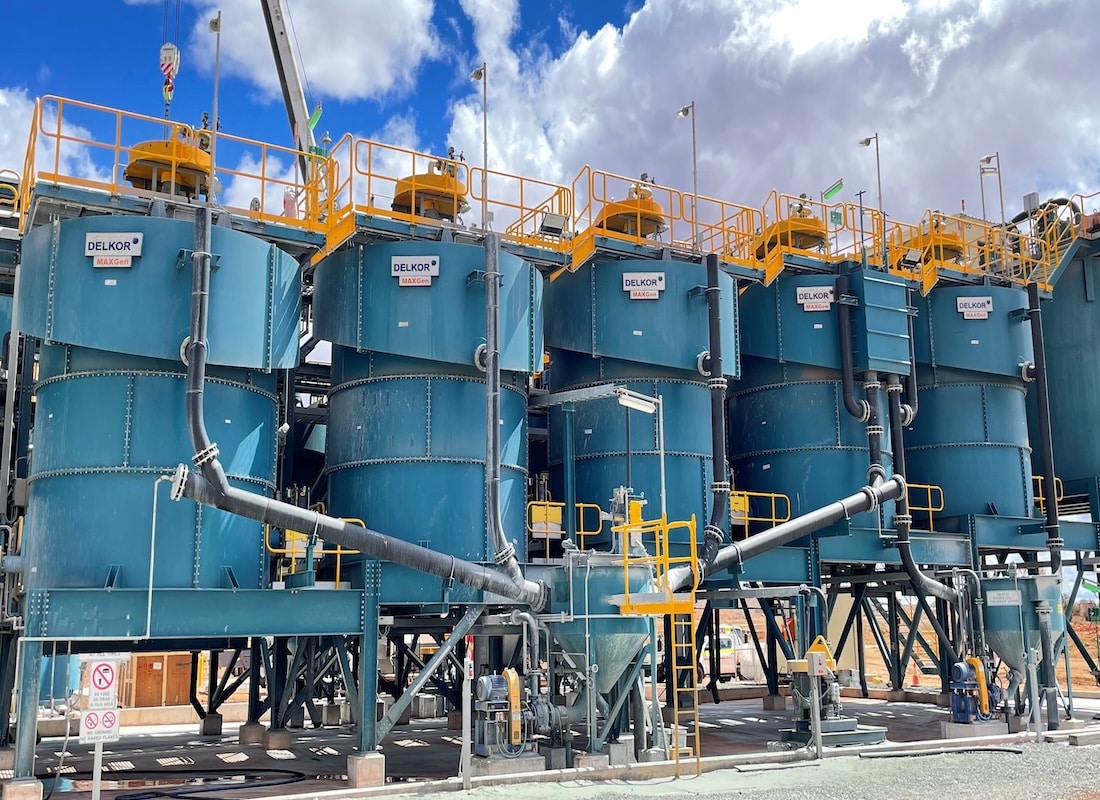
TAKRAF Group is upgrading flotation performance with its DELKOR BQR MAXGen cells, using optimised hydrodynamics and improved bubble–particle interaction to boost recovery from increasingly complex ore bodies while cutting energy use. The MAXGen design focuses on controlled air dispersion, high shear zones and stable froth conditions to improve fine particle attachment and reduce reagent consumption. For brownfield concentrators, retrofitting these cells into existing circuits offers a relatively low-footprint route to higher metallurgical performance without major layout changes.
Lynas Rare Earths will acquire Meteoric Resources in an all-scrip deal valuing Meteoric at about A$1.45 billion, securing the Caldeira ionic clay rare earths project in Minas Gerais, Brazil. Caldeira is described as the largest known ionic clay rare earth oxide resource outside China, with a definitive feasibility study due in the March 2026 quarter and first production targeted for 2028. The move gives Lynas a major non-Chinese, non-hard-rock feed source for its existing cracking and separation plants in Australia and Malaysia.
Leonardo DiCaprio has publicly backed opposition to Belo Sun Mining’s proposed $300-million Volta Grande project in Pará, planned as Brazil’s largest open-pit gold mine, intensifying scrutiny of its permitting in an area near Indigenous communities along the Xingu River. Brazilian federal prosecutors and FUNAI are asking the Supreme Court president to suspend provisional relief granted to Belo Sun until a final, unappealable judgment, arguing additional studies and Indigenous consultation are still required. Belo Sun counters that the site is outside protected Indigenous lands, cites over a decade of technical, environmental and social studies, and says Juruna and Arara communities formally supported its licensing.
Miata Metals has reported stacked, high-grade gold intercepts at the Jons Trend within its Sela Creek project in Suriname, including 35 metres grading 3.41 g/t gold from 97.7 metres in hole 26DDH-JT-023, with 5.5 metres at 15.36 g/t. A second key hole, 26DDH-JT-022, cut 37.9 metres at 1.6 g/t from about 158.3 metres, while JT-023 extends a previously defined higher-grade zone a further 50 metres down-plunge. Mineralisation is hosted in strongly strained, tightly folded, silicified quartz-biotite schists, supporting an open-pittable geometry and potential repetition of plunging high-grade shoots along the 14-km trend.
Arizona Gold & Silver’s latest drilling at the Philadelphia project in Arizona has cut broad gold-silver mineralisation beneath the Red Hills target, including hole PC26-173 with 7 metres at 4.24 g/t gold and 15.2 g/t silver from 456 metres within 44 metres at 1.48 g/t gold and 7.2 g/t silver from about 446 metres. Hole PC26-172 returned 70 metres at 1.16 g/t gold and 5.6 g/t silver from 417 metres, including 10 metres at 3.27 g/t gold and 19.3 g/t silver from 459 metres, extending mineralisation down-dip in the Perry zone. The company is modelling a north-plunging higher-grade shoot within a 3‑km Arabian Fault corridor to evaluate both underground and bulk-tonnage open-pit scenarios.
Kwagu’ł hereditary chief David Mungo Knox warned investors at the Precious Metals Summit in Beaver Creek that government permits, mineral claims and capital already spent in northern Vancouver Island do not constitute Indigenous consent under the 1851 Douglas Treaty or his Nation’s land-use plan. Private explorer Maven Exploration has already rejected 12–15 Canadian prospects near UNESCO sites or where First Nation consent seemed unlikely, and in one case sought permission from a Nation before staking promising open ground. Metallic Minerals’ La Plata copper–precious metals project in Colorado showed how delayed engagement forced the company into intensive community meetings, open houses and a dedicated project website to counter misinformation and rebuild trust.
Gold Fields has halted underground development at the proposed US$1.9 billion (C$2.7 billion) Windfall gold mine in Quebec after its bulk-exploration permit expired in August, leaving the 300,000 oz/y project awaiting provincial environmental approval despite a 2029 first-production target. Engineering and tendering continue while the Environmental and Social Impact Review Committee prepares its recommendation, with CEO Mike Fraser still hoping for sign-off before year-end following a June impact benefit agreement with the Cree First Nation of Waswanipi. The permitting delay, combined with unresolved Tarkwa lease renewals in Ghana (expiring April 2027) and a rejected A$38.7 billion Northern Star takeover proposal, is weighing on Gold Fields’ valuation.