Greater Anglia Essex derailment: track condition lessons for rail engineers
Reviewed by Tom Sullivan
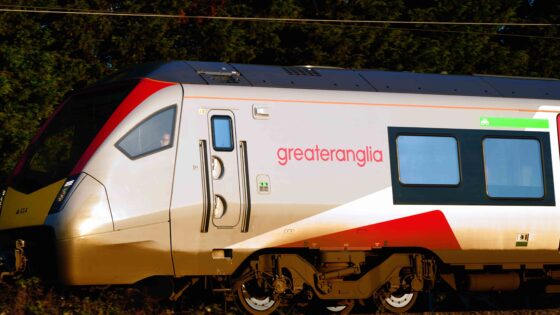
First reported on New Civil Engineer
30 Second Briefing
A Greater Anglia passenger train derailed near Wickford, Essex, on 14 August, the second derailment on England’s network in 48 hours after a separate incident at Lewes on 13 August. Both events occurred on conventional mixed-traffic routes, raising immediate questions over track condition, geometry control and inspection regimes on secondary lines. Investigators will focus on rail integrity, ballast condition and recent maintenance records, with potential implications for speed restrictions, tamping and renewal priorities across similar UK routes.
Technical Brief
- Failure mechanism currently unknown; RAIB investigation will focus on wheel–rail interaction, track support and vehicle dynamics.
- Initial site response will include detailed railhead inspection, fastener checks and ballast disturbance mapping along the derailed length.
- Geometry and condition data from recent track recording runs and ultrasonic rail testing will be cross-checked against the derailment location.
- Investigators are likely to recover OTMR/event recorder data from the Greater Anglia unit to correlate speed, braking and ride behaviour.
- Short-term remediation will involve re-railing, localised ballast renewal and tamping, followed by targeted stress restoration and track realignment.
- Monitoring after reopening typically includes temporary speed restrictions, intensified visual patrols and repeat geometry runs to confirm formation stability.
- Safety protocols require immediate route closure, isolation of traction power where applicable, and controlled passenger evacuation under railway rulebook procedures.
Our Take
Greater Anglia already features in our coverage for accessibility shortcomings at Stowmarket station (3 August 2026), so a second operational failure in two days elsewhere in England is likely to sharpen regulatory and public scrutiny of its wider asset management and safety culture.
New Civil Engineer’s recent focus on BIM, common data environments and asset management platforms suggests that better integration of condition and operations data could become a key recommendation when investigators review how Greater Anglia monitors track and rolling stock on its Essex routes.
Prepared by collating external sources, AI-assisted tools, and Geomechanics.io’s proprietary mining database, then reviewed for technical accuracy & edited by our geotechnical team.
Related Articles


Related Industries & Products
Construction
Quality control software for construction companies with material testing, batch tracking, and compliance management.
CMRR-io
Streamline coal mine roof stability assessments with our cloud-based CMRR software featuring automated calculations, multi-scenario analysis, and collaborative workflows.
HYDROGEO-io
Comprehensive hydrogeological testing platform for managing, analysing, and reporting on packer tests, lugeon values, and hydraulic conductivity assessments.
GEODB-io
Centralised geotechnical data management solution for storing, accessing, and analysing all your site investigation and material testing data.