Wirtgen WRC recycler-stabiliser: pavement design and cost insights for engineers
Reviewed by Joe Ashwell
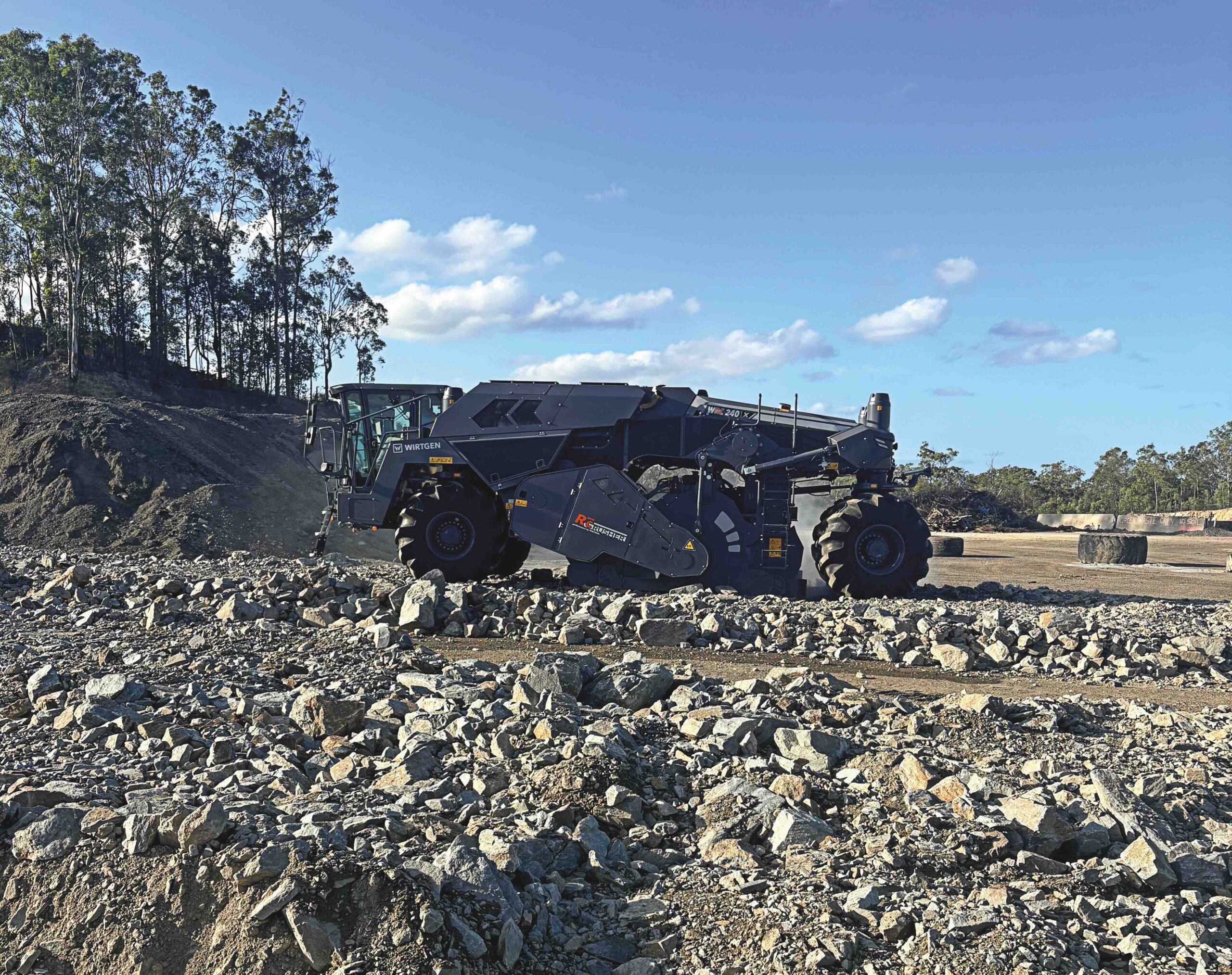
First reported on Roads & Infrastructure (AU)
30 Second Briefing
Wirtgen’s new WRC recycler-stabiliser targets heavy-axle pavement damage predicted by the Fourth Power Law by combining high-torque milling, in-situ mixing and cement/lime stabilisation in a single pass. Building on the WR series platform, the WRC is engineered for deep treatment of heavily trafficked base layers, allowing contractors to reprocess existing bound and unbound materials rather than import full-depth replacement. The approach cuts aggregate haulage, cement usage and construction time, with direct implications for life-cycle cost, pavement thickness design and workzone traffic management.
Technical Brief
- Wirtgen’s WRC is based on the WR recycler platform but reconfigured specifically for high-strength base treatment.
- The unit combines a heavy-duty milling drum with a high-torque drive to cut deeply into bound layers.
- Enclosed mixing chamber geometry is optimised to thoroughly blend cement or lime with reclaimed material in-situ.
- Powertrain and rotor torque are sized to maintain cutting performance in heavily cemented or asphalt-bound bases.
- Machine layout allows single-pass operation across the full lane width, reducing longitudinal cold joints.
- WRC is targeted at rehabilitation of freight corridors where repeated heavy-axle loads accelerate structural pavement fatigue.
- Integration into Wirtgen’s existing WR fleet simplifies fleet maintenance, spare parts logistics and operator training.
- For construction contractors, the unit offers a specialised alternative to general-purpose recyclers on high-modulus bases.
Our Take
Wirtgen’s Australian-focused coverage in Roads & Infrastructure Magazine this year has centred on cold recycling and in-situ stabilisation (e.g. the WR 240 X launch on 16 April 2026), signalling that its ‘savings’ narrative is increasingly tied to reduced virgin material use and shorter haulage on local road jobs.
The All Ash Asphalt case study from 24 April 2026 shows smaller Melbourne contractors using full Wirtgen Group trains to win major state road and rail packages, suggesting that lifecycle cost savings are becoming a procurement lever rather than just a plant-operator benefit in Australia.
Across the 931 Infrastructure stories in our database, Wirtgen appears more often in sustainability-tagged items than many peer OEMs, indicating that its Australian marketing is leaning heavily on recycling, asphalt reuse and fuel-efficiency themes rather than pure productivity claims.
Prepared by collating external sources, AI-assisted tools, and Geomechanics.io’s proprietary mining database, then reviewed for technical accuracy & edited by our geotechnical team.
Related Articles


Related Industries & Products
Construction
Quality control software for construction companies with material testing, batch tracking, and compliance management.
Mining
Geotechnical software solutions for mining operations including CMRR analysis, hydrogeological testing, and data management.
QCDB-io
Comprehensive quality control database for manufacturing, tunnelling, and civil construction with UCS testing, PSD analysis, and grout mix design management.