Geomechanics, Streamlined.
© 2026 Geomechanics.io. All rights reserved.
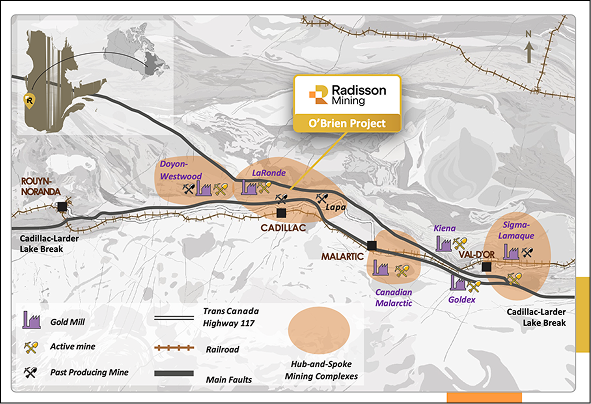
Agnico Eagle Mines is investing C$57.2 million in Radisson Mining Resources for a 10.5%–14.9% stake to advance underground access and infrastructure at the historic O’Brien gold mine in Quebec’s Bousquet-Cadillac camp along the Larder Lake-Cadillac Break. Funding will support an access ramp, underground workings, surface facilities and water management, complementing Radisson’s fully funded 140,000-metre surface drilling and a planned 11-year underground operation with toll milling at IAMGOLD’s Doyon plant. A July 2025 PEA at US$3,300/oz gold pegs O’Brien’s after-tax NPV5 at C$871 million with a 74% IRR, underpinned by recent intercepts such as 5.1 m at 316.31 g/t from 823 m.
South32 has lifted the Sierra Gorda ore reserve in Chile by 61% to 1.1 billion tonnes at 0.39% total copper, 0.016% molybdenum and 0.06 g/t gold (0.46% CuEq), extending reserve life by about five years to 2045 after 85,000 metres of infill drilling from 200 holes. The updated MRE now stands at 1.87 billion tonnes at 0.37% copper (0.44% CuEq), with the orebody remaining open at depth and additional potential at the Catabela Northeast target. A fourth grinding line, approved in July, is expected to lift copper output by roughly 30% from 2031, reinforcing long-term concentrator planning and infrastructure requirements.
Otavio (Tavi) Costa, founder and CEO of Azuria Capital, argues that mining equities are currently the cheapest way to gain AI exposure, as sovereign funds and governments re-rate the sector and mid-tier producers move to secure “strategic reserves” by acquiring high-quality junior assets. He links this to a macro backdrop where global debt has returned to World War II levels but only about 3% of the US Treasury market is now backed by gold, versus roughly 50% then. With spot gold at $4,673.20/oz, Costa expects reserve depletion, weak discoveries and a “global monetary race towards gold” to drive prices substantially higher.
ARAMAC has been launched as a standalone business focused on designing, manufacturing and distributing underground mining equipment, separating this activity from Aramine’s traditional narrow-vein specialisation. The new entity will target broader underground segments with complete fleets – from loaders and trucks to drilling and ground support units – while concentrating on a reduced set of priority regions rather than Aramine’s previous global spread. This tighter geographic focus is intended to deepen local service capability, parts availability and technical support for high-availability underground fleets.
Macmahon Contractors has secured a 42‑month extension to provide contract mining services at Greatland Resources’ Telfer Gold Mine in Western Australia, valued at A$485 million over the term. The deal locks in a multi‑year mining services pipeline at one of the state’s major gold operations, supporting continuity of fleet deployment, workforce planning and site-based maintenance. Contractors and suppliers can expect sustained demand for open-pit and underground support services, consumables and rebuilds tied to Telfer’s existing mine plan.
Metso has agreed to acquire Valmet’s Flowrox™ peristaltic hose pump and progressive cavity pump technologies, including associated spare parts and service capabilities, targeting abrasive and chemically aggressive slurry duties in mining and minerals processing. The deal adds positive displacement options alongside Metso’s existing slurry and submersible pump lines, enabling tighter process control in applications such as thickener underflow, filter feed and reagent dosing. For operators, the integration should simplify lifecycle support and parts standardisation across critical slurry handling circuits.
TOMRA Mining has secured a contract from Pilgangoora Operations Pty Ltd, a PLS Group subsidiary, to supply 22 sensor-based ore sorters for the P2000 Expansion Project at the Pilgangoora lithium operation in Western Australia. The installation is part of PLS’ pre-Final Investment Decision early works, signalling commitment to large-scale sorting ahead of full project sanction. For process engineers, the move points to increased reliance on front-end sensor-based separation to upgrade run-of-mine feed and manage lithia grade variability before downstream concentration.
Queensland’s five‑year major projects pipeline, detailed in the QMCA’s 2025 report, is being reshaped by Queensland University of Technology research targeting two critical constraints: labour productivity and cost escalation across road, rail and water schemes. QUT teams are deploying digital twins for corridor planning, AI‑based earthworks optimisation and sensor‑equipped pavements to cut rework and improve construction staging on multi‑billion‑dollar highway upgrades. For contractors, the work points to tighter programme control, more reliable cost forecasts and earlier geotechnical risk detection on large brownfield expansions.
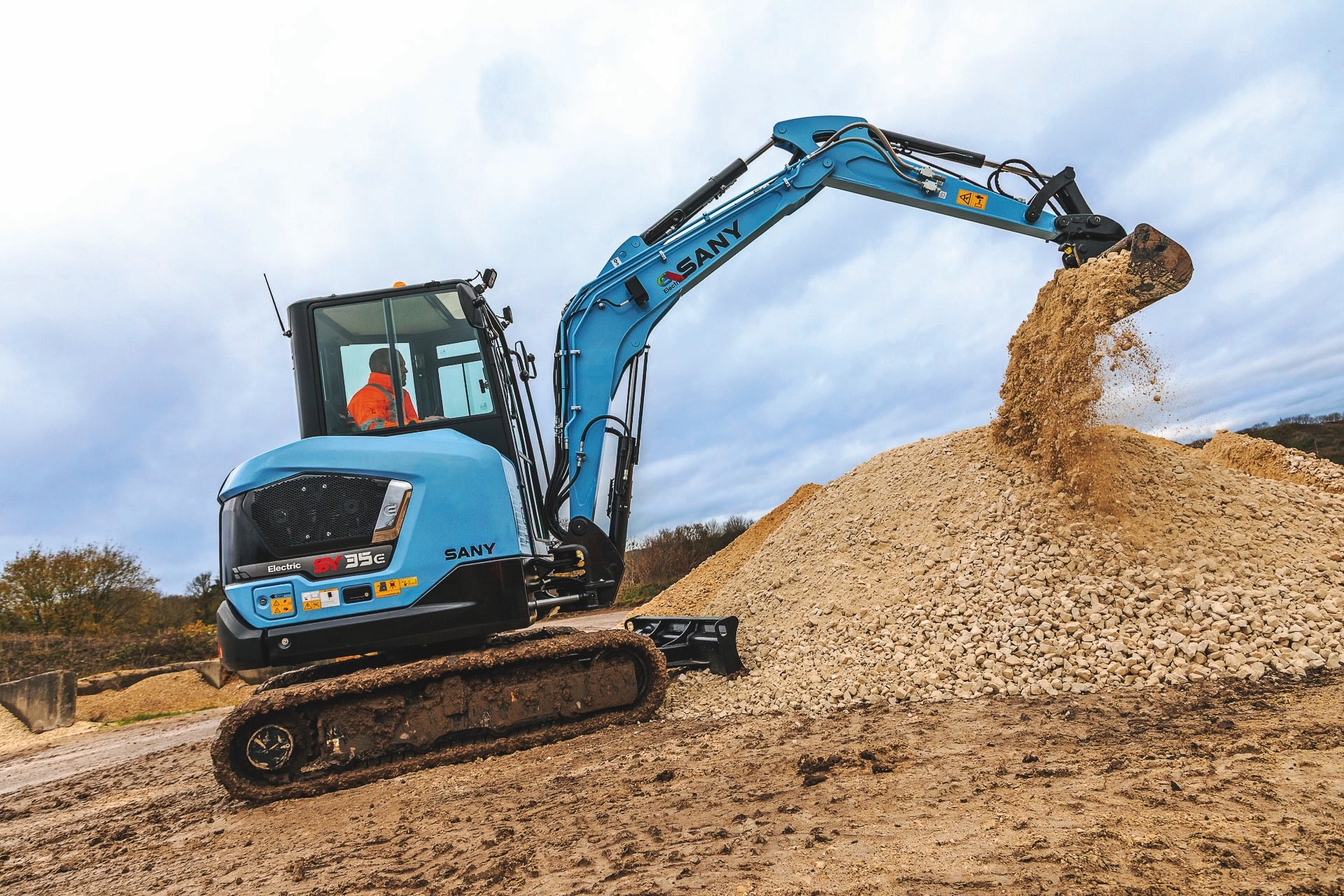
CEA has secured distribution of SANY’s electric excavator range across Queensland, New South Wales, South Australia and Western Australia, signalling a broader push to deploy battery-powered plant on road and civil projects. Product Manager Phil Withell points to compact units such as the SY35E, which use SANY’s proprietary high‑energy‑density battery packs and integrated electric drive systems, as early adopters for urban and tunnel works. For contractors, the move raises practical questions around charging logistics, noise limits and emissions compliance on constrained infrastructure sites.
A new funding round of the Federal Government’s $200 million Safer Local Roads Infrastructure Program will open on 1 September to state and territory governments and local councils. The program targets current and emerging road infrastructure priorities, enabling works such as intersection upgrades, shoulder widening, pavement rehabilitation and safety treatments on local and regional networks. Civil and geotechnical teams should prepare shovel-ready designs and costings now to compete for allocations within the capped national envelope.
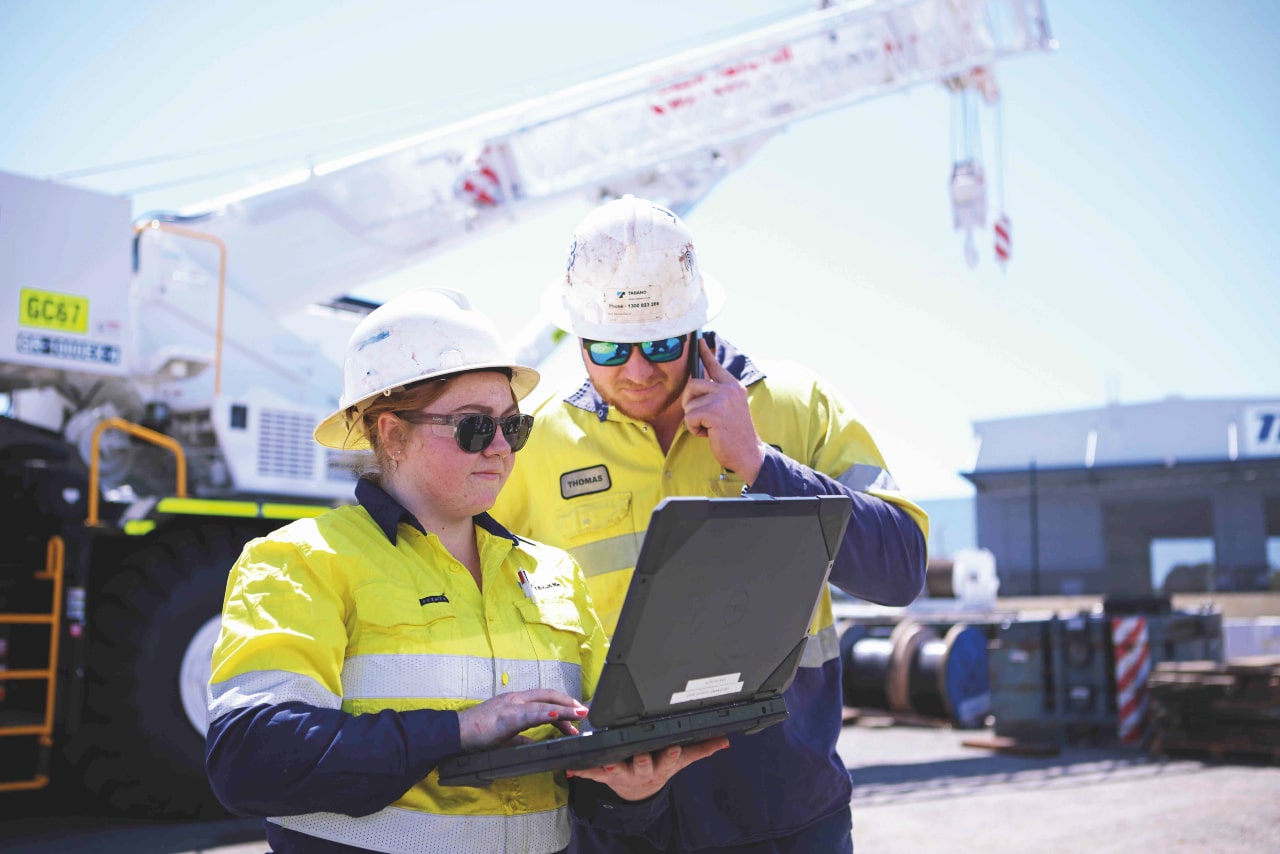
Tadano is expanding its Australian lifting offering for infrastructure and transport projects with a new crane product line backed by lifecycle-focused servicing and operator training. The company is positioning the crane as only one element of an integrated package that includes commissioning support, scheduled maintenance and compliance-based safety systems tailored to local road and bridge works. For contractors, the key shift is access to OEM-led training and support aimed at maximising crane uptime and safe utilisation over long project durations.
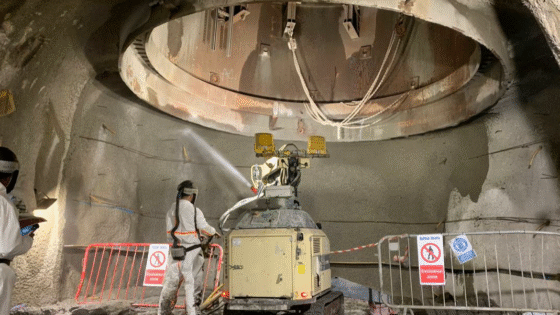
British Tunnelling Society chair and Jacobs tunnels director for Europe Alastair Smith calls for earlier geotechnical investigation and constructability input in UK tunnel planning to cut redesign and delay on major schemes. Drawing on five decades of work on large-bore metro, water and road tunnels worldwide, he points to fragmented client governance and late contractor involvement as key causes of cost escalation. Smith urges standardised design frameworks and clearer risk allocation for ground conditions to speed delivery of long linear assets.
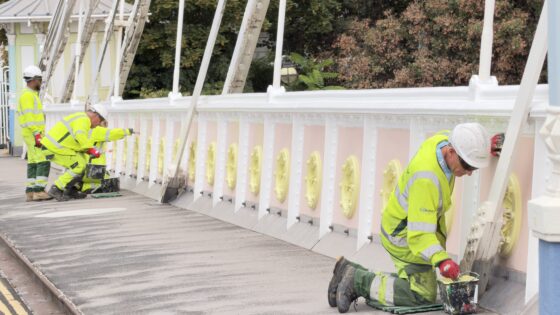
Albert Bridge in west London has been closed to road traffic for a programme of essential refurbishment that includes full repainting of its wrought-iron and steel structure. The Grade II* listed, 19th‑century suspension–cable‑stayed hybrid is undergoing complex repair work to address corrosion, protect critical tension members and connections, and extend fatigue life under modern traffic loading. For bridge and materials engineers, the project centres on surface preparation, coating system durability in a marine–urban environment, and maintaining structural integrity while preserving heritage detailing.
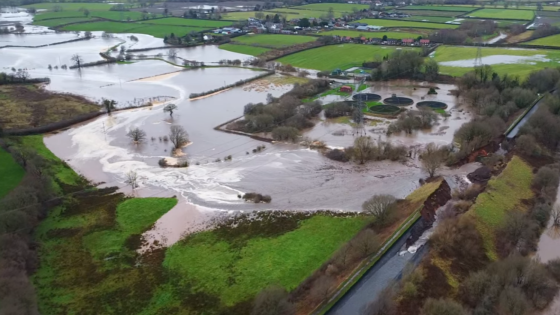
Repair of the Bridgewater Canal breach at Little Bollington has advanced to contractor procurement after completion of survey and design work on the failed embankment. Engineers have now defined the repair scope, likely including reconstruction of the canal lining, reinstatement of the earthworks profile and improved seepage control to prevent repeat overtopping or piping. Contractors will need to manage works adjacent to live water infrastructure and local transport routes, with temporary cofferdams, dewatering and staged reinstatement expected to be key construction risks.
Wirral Borough Council has let a four-year, £1.2bn (including VAT) multi-lot contractor framework covering construction, infrastructure and demolition works across the North West. The framework comprises 13 published lots, signalling a pipeline likely to include highways, structures and public realm schemes where bidders must demonstrate capability in complex groundworks, temporary works and brownfield remediation. Civil and geotechnical contractors should expect mini-competitions to demand robust cost control, programme certainty and early contractor involvement on design and build risk.
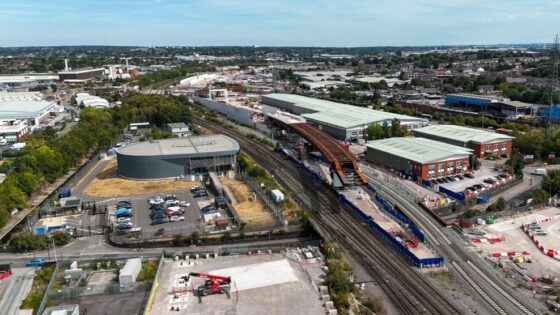
HS2 engineers have completed the first major launch of the Duddeston Junction Viaduct, pushing the steel and concrete structure over the live Birmingham–Derby main lines on the approach to Curzon Street station. The incremental launch was carried out during tightly timed possessions above multiple tracks, using temporary piers and sliding bearings to control alignment and minimise disruption to existing services. The viaduct will carry high-speed trains into the new city-centre terminus, imposing stringent tolerances on deck geometry, dynamic behaviour and clearances over the classic network.
Alkane Resources has defined a new high‑grade mineralised zone within the Cuffley Lode at its Costerfield gold–antimony mine in Victoria, using 23 diamond drill holes into previously unmined ground between historical high‑grade Cuffley panels. Intercepts include 0.61m at 580.9g/t gold and other “thousand grams per tonne” hits, pointing to very narrow but ultra‑high‑grade vein structures typical of the district. For mine planners and geotechs, the results suggest potential for additional high‑margin stopes but with challenging ground control and dilution management in sub‑metre widths.
Tungsten Mining has engaged specialist adviser Cutfield Freeman & Co to structure funding for its Watershed Tungsten Project in Far North Queensland, aiming for a final investment decision next month. The project is targeting first production in the first half of 2027, with approvals and key study work already in place, positioning it to move rapidly into construction once financing is secured. For mine planners and contractors, the timeline signals potential tendering for open-pit development, processing plant delivery and associated infrastructure within the next 12–18 months.
PLS Group has lifted Pilgangoora’s annual spodumene concentrate output to a record 879,543 tonnes in FY26 while cutting unit operating costs by 9 per cent, driven by the Ngungaju plant restart and process improvements. The company is guiding 1.03–1.10 million tonnes for FY27 from the combined Pilgan and Ngungaju circuits, signalling sustained high utilisation of crushing, dense media separation and flotation capacity at the Western Australian operation. For mine planners and process engineers, the step-up implies continued pit expansion, higher ore haulage volumes and tighter control of recoveries to maintain cost discipline.
Perenti has reported record 2025–26 EBITA of $340 million, a 2 per cent increase year-on-year and its fifth consecutive annual earnings rise, as the mining services group strengthens its balance sheet for further growth. Chief executive Vanessa Torres framed the result around disciplined capital allocation and a growing contract portfolio across surface and underground projects in Australia and Africa. For contractors and mine owners, the numbers signal continued demand for outsourced drilling, development and production services, with Perenti positioned to bid for larger, longer-tenure contracts.
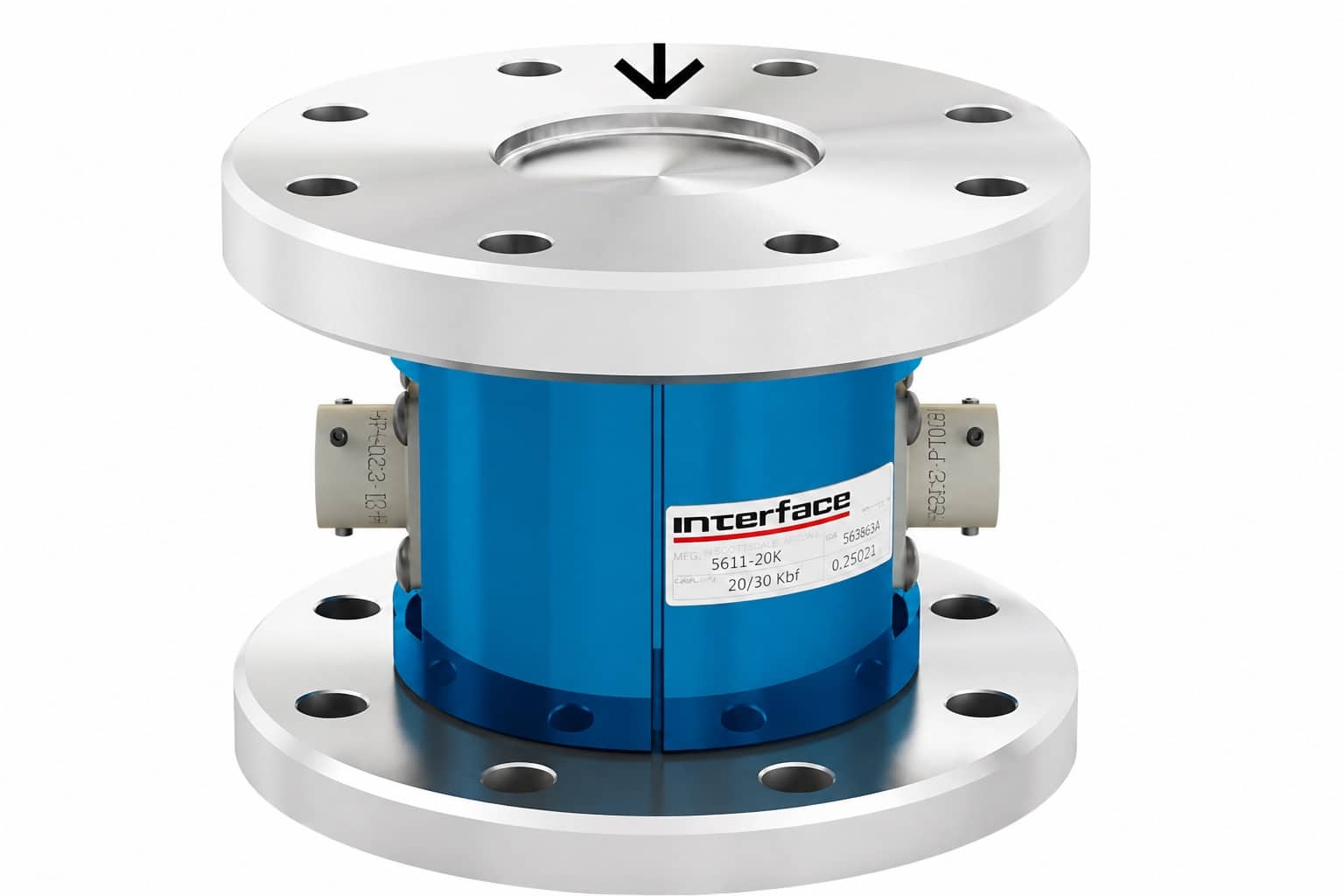
The Interface 5600 2-Axis Axial Torsion Load Cell combines compressive force and torsional moment measurement in a single flange-mount transducer, capturing both at the same point for demanding test and measurement rigs. Its compact, multi-axis design reduces fixture complexity compared with separate axial and torque sensors, freeing space around test specimens and simplifying alignment. For mining equipment OEMs and materials labs, the unit supports more accurate characterisation of drill strings, couplings and rotating components under combined loading.
Veyex has trialled heavy-duty nylon conveyor rollers at Rio Tinto’s Gudai-Darri iron ore mine in Western Australia, where previous high-density polyethylene (HDPE) rollers were failing prematurely under high-tension loads. The case study covered two specific conveyor applications, with the nylon rollers subjected to extreme belt tensions and impact loading typical of large-scale iron ore handling. Results showed markedly improved roller durability and reduced maintenance interventions, signalling potential lifecycle and reliability gains for high-load overland and plant conveyors in similar hard rock operations.
US export restrictions taking effect later in August will force some lithium-ion battery scrap, including black mass, and tungsten scrap to be sold to US buyers, but GEM Mining Consulting’s Alina Karpunina argues supply security hinges on how much of this material is actually converted into qualified secondary minerals. DOE data show a 2023 US mismatch, with intermediate facilities able to process nearly 175,000 tons of batteries and scrap, but only about 35,500 tons of battery-material recovery capacity and 76,000 tons more merely planned. Karpunina proposes a “scrap-to-security conversion ratio” based on contained critical-mineral units recovered to customer specification, warning that export controls without robust domestic processing risk idle feedstock and continued reliance on primary mining.
Suncor has commissioned its first Autonomous Operating Zone at Syncrude’s Mildred Lake oil sands mine, extending its autonomous haulage system deployment beyond the existing fleet of about 140 autonomous trucks already running at other Suncor sites. The new zone uses Cat AHS fleets under Suncor control (since late 2021) and is complemented by Komatsu AHS trucks at Base Plant operating with a dedicated “Mud Mode” to maintain traction and control in soft ground. For mine planners, this signals wider-scale AHS integration across multiple pits and variable ground conditions.