Teck’s BC Trail smelter germanium expansion: capex and supply notes for mine planners
Reviewed by Tom Sullivan
First reported on MINING.com
30 Second Briefing
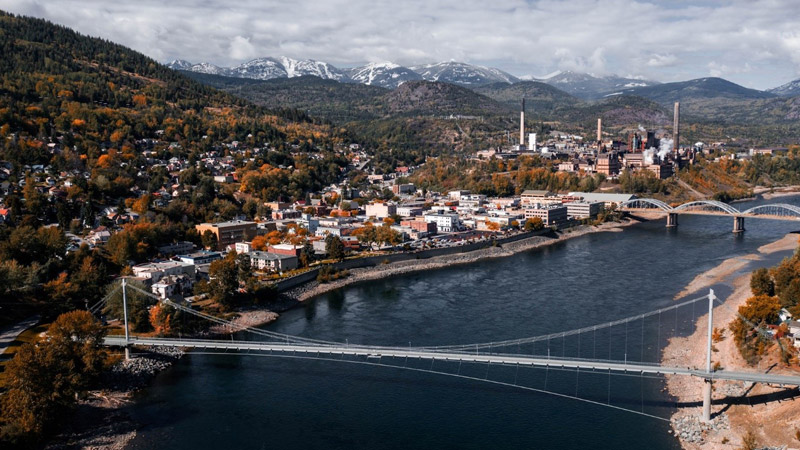
Canada’s federal government is poised to inject “hundreds of millions” of dollars into Teck Resources’ Trail metals facility in British Columbia to expand germanium output, with funding expected from Natural Resources Canada, the Canada Growth Fund and Export Development Canada. Teck already recovers germanium as a byproduct of zinc operations in Alaska and supplies all of Canada’s germanium dioxide exports to the US, where prices exceed US$6,000 per kg. The move follows China’s 2024 export restrictions on germanium and antimony and mirrors recent C$459 million federal debt support for Nouveau Monde Graphite’s Matawinie project.
Technical Brief
- Titan–Teck cooperation agreement targets recovery of 13,000 kg/year germanium from Titan’s Empire State zinc mine.
- Teck’s Trail complex is one of the world’s largest integrated zinc–lead smelters, already producing germanium, indium and antimony.
- Trail output expansion is being framed as a “critical minerals” project, with a formal ministerial announcement scheduled in Trail.
- China controls >80% of global germanium production, and only suspended its 2024 export restrictions in late 2025.
- The US presently has no domestic primary germanium production, increasing reliance on byproduct recovery from foreign zinc streams.
- Germanium demand is tied to defence, semiconductor and chip manufacturing applications, where supply disruptions directly affect high-value manufacturing.
- EDC and Canada Infrastructure Bank previously committed C$459 million in senior debt to Nouveau Monde Graphite’s Matawinie project, signalling Ottawa’s willingness to finance midstream critical-mineral processing.
Our Take
The Titan Mining–Teck cooperation on recovering about 13,000 kg/year of germanium from Empire State Mine waste streams suggests Trail’s germanium push is part of a broader Teck strategy to monetise by-products from existing zinc circuits rather than rely on new primary germanium mines.
With China controlling more than 80% of global germanium output, state-backed support for Teck’s Trail complex positions Canada as one of the few OECD jurisdictions in our database actively trying to build non-Chinese supply of both germanium and related specialty minerals for space and defence hardware.
The involvement of EDC and the Canada Infrastructure Bank in financing Nouveau Monde Graphite’s Matawinie project, alongside prospective backing for Teck’s Trail operations, signals that Canadian public lenders are increasingly comfortable treating critical-mineral processing assets in British Columbia and Quebec as infrastructure-like plays rather than purely mining risk.
Prepared by collating external sources, AI-assisted tools, and Geomechanics.io’s proprietary mining database, then reviewed for technical accuracy & edited by our geotechnical team.
Related Articles

Related Industries & Products
Mining
Geotechnical software solutions for mining operations including CMRR analysis, hydrogeological testing, and data management.
Construction
Quality control software for construction companies with material testing, batch tracking, and compliance management.
CMRR-io
Streamline coal mine roof stability assessments with our cloud-based CMRR software featuring automated calculations, multi-scenario analysis, and collaborative workflows.
QCDB-io
Comprehensive quality control database for manufacturing, tunnelling, and civil construction with UCS testing, PSD analysis, and grout mix design management.
HYDROGEO-io
Comprehensive hydrogeological testing platform for managing, analysing, and reporting on packer tests, lugeon values, and hydraulic conductivity assessments.