Geomechanics, Streamlined.
© 2026 Geomechanics.io. All rights reserved.
US federal critical minerals policy in 2026 is set to move beyond rare earths to high‑risk inputs such as antimony and tungsten, where the US currently relies heavily on China, Tajikistan and Russia for supply into defence alloys, munitions and flame‑retardant applications. Washington is expected to prioritise domestic processing capacity over new mines, backing alternatives to traditional smelting and refining that cut emissions and withstand high US power prices. Intensifying competition for electricity from AI data centres will put aluminium, copper, magnesium and titanium processors under pressure, favouring technologies that materially lower energy use and total production costs.
Liebherr has opened a new Saudi Liebherr Company Ltd branch in Riyadh to expand support for mining and construction customers across Saudi Arabia’s central region. The facility is intended to provide closer access to OEM service for Liebherr mining trucks, excavators and cranes, with local parts supply and field maintenance rather than relying solely on coastal hubs. For operators, the move should shorten downtime for heavy equipment fleets working on central Arabian gold, phosphate and infrastructure projects, and may influence procurement strategies favouring OEM-backed lifecycle support.
Eldorado Gold has lifted its stake in Amex Exploration to 27.3% on a non-diluted basis by acquiring 14.87 million shares at C$4 each in a C$59.5 million private transaction that appears to replace Eric Sprott’s position. Amex’s Perron project in Quebec now hosts 8.2 million tonnes of measured and indicated resources at 6.1 g/t gold (1.6 Moz), plus 5 million inferred tonnes at 4.31 g/t (698,000 oz), including the high-grade Champagne zone at 16.2 g/t. Bulk sampling at Perron is in permitting, with toll-milling discussions under way and Eldorado’s Lamaque/Sigma mill an obvious processing candidate.
SSEN Transmission has secured a £1bn bank facility backed by an £800M guarantee from the UK government’s National Wealth Fund to accelerate four major electricity transmission projects in the north of Scotland. The facility is expected to support high‑voltage onshore infrastructure connecting new offshore wind and grid reinforcement schemes in remote areas with challenging ground conditions and long linear wayleaves. For contractors and designers, the funding signals a firm pipeline of large-diameter cable routes, new substations and associated civil works over the next few years.
United Utilities is preparing for AMP8 (2025-2030) with a capital works programme several times larger than previous five-year cycles, forcing a shift in how it delivers major water and wastewater infrastructure. Directors are signalling earlier contractor involvement, more alliancing-style frameworks and greater use of offsite manufacture to manage programme risk across multiple large treatment upgrades and network resilience schemes. For geotechnical and civil teams, this points to higher volumes of parallel design-and-build work, tighter standardisation of earthworks and structures, and stronger pressure on delivery productivity.
Arcadis has secured two National Highways contracts to provide programme and project management for asset management, roadside technology and major scheme delivery across multiple English regions. The work covers strategic road network assets and ITS/communications systems, supporting planning and delivery of upgrades on high‑traffic corridors where lane availability, pavement condition and real‑time traffic management are critical. For contractors and designers, this signals continued emphasis on integrated asset data, technology‑heavy schemes and coordinated delivery frameworks on England’s motorways and trunk roads.
Infrastructure’s exposure to corruption is linked to trillions of dollars in annual public spending, opaque political decision-making, and fragmented delivery chains spanning clients, contractors and consultants. The piece argues that structured project data – from procurement records and change orders to asset performance logs – can be mined to flag red‑flag patterns such as repeated single‑bid tenders, abnormal cost escalations and clustered contract awards. For engineers and asset owners, this implies designing data standards and digital workflows that make audit trails, benchmarking and anomaly detection routine parts of project delivery.
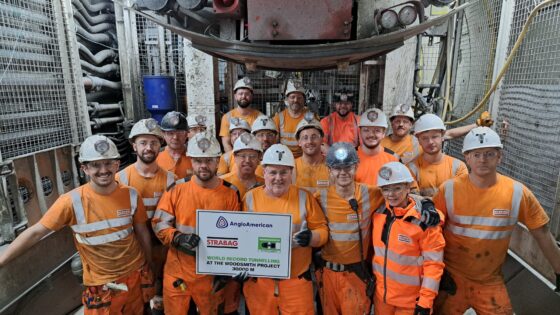
A tunnel boring machine on Anglo American’s Woodsmith polyhalite mine in North Yorkshire has passed the 30km mark, setting a new record for the longest single TBM-driven tunnel drive. The machine is driving the mineral transport tunnel towards Teesside, designed to carry ore on a 37km underground conveyor system from the mine head to the processing and export facilities. The milestone signals sustained TBM performance over an unusually long drive, with implications for segmental lining logistics, spoil handling and maintenance planning on extended underground haulage routes.
Government backing has been reaffirmed for the £2.5bn West Yorkshire Mass Transit network, but the delivery programme has been stretched so first services are now not expected until the late 2030s. The revised timetable is intended to reduce delivery and cost risk on the multi-line, multi-centre system linking Leeds, Bradford and surrounding towns, rather than compressing design, utilities and land acquisition phases. For civil and geotechnical teams, this signals a longer pipeline for corridor safeguarding, ground investigation and major structures planning, but slower conversion of outline concepts into detailed design work.
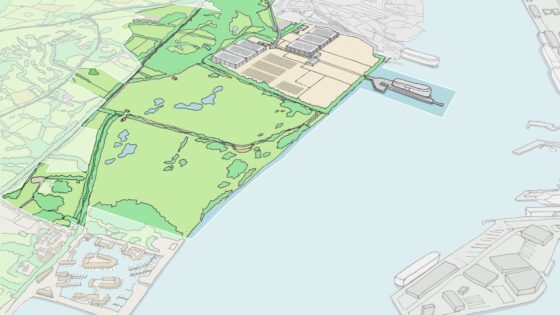
Associated British Ports has issued a planned procurement notice for an Early Contractor Involvement and Works Contractor package worth up to £500M for its Solent Gateway 2 expansion near the Port of Southampton. The contract will cover major marine and landside works to extend port capacity, with bidders expected to support design development, constructability reviews and phasing to maintain operations during construction. Geotechnical and marine civil specialists should anticipate complex quay wall, dredging and ground improvement requirements on a heavily constrained, tide‑influenced site.
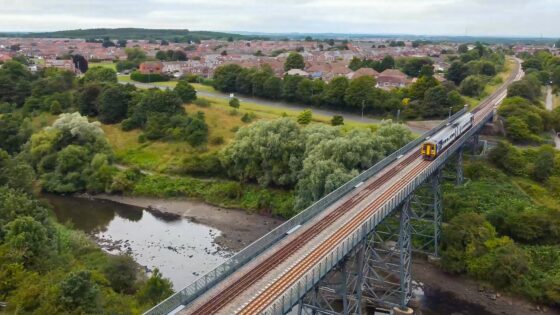
Northumberland County Council has submitted a funding bid to extend the reopened Northumberland Line after it carried nearly 1M passengers in its first year of operation, far above initial demand forecasts. The council is seeking backing to push services beyond the current corridor between Ashington and Newcastle, building on the recently delivered double-track sections, new stations and upgraded signalling. For civil and rail engineers, the move signals potential further works on earthworks, structures and level crossings along the former freight alignment if the extension is approved.
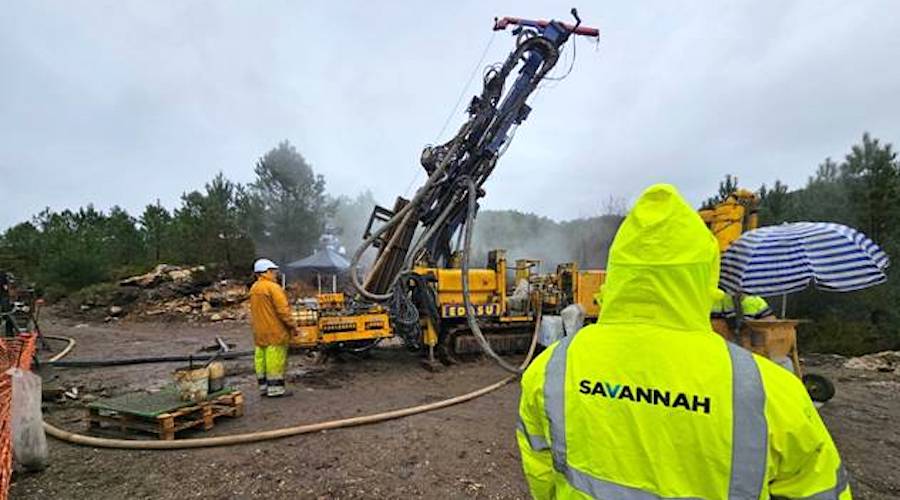
Savannah Resources is set to secure full ownership of the Aldeia C‑190 lithium lease at Barroso in northern Portugal, adding a JORC-compliant 3.5 Mt at 1.30% Li₂O on Block A, about 11% of the project’s global resource, for €3.25 million via staged payments to the Directorate General for Energy and Geology. Barroso, designated an EU strategic project, now totals over 39 Mt of high-grade spodumene and is planned as four open pits processing 1.5 Mt/year over 14 years, with break-even at roughly $600/t lithium. Production is targeted for 2028, but permitting and environmental licensing remain contentious in the Barroso World Heritage agricultural landscape.
Lundin Mining is selling its Eagle nickel-copper underground mine and Humboldt Mill in Michigan to Talon Metals in an all-share deal worth about $84 million, giving Lundin roughly 275 million Talon shares and a 20% non-diluted stake. Eagle, the only primary nickel mine currently operating in the US, has produced over 194,000 tonnes of nickel and 185,000 tonnes of copper, generating more than $3.2 billion in revenue to Q3 2025. Talon plans to use Humboldt Mill as a centralised processing hub while advancing the Tamarack project in Minnesota and a Beulah processing facility in North Dakota.
Erdene Resource Development has poured first gold at its Bayan Khundii open-pit mine in southwest Mongolia and is ramping to nameplate output of 85,000 oz. per year from a 650,000 tpa plant, underpinned by 3.8 Mt of proven and probable reserves grading 3.8 g/t gold and 1.7 g/t silver for a six-year mine life. The 50-50 joint venture with Mongolian Mining Corporation has invested about $115 million, installed a 240 km power line from Inner Mongolia and employs roughly 500 people, signalling district-scale intent. Nearby Zuun Mod, 35 km east, holds 271 Mt measured and indicated at 0.06% Mo and 0.06% Cu plus similar-scale inferred resources, positioning it as a potential major molybdenum-copper supplier to China.
Ioneer now expects to secure a new partner for its Rhyolite Ridge lithium-boron project in Nevada in H1 2026, after Sibanye-Stillwater withdrew from a proposed $490 million, 50% stake and Goldman Sachs-advised talks overran the original four‑month timetable amid weaker markets and geopolitical uncertainty. Backed by a $996 million US government loan and all key permits, Rhyolite Ridge has an updated DFS with a 95‑year mine life, NPV lifted to $1.5 billion, and reserves of 7.8 Mt boric acid plus 2 Mt lithium carbonate supporting an initial 77‑year plan. Average output for years 1–25 is now projected at 24,500 t/y lithium carbonate equivalent and 135,500 t/y boric acid, placing the operation in the global lowest cost quartile on an LCE basis and making co‑product economics central to any JV valuation.
US Export-Import Bank has lifted potential financing for Graphite One’s Alaska-to-Ohio graphite supply chain to about $2.1 billion, including $670 million for the Graphite Creek mine near Nome and $1.4 billion for a 100,000 t/y anode materials plant in Niles, Ohio, repayable over 15 years. EXIM signals willingness to fund roughly 70% of capex to first production, with Graphite One targeting initial 25,000 t/y anode output by mid-2027 and mine start-up in 2030 under a 20-year life. The project is post-feasibility, advancing under FAST-41 permitting, and already has $37.5 million US Department of Defense support.
The International Society for Soil Mechanics and Geotechnical Engineering, via the International Journal of Geoengineering Case Histories, has opened a call for papers for a Special Issue on “Geo-Hazards: Lessons from the Ground”. Submissions are sought on documented case histories of landslides, liquefaction, sinkholes, tailings failures and other geo-hazards, emphasising in-situ data, back-analyses and performance of mitigation works. The issue targets practice-oriented lessons for design, monitoring and risk management, with detailed ground investigation records and instrumentation results strongly encouraged.
North American Construction Group has agreed to acquire Western Australia–based Iron Mine Contracting for about C$115 million, positioning NACG as a Tier 1 mining services contractor in the Australian iron ore and bulk commodities market. IMC brings established contracts across mine development, drill-and-blast and load-and-haul services, complementing NACG’s large earthworks and overburden removal fleet. NACG is pairing the deal with infrastructure and fleet optimisation initiatives, signalling further redeployment of ultra-class trucks and support equipment into higher-margin Australian projects.
Rajant Corporation has launched the SLP-1025 Slipstream gateway and Hawk FE1-2450G triple-radio BreadCrumb®, integrating 5G directly into its industrial wireless mesh architecture. The Hawk FE1-2450G combines three radios with embedded 5G to support low-latency links for autonomous haul trucks, high-definition video and real-time fleet telemetry across large open pits and underground drifts. The SLP-1025 acts as a high-throughput edge gateway, allowing mines to design distributed computing networks with 5G backhaul from initial deployment rather than retrofitting later.
Eldorado Gold is expanding electrified underground load-and-haul at the Lamaque Complex in Val-d’Or, Québec, with an order for 10 Sandvik battery-electric vehicles and 10 charging systems, including five TH550B 50‑t trucks and five Toro LH518iB loaders. The first two TH550B trucks were delivered in October, with the remaining three trucks and five loaders to follow, supporting a fully electric primary haulage fleet in key production areas. For mine planners and ventilation engineers, the BEVs are expected to cut diesel emissions and heat load, enabling tighter development in deeper zones.
Develop Global has secured a A$200 million, five-year underground development contract to establish access tunnels for OceanaGold’s Waihi North Project on New Zealand’s North Island, with mobilisation scheduled for the first half of 2026. The scope centres on creating new underground access to support future gold mining adjacent to the existing Waihi operations, implying significant lateral development and ground support in complex epithermal geology. The long lead time allows detailed mine design, equipment selection and geotechnical modelling before full-scale development starts.
Decmil has secured an A$81 million contract from Rio Tinto to deliver a Mobile Equipment Maintenance (MEM) Workshop Expansion at the Brockman 4 iron ore mine in Western Australia’s Pilbara. The scope includes a new MEM workshop, office and associated infrastructure to service large haul trucks and ancillary fleet, supporting higher availability of mobile plant in a remote, high-dust environment. Civil and structural works will need to accommodate heavy vehicle loads, large-span workshop bays and integration with existing mine services and traffic flows.
Epiroc’s Pit Viper blasthole drill, introduced 25 years ago, remains a flagship high‑capacity rig in large open pits, combining high power with flexible mast and hole configurations for production drilling. The platform has operated autonomously for the past decade, with fleets running driverless drill patterns and remote supervision from control centres rather than on‑bench cabins. For mine planners and drill‑and‑blast engineers, the Pit Viper’s long autonomous track record is a key reference point for integrating automated drilling into existing benches, patterns and safety envelopes.
BEUMER Group has inaugurated a new INR 2 billion manufacturing facility at Reliance’s Model Economic Township (MET City) in Jhajjar, Haryana, marking a major expansion of its Indian material handling footprint. The high-tech plant will localise production of bulk handling systems and conveyor technology for mining and cement, reducing import dependence and lead times for large overland conveyors and loading systems. For project engineers, closer regional fabrication should simplify logistics, spares support and lifecycle service for high-capacity conveying installations across India and neighbouring markets.