Geomechanics, Streamlined.
© 2026 Geomechanics.io. All rights reserved.
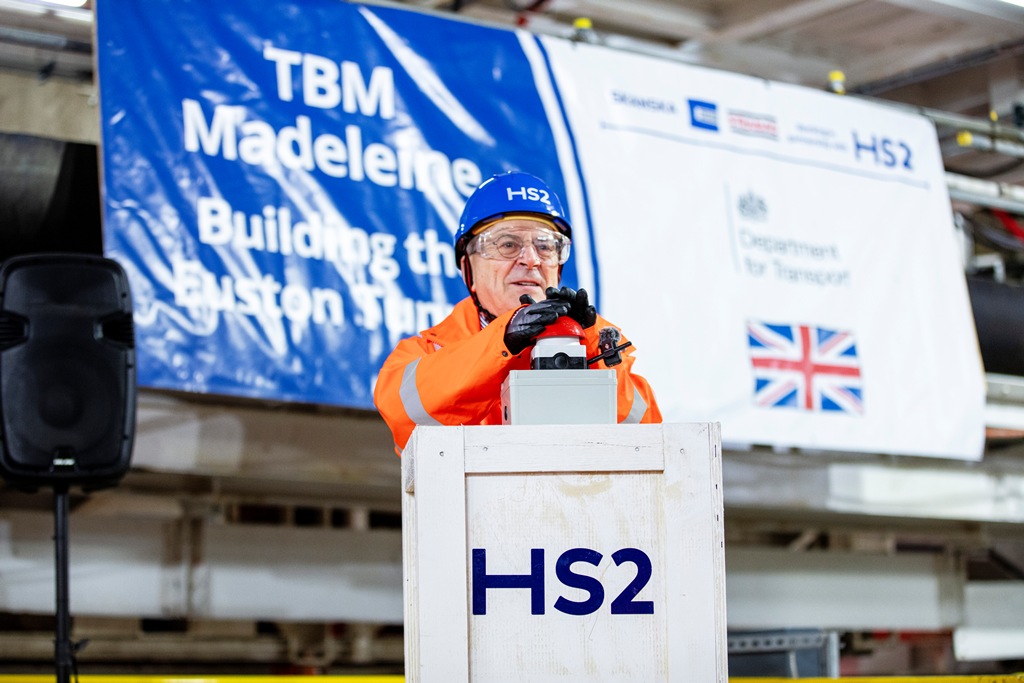
The first of two Herrenknecht tunnel boring machines for HS2’s Euston Tunnel, 1,624‑tonne “Madeleine”, has begun driving the 4.5‑mile twin‑bore section between Old Oak Common and Euston, the fifth and final deep tunnel on the 140‑mile London–Birmingham route. Contractor Skanska Costain Strabag JV will use the 853‑metre Atlas Road logistics tunnel to supply 48,294 precast concrete ring segments and handle more than 1.5 million tonnes of spoil via conveyor to the Willesden Euro terminal depot. Spoil will then be moved by rail for reuse on schemes in Kent, Cambridgeshire and Warwickshire, reducing HGV movements in west London.
UK construction materials suppliers report demand, not supply, as the critical constraint, with UK brick deliveries to November 2025 down 6.1% year-on-year while brick stocks have climbed 14.5% to 542.1 million units. The CLC Material Supply Chain Group, co-chaired by Builders Merchants Federation chief executive John Newcomb and Construction Products Association chief executive Peter Caplehorn, cites concrete volumes falling about 28% nationally over four years and 39% in London over two years, alongside a 1.3% drop in Q4 2025 construction output despite 0.3% UK GDP growth in November. Producers are mothballing sites, delaying capex and cutting jobs, with the group warning that restarting capacity could take up to six months and urging targeted government stimulus focused on housing and residential RMI to avoid long-term structural damage.
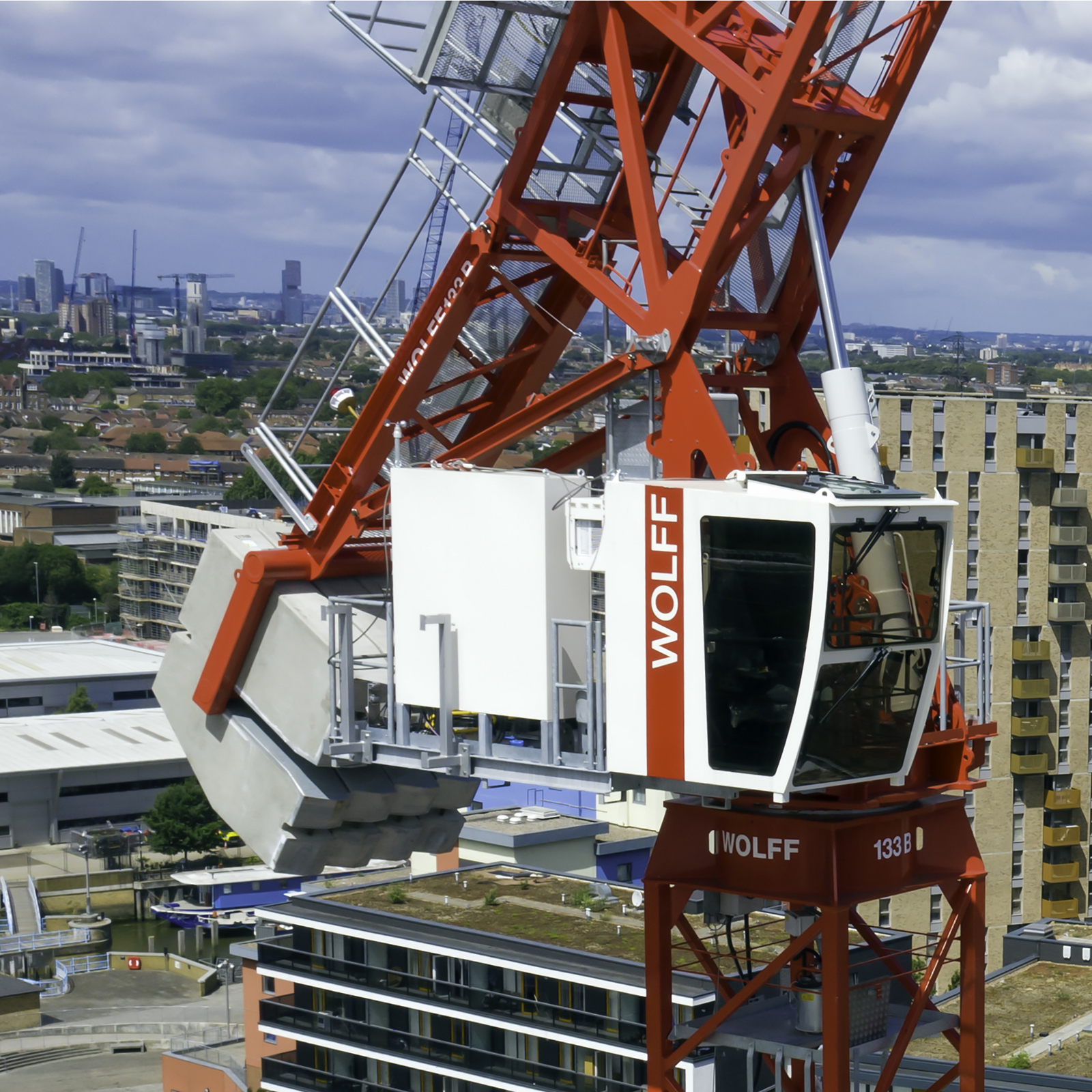
Around 100 Wolffkran UK tower crane operators have begun strike action as the Construction Plant-hire Association blames Labour government tax and regulatory policy for creating a “perfect storm” of weak demand and rising costs. Glenigan data show project starts down about 20% in 2025, civil engineering activity down 56% year-on-year, and main contract awards down 11%, with Gateway 2 delays further stalling high-rise residential work. Wolffkran reports crane utilisation down 26% since 2016, cranes on hire down ~40%, and rental rates cut 20–25%, leaving minimal margin for wage increases.
Tapojärvi has completed a relocatable small-house accommodation complex on leased land immediately adjacent to Agnico Eagle Finland’s Kittilä gold mine, delivered in December as a new model for mine-site housing. The complex consists of six detached houses, each with four bedrooms, designed to be dismantled and moved as project locations change, rather than relying on permanent barracks-style units. Proximity to the pit and plant reduces daily travel time and bussing, with the modular approach giving operators more flexibility in labour deployment and contract durations.
Ivanhoe Electric has signed a definitive collaboration and exploration agreement with Sociedad Química y Minera de Chile (SQM) to search for copper across SQM’s extensive northern Chile concessions, where SQM already produces lithium, potassium nitrate and iodine. The programme will deploy Ivanhoe Electric’s proprietary Typhoon geophysical surveying system, designed for deep, high-power induced polarisation and electromagnetic imaging of concealed sulphide mineralisation. For geophysicists and exploration teams, this signals a large-scale application of Typhoon over brownfield brine and nitrate districts that have seen limited deep copper-focused geophysics.
National Highways has started a £1.8M safety upgrade on a 42km single-carriageway section of the A35 in west Dorset, targeting a corridor with a history of serious collisions and speed-related incidents. Measures will focus on speed reduction and driver guidance, typically involving average speed cameras, improved signing and lining, and localised junction treatments on rural curves and undulating gradients. For designers and contractors, the works will require careful traffic management on a strategic trunk route with constrained verges and limited diversion options.
Skanska UK president and CEO Katy Dowding backs the new government’s infrastructure agenda as “bold” and rates it “10 out of 10” on intent, while warning that delivery certainty will be the real test. She points to long-term, multi-year public sector pipelines and consistent procurement models as critical to stabilising major programmes in transport, healthcare and education. For contractors and consultants, she signals that predictable funding profiles and earlier supply chain engagement will be central to controlling risk, costs and schedule performance.
The first of two tunnel boring machines driving HS2 into central London has begun its 7.2km excavation from Old Oak Common on 27 January, marking the start of the twin-bore approach tunnels towards Euston. The TBM will construct the running tunnels beneath densely built West London, requiring tight control of settlement and ground movements in complex urban geology. For geotechnical and structural teams, key tasks now centre on continuous monitoring of surface assets, segmental lining performance and groundwater behaviour along the alignment.
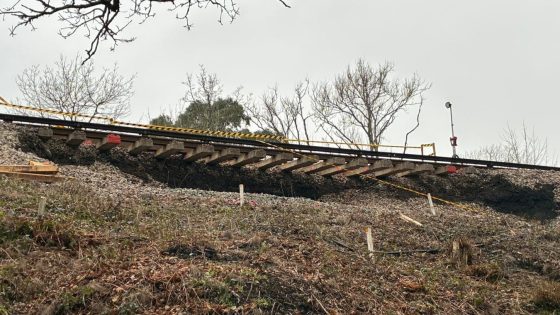
A landslip south of Ockley station in Surrey has stripped away the embankment supporting one of the two Horsham–Dorking tracks, leaving the rail and sleepers cantilevered in mid‑air and forcing full closure of the route until at least mid‑February. Network Rail engineers now face emergency stabilisation of the failed cutting or embankment, reconstruction of the formation, and re‑ballasting before traffic can resume. The incident will focus attention on drainage, slope monitoring and resilience of Victorian earthworks under increasingly intense winter rainfall.
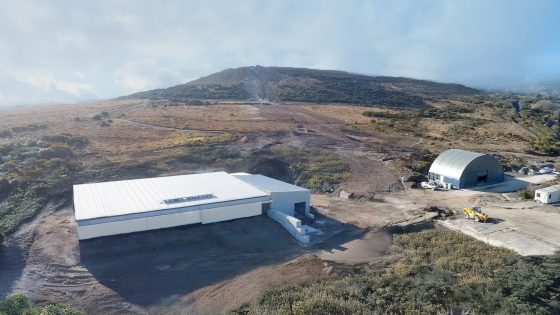
A 500kW high-density hydro demonstrator developed by RheEnergise on the outskirts of Plymouth is now operating at full capacity, using an energy-dense fluid rather than water to increase storage in relatively low-head sites. The closed-loop system is designed to pump the fluid uphill during off-peak periods and generate on demand, targeting smaller elevation differences than conventional pumped storage. For civil and geotechnical teams, the concept points to compact reservoirs, reduced dam heights and new opportunities on brownfield or constrained topography.
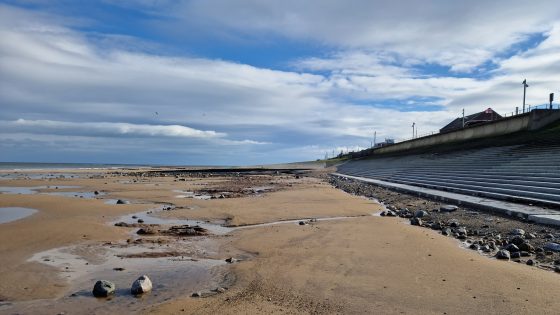
Storm Goretti’s impact on North East Yorkshire and Eastern Scotland is reviving concern over how Storm Babet in 2023 stripped and reprofiled beaches, exposing the limits of fixed “hold-the-line” coastal defences. Engineers are being urged to adopt adaptive pathways planning, sequencing measures such as managed realignment, dune and beach nourishment, and periodic crest raising rather than relying solely on hard sea walls and rock armour. The approach hinges on trigger points tied to beach levels, overtopping rates and asset condition, enabling long-term, staged investment under rising sea levels and more frequent extreme storms.
Brightstar Resources plans to turn its Sandstone project in Western Australia into a long-life, district-scale gold hub by consolidating multiple deposits within haulage distance of a central processing plant. The company is targeting higher-grade open pit and potential underground feed to restart and expand production, leveraging existing infrastructure from historic operations at Sandstone. For geotechnical and mine planners, the strategy points to staged cutback designs, regional pit sequencing, and possible plant debottlenecking rather than a single-mine development.
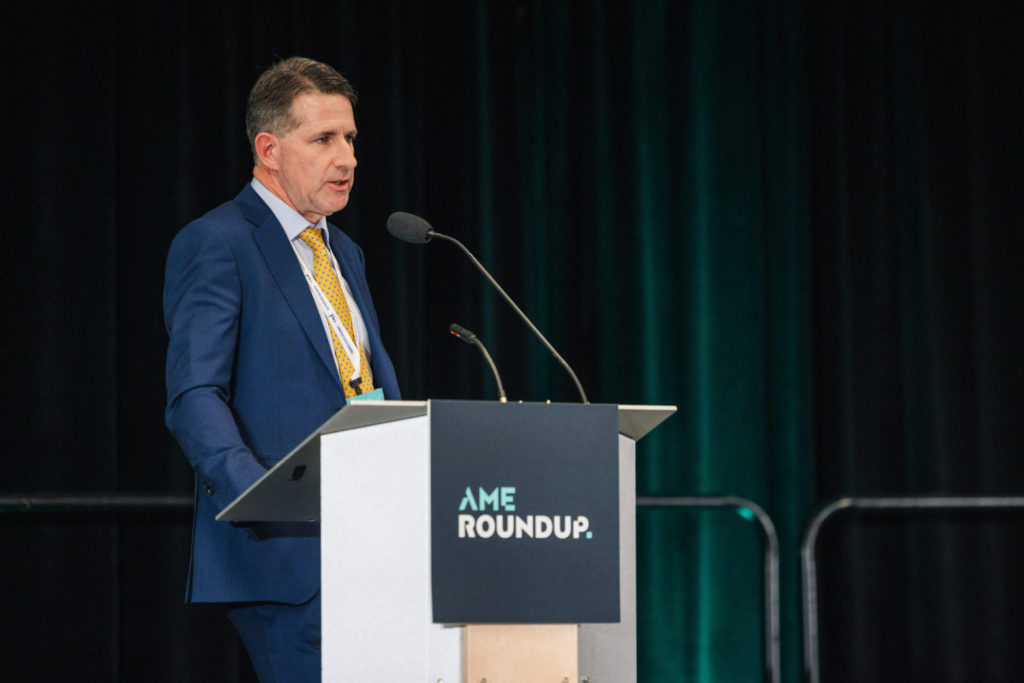
Anglo American’s proposed US$53 billion merger with Teck Resources, now cleared by Ottawa, would create “Anglo‑Teck”, a Vancouver‑headquartered copper major planning US$300 million over five years for exploration and technology in Canada plus a US$100 million global critical minerals research institute. CTO Tom McCulley told AME Roundup that closing the gap between roughly 230 kg and 70 kg of installed copper per capita in developed versus global averages will require installed stocks to rise from about 500 million to over 2 billion tonnes. He detailed deployment of the Spectrum airborne EM–magnetic–radiometric system, low‑temperature SQUID magnetometers and AI‑assisted core logging, alongside community‑designed water infrastructure such as the 60 million m³ Vizcachas dam at Quellaveco.
RheEnergise’s first commercial High-Density Hydro® long-duration energy storage system is now delivering full, predicted output on a continuous basis to Sibelco’s Cornwood kaolin mine in Devon, using an energy-dense fluid rather than water to increase storage capacity on modest head heights. The closed-loop system is integrated directly with the mine’s power demand profile, supporting around-the-clock processing loads and reducing reliance on grid imports at a constrained rural connection. For other UK mine and quarry sites with limited elevation and weak grid capacity, the project provides an early operational reference for sub-surface or brownfield hydro storage deployment.
China’s mining truck battery conversion boom is extending beyond Electric Power Conversions Australia’s E-777 (a converted Caterpillar 777D) as multiple Chinese firms push retrofit packages for mid‑range haul trucks in domestic and export markets. Conversions typically replace diesel powertrains with large lithium‑ion battery packs and high‑torque electric drive systems, targeting 50–100 t class trucks widely used in open‑pit operations. For mine planners and maintenance teams, this signals growing aftermarket options for decarbonising existing fleets without full replacement of chassis or mechanical systems.
Bulk Expo 2026 in Melbourne will convene Australia’s bulk solids handling sector across grain, ore, cement, fertiliser and powder supply chains to tackle capacity, reliability and cost pressures in a “steady demand, tight margins” environment. A new Bulk Handling Technical Conference will run alongside the expo, focusing on conveyor design, transfer chutes, dust control, stockpile management and flow assurance for high-throughput terminals and processing plants. Organisers position the event as a forum for resolving bottlenecks in large-volume materials handling systems rather than showcasing equipment alone.
Nominations have opened for the 2026 Endeavour Awards, billed as Australia’s premier manufacturing awards and run by Manufacturers’ Monthly in collaboration with Australian Manufacturing Week. The program recognises both individual engineers and organisations for innovations in areas such as advanced manufacturing, automation and materials processing that are reshaping domestic production capability. Winners will be announced at an annual gala dinner in May 2026, giving suppliers, fabricators and plant operators a national platform to showcase new processes and technologies.
Pilbara Ports has awarded the contract for Stage 2 of the Dampier Link Bridge in Western Australia, a key connection between the new Dampier Bulk Handling Facility and the existing cargo wharf to support direct shipping services in the Pilbara. The bridge will create a continuous landside link for bulk and general cargo, enabling ship loading from the new facility while maintaining access to the current wharf. Construction staging is designed to keep existing trade operating throughout works, which will be critical for minimising disruption to port throughput.
New Murchison Gold has commenced production at its Crown Prince gold mine with an “extremely smooth ramp up”, reporting initial gold output above internal forecasts and signalling stronger-than-modelled ore grades from early stopes. The Western Australian operation, part of the broader Murchison goldfield, is moving from development into steady-state production with processing plant performance meeting design throughput and recovery assumptions. For mine planners and geotechs, the early overcall on grade and stable plant performance will influence reserve models, stope sequencing, and near-term cashflow for further drilling and underground development.
Hancock Prospecting’s Brilliant at the Basics (B@TB) occupational health and safety program is driving sustained improvements in incident rates by hard‑wiring personal accountability and “values‑driven” behaviours into daily iron ore operations. Led by Hancock Iron Ore head of health and safety Paul Slocombe, the framework centres on simple, repeatable controls such as pre‑start risk checks, critical control verification and peer‑to‑peer interventions rather than complex new systems. For geotechnical and processing teams, the approach means frontline supervisors own controls around pit wall inspections, isolation and lock‑out on fixed plant, and contractor management on high‑risk tasks.
Alligator Energy has completed a key construction plan for the Samphire uranium project near Whyalla in South Australia, advancing its in-situ recovery (ISR) development pathway. The company is progressing regulatory approvals and detailed design for wellfields and processing infrastructure at the Blackbush deposit, targeting ISR extraction from shallow sandstone-hosted mineralisation. Work across its broader South Australian portfolio, including the Big Lake and Nabarlek South exploration areas, is being aligned to support a longer-term uranium production strategy.
Queensland’s resources sector generated over $115 billion for the state economy in the last financial year, accounting for roughly one quarter of gross state product and supporting extensive coal, gas and critical minerals operations. The industry’s footprint spans Bowen Basin metallurgical coal, Surat Basin gas and emerging North West Minerals Province copper and rare earths, with associated rail and port infrastructure such as the Goonyella and Blackwater systems running near capacity. For engineers, the figures signal continued demand for mine expansions, tailings and water management upgrades, and heavy-haul transport projects across regional Queensland.
Heritage survey clearance of a previously registered site at Victory Metals’ North Stanmore rare earths project in Western Australia opens additional ground for drilling and resource definition. The project, centred on clay-hosted rare earth mineralisation near Cue in the Murchison region, can now extend exploration beyond the original cleared envelope. For geotechnical and mine planners, the expanded footprint enables more flexible pit or in-situ leach layouts and better assessment of overburden characteristics and haul road alignments.
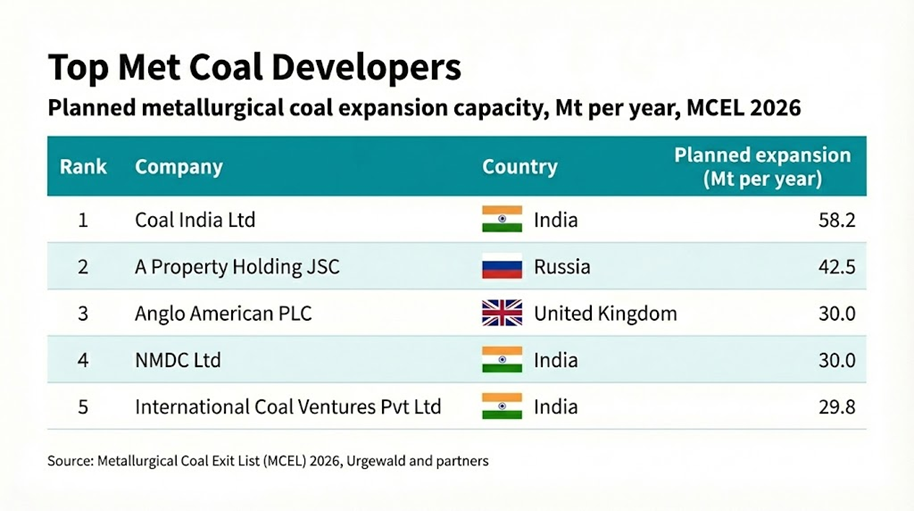
A new assessment by German NGO Urgewald finds 273 metallurgical coal projects planned or under construction across more than 20 countries, adding up to about 580 Mtpa of potential new capacity this decade, despite IEA forecasts of demand slipping from 1,114 Mt to 1,061 Mt by 2030. Australia leads the pipeline, with Queensland’s Moranbah South in the Bowen Basin flagged as the largest proposed pure met coal mine at 18 Mtpa, even as BHP drops the Saraji East expansion and Whitehaven shelves Blackwater North. Urgewald links the buildout to environmental impacts such as selenium contamination in Elk Valley, British Columbia, and notes over 150 financial institutions now use its Metallurgical Coal Exit List, with investors like Ilmarinen moving to divest from met coal developers.