Geomechanics.io

  • Free Tools
Sign UpLog In

Geomechanics.io

Geomechanics, Streamlined.

© 2026 Geomechanics.io. All rights reserved.

Geomechanics.io

CMRR-ioGEODB-ioHYDROGEO-ioQCDB-ioFree Tools & CalculatorsBlogLatest Industry News

Industries

MiningConstructionTunnelling

Company

Terms of UsePrivacy PolicyLinkedIn
    AllGeotechnicalMiningInfrastructureMaterialsHazardsEnvironmentalSoftwarePolicy
    Projects
    Contract Award
    Safety

    Fehmarnbelt tunnel submersion delays: risk and schedule notes for project teams

    January 29, 2026|

    Reviewed by Tom Sullivan

    Fehmarnbelt tunnel submersion delays: risk and schedule notes for project teams

    First reported on New Civil Engineer

    30 Second Briefing

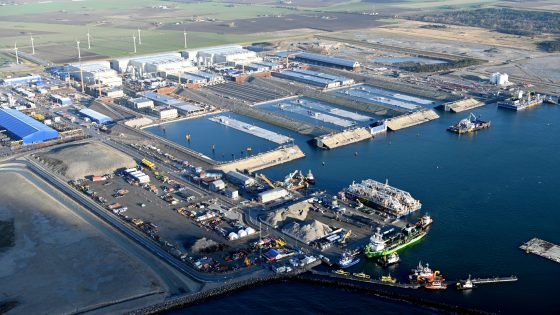
    Tensions are escalating between Femern A/S and the main contractors on the Fehmarnbelt Fixed Link immersed tunnel between Denmark and Germany as tunnel element submersion has still not begun despite schedule and budget overruns. Senior-level correspondence reportedly details disputes over responsibility for delays to placing the 18km-long immersed elements and associated marine works in the Baltic Sea. Prolonged stand-off risks further cost escalation, extended use of temporary works and marine plant, and knock-on impacts on rail and road connection programmes on both sides of the border.

    Technical Brief

    • Immersed tunnel comprises prefabricated concrete elements to be submerged and joined on the Baltic seabed.
    • Submersion phase depends on specialist immersion pontoons, positioning systems and temporary bulkheads for dewatering.
    • Marine works interface tightly with dredged trench tolerances, scour protection and seabed preparation along the alignment.
    • Safety-critical operations include controlled ballasting, real-time monitoring of element settlement and watertight joint integrity.
    • Prolonged pre-submersion period extends exposure of temporary works and marine plant to Baltic weather and wave loading.
    • Similar immersed-tube projects show that extended marine spreads and standby time can dominate construction risk allowances.

    Our Take

    Among the 586 Infrastructure stories in our coverage, very few involve cross-border megaprojects like the Fehmarnbelt Fixed Link between Denmark and Germany, which tend to show a higher incidence of schedule tension because of dual regulatory and political interfaces.

    Within the 1609 tag-matched pieces on Projects and Safety, large marine works such as immersed tunnels consistently show that safety-related disputes often cluster around the transition from fabrication to installation, suggesting this current stand-off may be occurring at a particularly risk-sensitive phase.

    Delays on the Fehmarnbelt Fixed Link place it alongside other major European transport links in our database where protracted pre-installation disputes have later translated into claims and renegotiated contract terms, which contractors and clients on this scheme will likely be modelling against.

    Geotechnical Software for Modern Teams

    Centralise site data, logs, and lab results with GEODB-io, CMRR-io, and HYDROGEO-io.

    No credit card required.

    • Save and export unlimited calculations
    • Advanced data visualisation
    • Generate professional PDF reports
    • Cloud storage for all your projects

    Prepared by collating external sources, AI-assisted tools, and Geomechanics.io’s proprietary mining database, then reviewed for technical accuracy & edited by our geotechnical team.

    Related Articles

    Implenia/Marti JV MehrSpur Zurich–Winterthur: design and risk notes for engineers
    Infrastructure
    in 6 months

    Implenia/Marti JV MehrSpur Zurich–Winterthur: design and risk notes for engineers

    Swiss Federal Railways has awarded an Implenia/Marti 50:50 joint venture five of six MehrSpur Zurich–Winterthur lots worth just under CHF 1.7 billion, including the 8.3 km Brüttener tunnel (Lot 240) with twin 10 m diameter single-track tubes and a 1 km spur to Zurich Airport. TBM excavation will start in August 2029, with a roughly ten-year construction phase using BIM for planning and execution and extensive special foundations, earthworks and embankments. Additional works cover full redevelopment of Dietlikon station, about 6 km of new track across Dietlikon and Wallisellen sections, multiple underpasses, bridges and the Neumühle railway bridge and Storchen underpass near Winterthur.

    Xihe on Tung Chung Line down-track: TBM turnback method and risks for tunnel engineers
    Infrastructure
    in 4 months

    Xihe on Tung Chung Line down-track: TBM turnback method and risks for tunnel engineers

    TBM Xihe, a 7.3m-diameter, 100m-long, 1,000-tonne Herrenknecht slurry machine, has completed the up-track drive to the future Tung Chung West Station and has begun boring the down-track tunnel towards Tung Chung Station for MTR’s Tung Chung Line Extension in Hong Kong. The Bouygues Travaux Publics–Dragages Hong Kong JV turned the TBM underground within the launch shaft using a push-pull method and self-propelled modular transporter, avoiding full disassembly and surface transport. About 1.3km of new twin-bore tunnels are being driven close to existing rail and urban structures, with commissioning targeted for 2029.

    Sydney Metro Stations Package West: design and delivery notes for engineers
    Infrastructure
    in 3 months

    Sydney Metro Stations Package West: design and delivery notes for engineers

    Gamuda Engineering has secured the Sydney Metro Stations Package West as principal contractor, covering design and construction of five new underground stations at Westmead, North Strathfield, Burwood North, Five Dock and The Bays on the 24km Sydney Metro West line between Greater Parramatta and the CBD. The scope includes deep station boxes, entrances and access points, full station fit-out and integration with surrounding precincts, with Laing O’Rourke and DT Infrastructure joining as MetroVista delivery partners. Site works are scheduled to start on Monday, 5 January 2026.

    Related Industries & Products

    Construction

    Quality control software for construction companies with material testing, batch tracking, and compliance management.

    Tunnelling

    Specialised solutions for tunnelling projects including grout mix design, hydrogeological analysis, and quality control.

    QCDB-io

    Comprehensive quality control database for manufacturing, tunnelling, and civil construction with UCS testing, PSD analysis, and grout mix design management.