Geomechanics, Streamlined.
© 2026 Geomechanics.io. All rights reserved.
Metso has acquired Newcastle-based MRA Automation (Multiskilled Resources Australia Pty Ltd), a specialist in engineering, automation and software for bulk material handling systems at ports and terminals worldwide. The deal adds MRA’s digitalisation and control expertise for shiploaders, stacker–reclaimers and conveyor networks to Metso’s existing crushing, screening and conveying portfolio. For mine and terminal operators, this signals tighter integration between mechanical handling equipment and advanced automation platforms, with a single OEM able to deliver end-to-end design, control and optimisation support.
Saudi Arabia’s rapidly expanding surface mining sector is increasingly relying on three major contractors – Jac Rijk Al-Rushaid, EPSA and Saudi Comedat – to run large-scale load-and-haul, drilling and blasting fleets for Ma’aden and other operators. These groups are supplying and operating high-capacity hydraulic excavators, ultra-class haul trucks and large rotary blast-hole rigs across multiple gold, phosphate and bauxite pits, often under long-term, performance-based contracts. For mine owners, the model shifts capital and fleet management risk to contractors while tightening production, availability and cost-per-tonne guarantees.
Caterpillar’s redesigned Cat 6015 hydraulic mining shovel introduces a more versatile front-end and structural package aimed at higher annual output and lower cost per tonne across multiple digging and loading duties. The machine incorporates durability and serviceability upgrades to extend component life and reduce planned downtime, with easier access to major systems and faster maintenance cycles. For mine operators, the 6015’s flexible configuration is positioned to slot into existing truck–shovel fleets where maximising uptime on 100–150 t class excavators is critical to meeting production schedules.
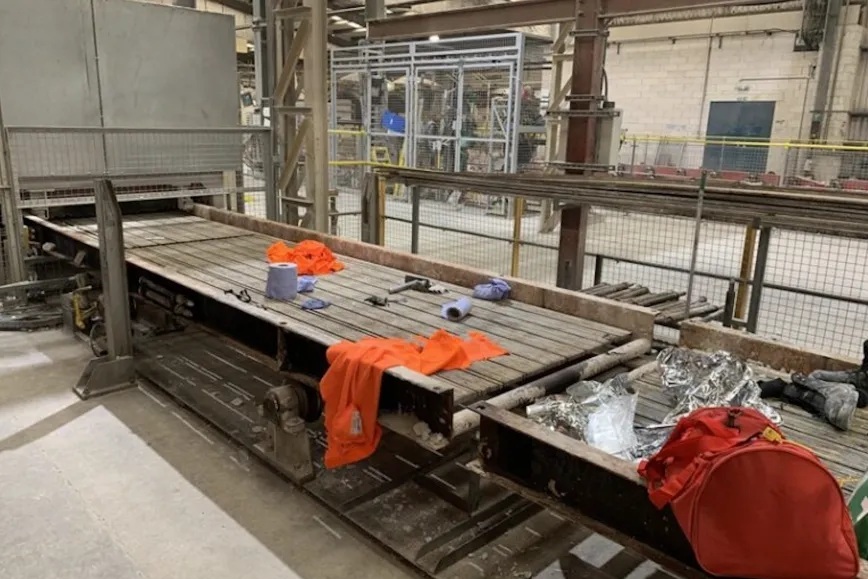
Tarmac Building Products has been fined £633,300, plus £5,583 costs and a £2,000 victim surcharge, after an HSE investigation into a 22 July 2022 incident at its Linford, Essex block production line where an employee’s legs were crushed between moving steel frames on a trackway. The interlocked access gate to the fenced frame-cleaning area did not isolate power to preceding track sections, allowing a loaded frame to enter the “safe” zone while manual cleaning was underway. HSE found prior near misses on the same section and a historic risk assessment identifying extra guarding and control measures, which were only implemented after the life-changing injury.
A self-employed contractor has been jailed for 12 months after 19-year-old labourer Thomas Neate died from head injuries sustained when he fell through an opening while stripping tiles from a domestic garage roof in Staines-upon-Thames on 16 August 2023. HSE investigators found the demolition was carried out directly from the roof with no scaffolding, decking or fall-prevention system, alongside unsafe mini-digger use and unrestricted public access to the site. Asbestos cement sheets were also broken up and removed by hand with no prior survey, exposing three other workers and the household to fibre risk.
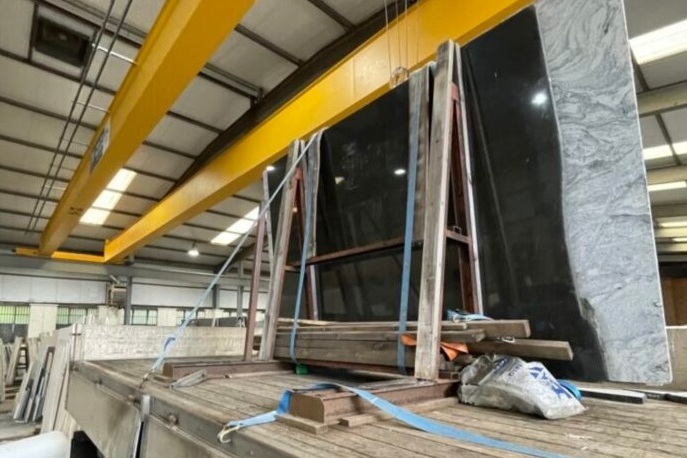
Blyth Marble Limited has been fined £50,000 plus a £3,750 victim surcharge after 61-year-old worker Steven White was fatally struck by two granite slabs with a combined weight of more than 900 kg during offloading from a lorry loader at its Larkhall, Lanarkshire premises on 4th September 2024. HSE investigators found vertical safety posts, intended as a physical barrier to prevent slab toppling, had been removed despite custom and practice to leave them in place and no explicit requirement in the safe working manual. The Safe System of Work also failed to distinguish between single and multiple slab lifting and was breached when White worked alone despite a two-person offloading requirement.
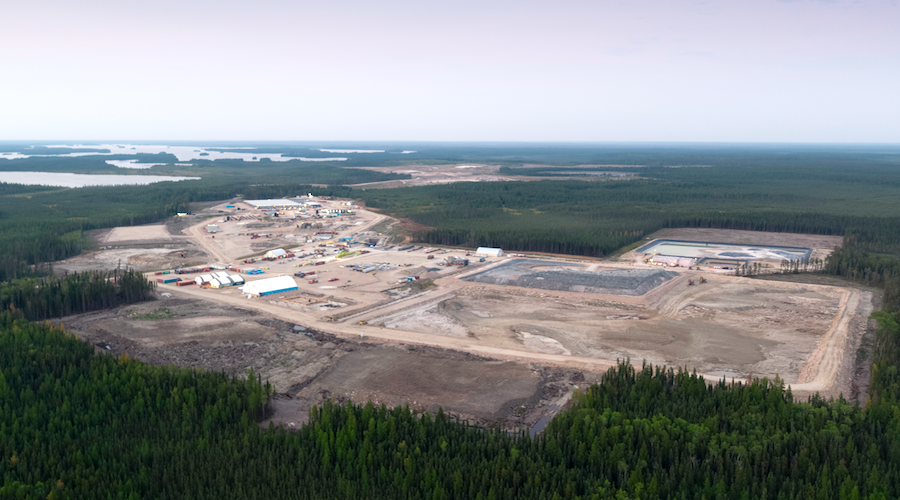
Wyloo is advancing its Eagle’s Nest nickel–copper–PGE deposit in Ontario’s Ring of Fire from remote prospect to near-term production hub, positioning it as a high-grade underground operation within a largely greenfield mining camp. The project sits in roadless muskeg terrain north of the Albany River, requiring all-season access corridors and air-supported logistics while Ontario and First Nations negotiate regional infrastructure and environmental approvals. For Australian operators, the move deepens Australia–Canada critical minerals ties and offers a test case for permitting and building deep, high-value sulphide mines in sensitive sub-Arctic wetlands.
Tega is promoting its DynaMax liner range as a full-coverage solution for mill grinding circuits, with the DynaPrime variant engineered specifically for large 28‑ft and above SAG and ball mills. The system focuses on optimising liner profile and wear life to extend mill uptime, stabilise power draw and improve grinding efficiency, particularly in high-throughput operations. For plant and maintenance engineers, the key implication is potential reductions in unplanned relines and more predictable mill availability across both primary SAG and secondary ball mill duties.
Global Tailings Management Institute has appointed a new chief executive officer and created a dedicated technical body to accelerate implementation of the Global Industry Standard on Tailings Management across major mining jurisdictions. The technical group is expected to focus on dam breach analysis, independent tailings review boards and minimum design criteria for upstream, downstream and centreline facilities, directly affecting geotechnical design and monitoring practice. For operators, the move signals tighter scrutiny of closure plans, beach slope performance and water balance management at large tailings storage facilities.
Merger talks between Rio Tinto and Glencore face a 5 February deadline under UK takeover rules, with any extension now described as unlikely. The proposed all-share deal would combine Rio’s iron ore and aluminium portfolio with Glencore’s large copper, coal and trading operations, creating a diversified mining group with a market value well above US$100 billion. For project developers and contractors, a tie-up could reshape capital allocation across Pilbara iron ore, Queensland and NSW coal, and major copper assets in South America and Africa.
Deep Yellow has confirmed the resignation of executive director Gillian Swaby and the appointment of Greg Field as managing director, signalling a leadership reset as the company advances its uranium portfolio. Swaby, a long-serving board member with a corporate governance and project finance background, is credited with shaping Deep Yellow’s growth strategy and capital structure. Field steps into the MD role as the company progresses key Namibian and Australian uranium assets through study and approvals phases, where permitting, ESG scrutiny and long-term price signals remain critical.
JPMorgan has set a year-end gold price target of $6,300/oz despite last week’s 10% single-day plunge from a near-record $5,600/oz to about $4,600/oz, arguing that an “entrenched” preference for real over paper assets will keep bullion supported. Strategists led by Nikolaos Panigirtzoglou see potential for $8,000/oz by 2030 if private investors increase allocations and central bank purchases return to around 800 tonnes in 2026. Silver is viewed as riskier, with prices having whipsawed from $120/oz to $70/oz in two days and JPMorgan now assuming a higher floor of $75–$80/oz.
Eldorado Gold will acquire Foran Mining in a C$3.8 billion ($2.8 billion) share-and-cash deal, consolidating the Skouries gold-copper project in Greece with Foran’s McIlvenna Bay copper-zinc project in Saskatchewan, both targeting commercial production in mid‑2026. The combined portfolio is projected to deliver about 900,000 gold-equivalent ounces in 2027, with roughly 77% exposure to gold and 15% to copper, and generate an estimated $2.1 billion in core profit and $1.5 billion in free cash flow. Foran shareholders will receive 0.1128 Eldorado shares plus C$0.01 per share, owning about 24% of the enlarged Vancouver-headquartered company.
Trump’s “Project Vault” will create a $12 billion US strategic stockpile of critical minerals such as gallium, cobalt and rare earths, funded by a $10 billion US Export-Import Bank loan plus $1.67 billion in private capital, to shield civilian manufacturers from Chinese supply and price shocks. More than a dozen major users including GM, Stellantis, Boeing, Corning, GE Vernova and Google have signed on, with traders Hartree, Traxys and Mercuria mandated to procure material. Fixed-price, buy-and-rebuy contracts aim to stabilise prices and give long-term offtake certainty to domestic mining and processing projects.
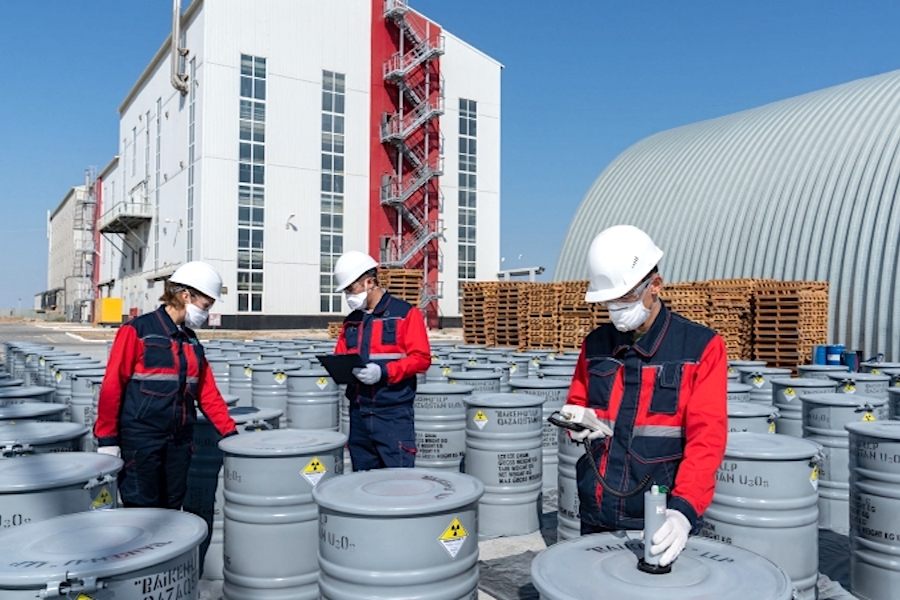
Kazatomprom plans to lift 2026 uranium output about 9% to 71.5–75.4 million lb. U3O8, driven mainly by ramp-up at the Budenovskoye in-situ recovery joint venture in southern Kazakhstan with its Russian partner, a range still about 5% below its state production cap but 6% above BMO’s forecast. The state-owned miner guides 2026 sales at 50.7–53.3 million lb., while spot uranium has surged to $99.25 per lb. from $63.50 at end-December, tightening margins for utilities and supporting new ISR wellfield development and brownfield expansion decisions.
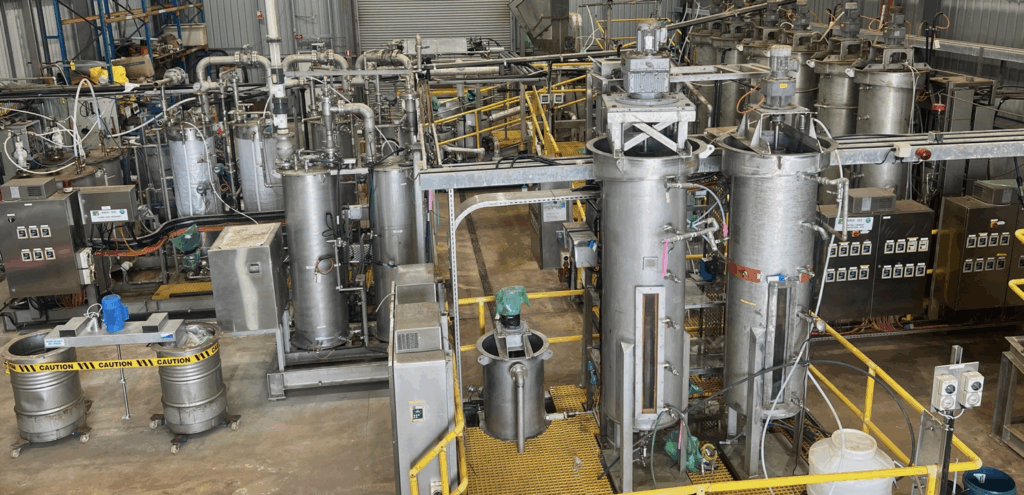
Cleantech firm EnviroGold Global (CSE: NVRO) will begin trading on the TSX Venture Exchange on 4 February, maintaining its NVRO ticker, with a current C$51.5 million market capitalisation and shares at C$0.11. The company is advancing its NVRO hybrid acid leaching process for mine waste and tailings, claiming >95% gold and silver recovery, strong copper recovery, and operation at low temperature and atmospheric pressure to break sulphide bonds. EnviroGold reports up to 70% reduction in plant footprint and capex and as much as 96% lower carbon emissions versus conventional processing.
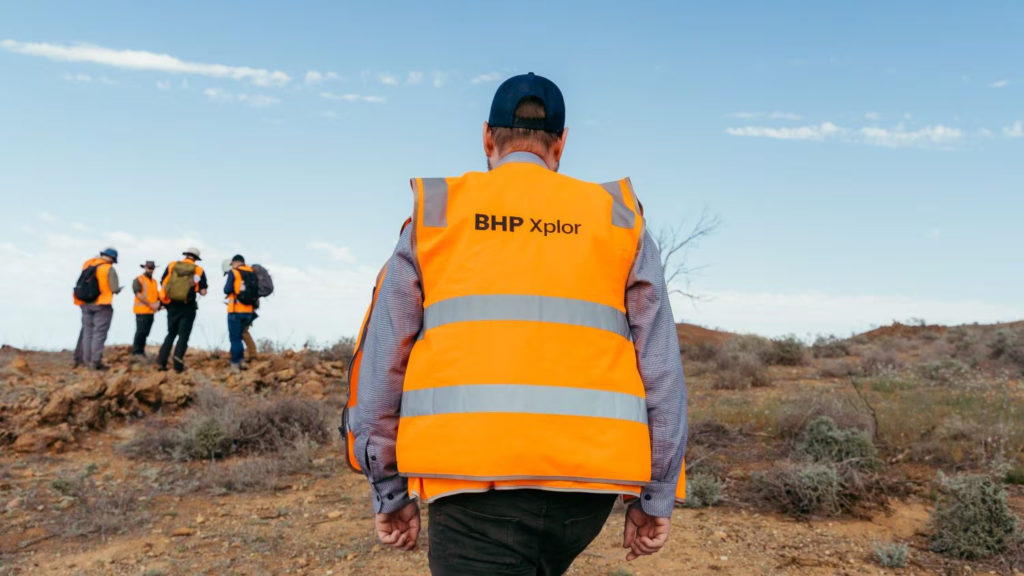
BHP has selected its largest Xplor cohort to date, backing 10 early-stage exploration and technology groups with a combined US$5 million in seed funding, with each participant eligible for US$500,000 equity-free plus access to BHP technical mentors. Tech recipients RadiXplore (Australia), Mineural and Discovery Genomics (Canada) and VectOres Science (US) are developing data analytics and genomics tools aimed largely at copper targeting, while exploration cohorts span uranium (FrontierX), copper-zinc (Orion Minerals), multi-commodity base metals (Litchfield Minerals), and copper-gold projects from South America to Indonesia. The inclusion of the Utah Geological Survey signals stronger integration of public geoscience datasets with private-sector targeting workflows.
Sizewell C has ramped up to more than 2,000 workers on enabling infrastructure just three months after financial close, ahead of a projected 8,000-strong peak workforce for the Suffolk nuclear plant. Early works include the first of three site-connecting bridges, new access roads and roundabouts, rail links, a beach landing facility, park-and-ride sites, and on-site worker accommodation. Construction is led by the Bylor JV of Bouygues Travaux Publics and Laing O’Rourke, with Balfour Beatty delivering supporting infrastructure and £3bn already awarded across 400+ UK suppliers.
Morgan Sindall Construction has begun a £16.2m, three-phase rebuild of the Burnside Secondary Pupil Referral Unit in Chingford, delivering two new blocks totalling 1,815 m² – a teaching block with six multi-purpose classrooms, a science lab and art & design studio, plus a hall and sports block with sports hall, dining room, food tech and fitness rooms – linked by a glazed corridor. Existing single-storey buildings will be demolished sequentially to keep the 48-place PRU operational, with handovers from late 2026 to spring 2028, and safeguarding measures including controlled public interaction and privacy in play areas. The design uses closed panel timber for insulation, solar PV, an air source heat pump system for net-zero operational carbon, and robust, damage-resistant finishes with muted colours and lighting to support pupil wellbeing.
Robert Purvis Plant Hire has expanded its Lochgelly-based fleet with 45 new Sany excavators, covering operating weights from 1 tonne to 8 tonnes for civils, utilities and general construction work. The package includes five SY10U micro excavators and 10 units each of the SY18C, SY26C, SY50U and SY80U models, giving a spread from compact machines for tight urban sites to larger units suited to heavier earthworks. For contractors, the move signals growing UK acceptance of Chinese-built plant in mainstream hire fleets, potentially shifting lifecycle cost and parts-support expectations.
Holcim UK has promoted former northern aggregates regional director Shaun Elliott to managing director for recycling, tasking him with maximising recycling performance and integrating it across the business. The company now operates eight recycling centres after acquiring PJ Thory, Gemmix, Pro Minimix and Thames Materials, expanding capacity to process construction and demolition materials into certified secondary aggregates and cementitious products. Globally, Holcim is targeting annual recycling of 20 million tonnes of CDM by 2030, lifting cement recycled content to 30% and using 70 million tonnes of waste and by-products as alternative fuels and raw materials.
The UK Concrete Show will return to Birmingham’s NEC on 25–26 March 2026 in Hall 17, bringing more than 170 exhibitors covering cementitious materials, admixtures, test equipment, pumps, volumetric and truck mixers, and digital monitoring solutions. New technical features include the Live Demo Zone for in-situ demonstrations of production, placement and finishing equipment, and an expanded Concrete Connect Seminar Theatre hosted by Susannah Streeter, with sessions on decarbonisation technologies, advanced carbons and lower‑carbon precast design. Suppliers range from Cormac Engineering’s Frumecar batching plants (30–150 m³/h, fixed and mobile, wet and dry) to Arrow kerbing machines and Betonblock steel block moulds.
Environment consultant Dalcour Maclaren has acquired Nailsworth-based geomatics specialist Geomap to deepen in-house surveying capability for water, waste and wider utilities projects. Geomap brings topographic, utility and drainage surveys, laser scanning, 3D modelling and photogrammetry, supplying survey-grade data for design, construction and asset management in complex, operationally constrained sites such as live treatment works and buried network corridors. The deal positions Dalcour Maclaren to deliver more integrated land, environmental and geospatial support on major infrastructure programmes focused on network resilience and environmental performance.
National Highways chief executive Nick Harris has reportedly been forced out after losing the board’s confidence following faulty motorway speed cameras that triggered 2,650 erroneous enforcement activations between 2021 and late 2024. The cameras led to thousands of incorrect speeding tickets, with National Highways now developing a data-checking tool and working with police to prevent further wrongful prosecutions, reimburse drivers and remove licence points. Transport secretary Heidi Alexander has ordered an independent investigation into the incident and its handling.