Geomechanics, Streamlined.
© 2026 Geomechanics.io. All rights reserved.
Timken is extending the service life of cone and gyratory crushers in Australian mines by pairing precision-engineered tapered roller bearings with advanced wear-resistant coatings tailored to high-load, high-contamination environments. The company is applying solid-film and PVD-style surface treatments to bearing races and rollers to cut fretting, scuffing and false brinelling on crusher mainshafts and eccentric assemblies, reducing unplanned shutdowns and relubrication intervals. For maintenance and reliability teams, the approach targets lower lifecycle cost and longer rebuild cycles on critical primary and secondary crushing circuits.
Global demand for minerals used in electric vehicles, grid-scale batteries and renewable energy infrastructure is surging, putting Australia’s iron ore, lithium, nickel and rare earths projects under sustained pressure to expand output. Major operations in the Pilbara and emerging lithium hubs in Western Australia are ramping up pit expansions, tailings storage facilities and rail and port capacity to move higher volumes of ore and concentrate. For geotechs and civil engineers, this means more large-scale waste dumps, deeper open pits and accelerated schedules for haul road, processing plant and export terminal upgrades.
Zanaga Iron has agreed a binding term sheet under which Mick Davis–backed Red Arc Minerals will invest up to $25 million in staged cash tranches to fund engineering and other pre-production work at the Zanaga iron ore project in the Republic of Congo. The initial funding, paid in five equal sub‑tranches, would give Red Arc a 20% stake in project owner Jumelles, with an option within 18 months to pay a further $125 million for an additional 67.5% interest, taking its holding to 87.5%. Zanaga Iron remains non‑diluted at listed level and would retain a 1% net sales revenue royalty on concentrate, half of which Red Arc can buy back for $50 million.
S&P Global Ratings has shifted First Quantum Minerals’ outlook to positive from negative on expectations that the idled Cobre Panama mine will restart in the first half of 2026, with ramp-up beginning soon after and potential 2026 output of about 120,000 tonnes of copper and 40,000 oz. of gold. The agency cites steps such as selling inventory, exporting concentrate, restarting the site power plant in Q4 2025, and advancing an independent audit, alongside Panama’s signals that it may allow processing of low-grade stockpiles. S&P models copper at $10,500/t and estimates that once Cobre Panama reaches full production, EBITDA could exceed $5 billion annually, driving adjusted debt-to-EBITDA below 2.0x if liquidity stays above $1 billion.
United States Antimony and Americas Gold and Silver will build an 18‑month hydrometallurgical processing plant in Idaho’s Silver Valley to treat antimony feed from the Galena complex, which produced 561,000 lb of antimony last year, with capacity to accept third‑party feed. The JV is structured 51/49 in favour of Americas Gold, but US Antimony will manage operations and buy the plant’s antimony output at market terms, integrating it with its Thompson Falls, Montana oxide smelter. The fully permitted site (pending construction permits) is positioned to support US defence‑linked demand and may seek federal funding under critical minerals programmes.
Diamond prices in prolonged slump, soft demand in the US and rising lab-grown supply are pushing Botswana, which supplies about 70% of De Beers’ rough diamonds and derives roughly one-third of national revenue and 75% of foreign exchange from the stones, to accelerate diversification. Mines minister Bogolo Joy Kenewendo told Indaba that only about 30% of Botswana’s territory has been explored, prompting the launch of a state-owned exploration company to generate geological data and de-risk copper and critical mineral projects. Namibia, Lesotho and South Africa are pursuing similar shifts towards base metals, PGMs, manganese and rare earths as US–China competition for energy-transition minerals intensifies.
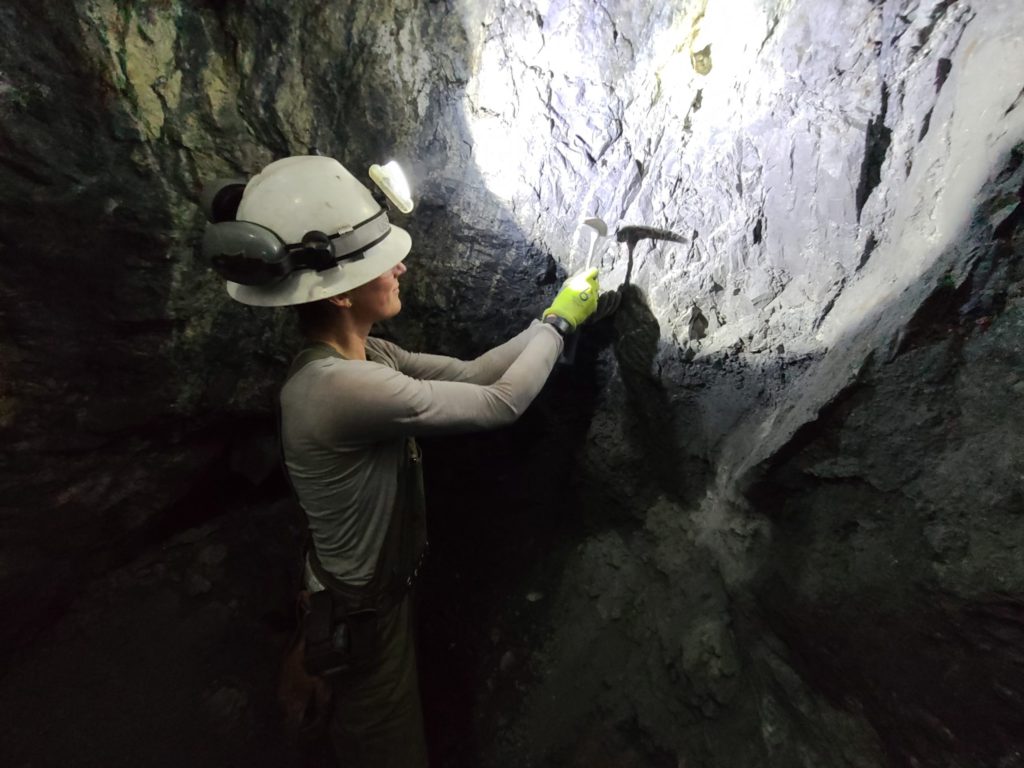
American Tungsten has reported its first underground drill assays from the rehabilitated D-level at the historic IMA tungsten mine in Lemhi county, Idaho, with three key intercepts including 31 ft at 0.48% WO₃ and 1.84 oz/t Ag, 11.1 ft at 1.08% WO₃ and 2.05 oz/t Ag, and 16.3 ft at 0.54% WO₃ and 1.79 oz/t Ag. Ten upward-inclined fan holes totalling about 3,800 ft have been drilled from new footwall stations on the No.5 and No.7 vein systems to support a maiden resource and restart study. The company, which acquired the former producer in 2024, is now prioritising metallurgy and mine infrastructure restoration as it evaluates a potential underground restart in a US market with no domestic tungsten output since 2015.
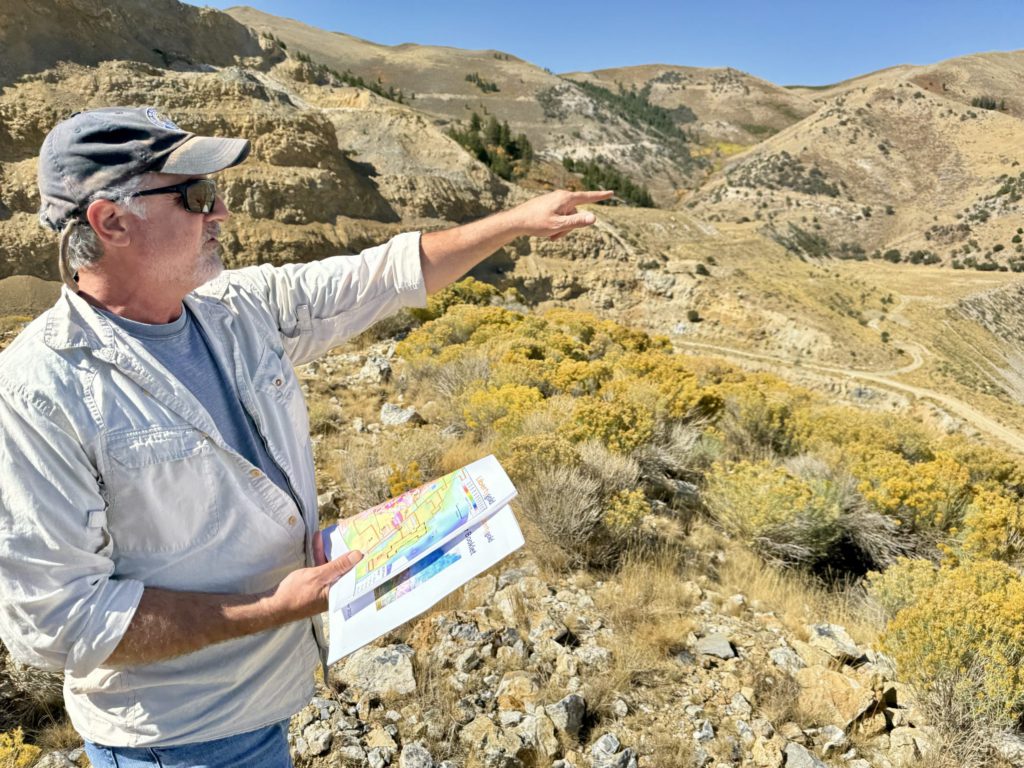
Liberty Gold’s Black Pine oxide gold project in southeastern Idaho now hosts 502.7 million tonnes indicated at 0.3 g/t Au (4.8 Moz) plus 157.1 million tonnes inferred at 0.21 g/t Au (~1 Moz), based on 462,662 metres of drilling in 3,010 holes, placing it among the three largest undeveloped gold projects in the Intermountain West. The resource supports a preliminary feasibility study with a post-tax NPV of US$550 million, 32% IRR and all-in sustaining costs of US$1,380/oz at US$2,000/oz gold. FAST-41 “covered project” status is expected to accelerate federal permitting and inter-agency coordination ahead of a targeted feasibility study in Q4.
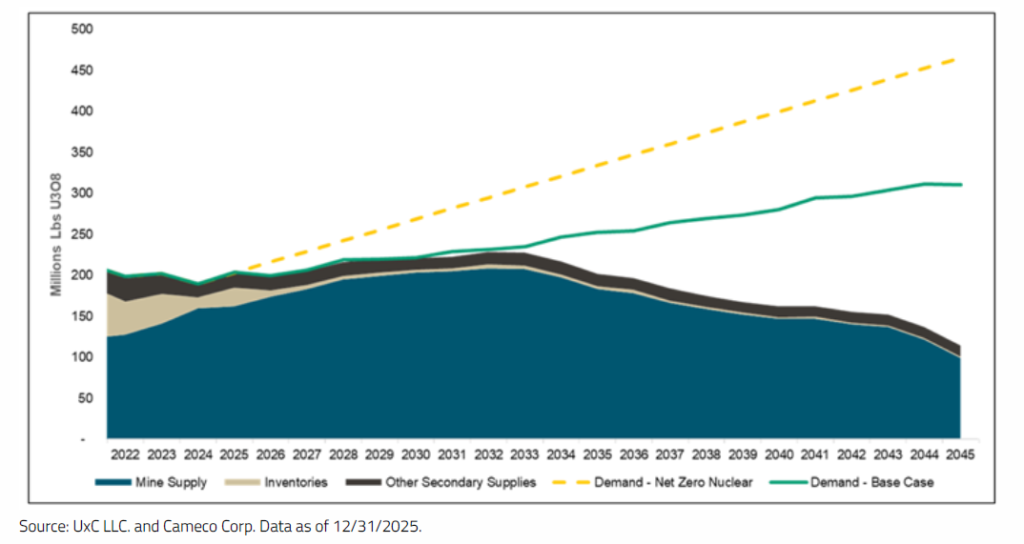
Uranium spot prices jumped about 25% in January to above US$100/lb, with Sprott’s Jacob White arguing that policy shifts such as the Trump administration’s Section 232 critical minerals framework and a US ambition to quadruple nuclear capacity by 2050 are pulling investor focus back to upstream supply. Sprott has added 4 million lb to its uranium fund in 2026, taking holdings to nearly 79 million lb, while Kazakhstan’s tighter exploration controls and Kazatomprom’s warning that current prices do not justify new production signal constrained future output. With utility fuel contracting undershooting replacement needs for a 13th consecutive year in 2025, Sprott sees 2026 procurement decisions as critical for early‑2030s mine development and pricing.
Procurement has opened for the first phase of construction on the Tarraleah Redevelopment Project in Tasmania, with the state government calling tenders for major works on the existing hydropower scheme. The upgrade would lift installed capacity from 90 MW to about 190 MW, requiring substantial new civil works on water conveyance, powerhouse infrastructure and grid connection. For designers and contractors, key issues will include staging works around existing assets, hydraulic performance of new headrace structures and foundations in a steep, high‑rainfall catchment.
Knights Brown has appointed former MWH Treatment and Wessex Water executive Simon Osborne as divisional director for its new standalone Water Division, completing a restructure into four units: Water, Energy, Southern & Southeast, and Wales. The move targets AMP8 delivery, with Knights Brown already mobilising on three water company frameworks: Dŵr Cymru Welsh Water across Wales, YTL Wessex Water in the south-west, and Northumbrian Water in Essex and Suffolk. Financially, the contractor reported 2025 pre-tax profit up 85% to £3.9m on turnover of £116m, a 15% rise.
Retail refit programmes using mobile elevated work platforms (MEWPs) are facing a critical safety gap, with a live Marks & Spencer fit-out exercise by Horizon Platforms and Sigma M&E showing that many rescue plans fail when tested under real site congestion, multiple trades and live programme pressures. Senior site managers and health & safety leads discovered that nominated ground rescuers often lacked familiarity with specific MEWP control layouts, with identical inputs sometimes triggering opposite movements between manufacturers. A simplified, on-equipment rescue process flow chart proved more usable than lengthy method statements, pointing to the need for regular, machine-specific familiarisation and realistic rescue rehearsals.
Clarion Housing Group has let a £68.35m contract to JRL Group to deliver the Argenta House scheme at Stonebridge Park, comprising 27- and 30-storey towers with 180 homes for social rent and shared ownership opposite Stonebridge Park Station in Brent. The project, designed by Assael Architecture and now 100% affordable, replaces an earlier 24–26-storey, 130–141 unit consent that stalled when Henry Construction entered administration nine months after starting on site. Clarion, having acquired full ownership from the Latimer–Cervidae JV, plans to start construction in March 2026 with completion in early 2030, alongside public realm and connectivity upgrades.
Agg-Pro has been appointed exclusive dealer for Arjes Impaktor GmbH across England, Scotland and Wales, adding five twin-shaft, slow-speed shredders for wood and green waste, stumps, stone and concrete, demolition debris, municipal and industrial waste, tyres and scrap metal, with two further models in development. The range includes the Impaktor 250 and Impaktor 350, conceived and produced by founder Norbert Hammel, who built the first twin-shaft slow-speed shredder in 1989. For UK recyclers and demolition contractors, this expands Agg-Pro’s existing McCloskey, Jonsson, GIPO, McCloskey Environmental and Terracon offering following its SMT/Volvo-backed takeover 18 months ago.
A 5.5% fall in electrical apprenticeship starts in 2024/25, against a 4.1% rise in overall apprenticeships, signals a widening UK electrical skills gap just as Skills England forecasts a need for 12,000 additional electricians by 2030. ECA’s 2026 Electrical Skills Index reports more than 26,000 enrolments on government-funded classroom electrical courses, yet fewer than 1 in 5 learners progress to an apprenticeship or skilled employment within 12 months. ECA leaders warn that without targeted support for SME training employers, delivery of Clean Power 2030 and wider electrification projects will stall.
Barhale has secured three Thames Water schemes under the £200m+ AMP8 major projects framework, covering Brent Cross (London), Benson (Oxfordshire) and South Basingstoke (Hampshire). At Rushgrove Park, Brent Cross, it will design and build an offline foul storage attenuation system with a 560 m³ shaft tank, CSO interception and pumped return, while at Benson it will install a 500 m foul gravity sewer with 15 manholes for new housing and increased capacity. In South Basingstoke, works include a new 590 m sewer plus upsizing of an existing 484 m sewer and manhole upgrades at Kempshott Lane, with design by Barhale’s ESL unit to improve resilience under more extreme rainfall.
Skanska has begun a £273m structural refurbishment of Broadgate’s One Appold Street in the City of London, retaining the existing 1980s concrete and steel frame while adding six new floors and expanding the floorplate to create a 14-storey, 360,000 sq ft office building plus 48,000 sq ft of leisure and hospitality space. The scheme, for the British Land–GIC Broadgate joint venture, includes a new façade aligned with neighbouring Broadgate assets and full in-house MEP installation. Target ratings of NABERS 5–5.5* and BREEAM Outstanding put strong emphasis on circularity and embodied carbon reduction, with completion due in Q1 2029.
RICS has overhauled its continuing professional development framework for 130,000 members, shifting to a flexible, outcomes-based system that explicitly covers artificial intelligence, net zero building assessments and climate risk analysis. The framework responds to feedback that many chartered surveyors qualified before exposure to AI-powered valuation tools or structured climate-related due diligence, raising concerns over competence in current regulatory and ESG contexts. A new RICS member app, now rolling out globally, logs CPD hours, issues reminders and links learning activity to demonstrable professional accountability and public-interest protection.
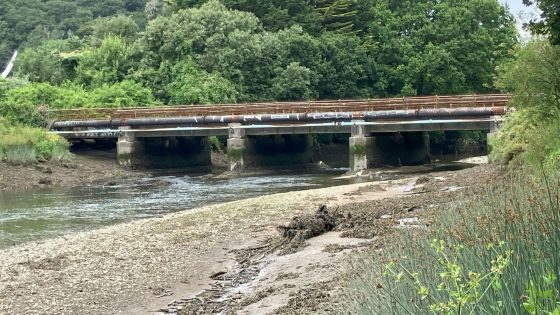
Network Rail will this month strengthen the River Plym railway bridge east of Plymouth by renewing age‑expired steelwork and rail bearers on the structure. The works target key load‑bearing elements that carry the twin‑track formation over the river, aiming to maintain route availability for passenger and freight services on this main line section. Contractors will need to manage short possessions over tidal water, with careful sequencing of steel replacement and track realignment to control deflection and minimise settlement.
Seequent has added laboratory testing functionality to its OpenGround cloud geotechnical data platform, allowing soil and rock sample data captured in the field to flow directly into lab reporting workflows. The update links borehole and test pit logs, sample metadata and chain-of-custody information with laboratory test schedules and results in a single environment. For ground investigation teams, this reduces manual data re-entry between site and lab systems and should cut errors in parameters used for foundation, retaining wall and earthworks design.
An ultrasonic acoustic fish deterrent designed for EDF’s Hinkley Point C cooling water intakes has proved “highly effective” in Swansea University trials, significantly reducing fish approach rates to the intake zone. The system uses targeted sound frequencies to steer multiple species away from the intake channel, aiming to meet Environment Agency requirements on impingement and entrainment without major changes to the intake structure. Trial results may remove the need for a large compensatory saltmarsh scheme on the Severn Estuary, easing local planning and coastal engineering constraints.
Osisko Development’s Barkerville Gold Mines has signed a definitive project and construction management services agreement with JDS Energy & Mining to build the Cariboo underground gold project in British Columbia. A feasibility study completed in April 2025 outlines a “robust and scalable” underground mine, with JDS to coordinate detailed engineering, procurement and construction management across the processing plant, underground infrastructure and surface facilities. The deal signals progression from study to execution, with geotechnical design, underground access development and shaft/decline construction planning now moving onto a defined EPCM footing.
Sandvik is adding the mid-range RG550Be drill bit resharpening machine to its portfolio, extending coverage across both top hammer (TH) and down-the-hole (DTH) drilling with a tiered line-up of high-end, mid-range and handheld units. The OEM is targeting improved safety and ergonomics in bit maintenance, moving more grinding work off manual benches and into enclosed, purpose-built machines. For mine operators, the broader range allows closer matching of resharpening capacity to fleet size and bit type, with potential gains in bit life and drilling penetration rates.
TOMRA Mining is deploying advanced sensor-based ore sorting to convert mine waste rock and tailings into saleable aggregate for infrastructure, extending mine life and reducing primary crushing and haulage demands. By separating barren from mineralised material on conveyors using XRT and other sensors, operations can upgrade run-of-mine feed, cut energy and water use in downstream comminution, and divert clean fractions for construction uses. The approach opens a secondary revenue stream while lowering waste dump volumes and long-term rehabilitation liabilities.