Geomechanics, Streamlined.
© 2026 Geomechanics.io. All rights reserved.
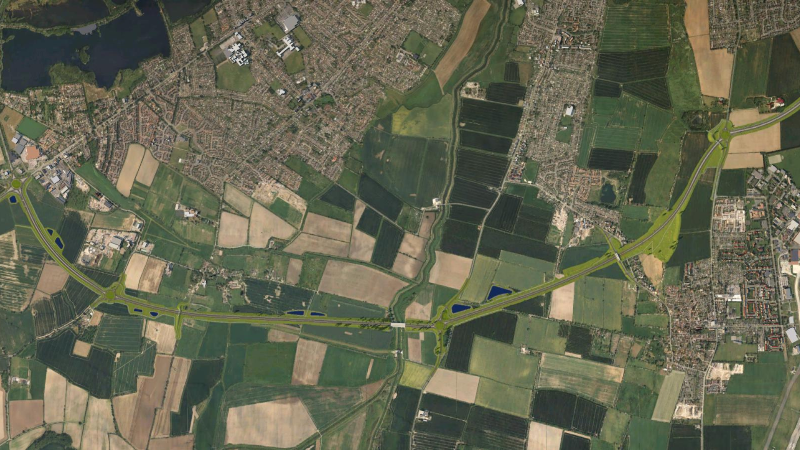
Construction of Lincolnshire County Council’s North Hykeham relief road will start next month after the Department for Transport finally released £110m from its large local majors programme towards the £218m dual carriageway between the A46 and A15. Balfour Beatty, appointed under a pre-construction services agreement in April 2022, is scheduled to complete the final section of Lincoln’s ring road by May 2029. The scheme is designed to unlock land for 4,500 homes and 7 hectares of employment space, with forecast economic benefits of £800m over 60 years.
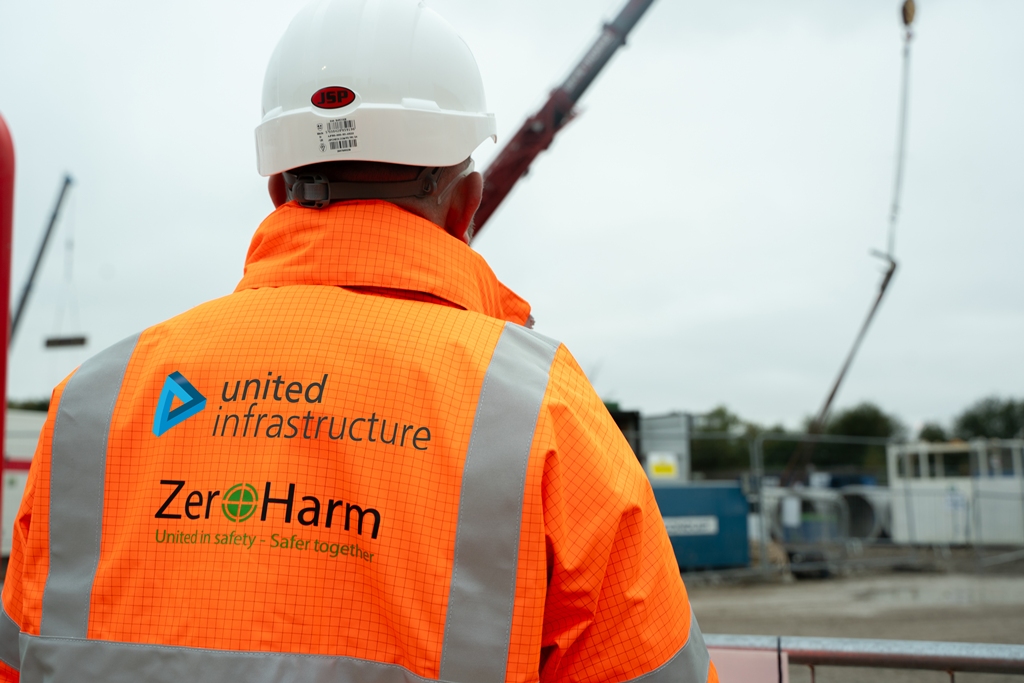
United Infrastructure has secured a Cadent Gas contract to redevelop the Bromley-By-Bow Gasworks, home to the UK’s largest collection of Grade II listed gasholders, as part of a 15‑month programme started in late November 2025. Works include isolating the site from the gas network, demolishing redundant buildings, rationalising legacy pipework and fully rebuilding the gas facility on a reduced footprint with new civil, mechanical and electrical installations. The upgraded, quieter infrastructure is a key enabler for the Bromley-By-Bow masterplan, which plans over 2,150 homes in 13 buildings, some within restored gasholder frames.
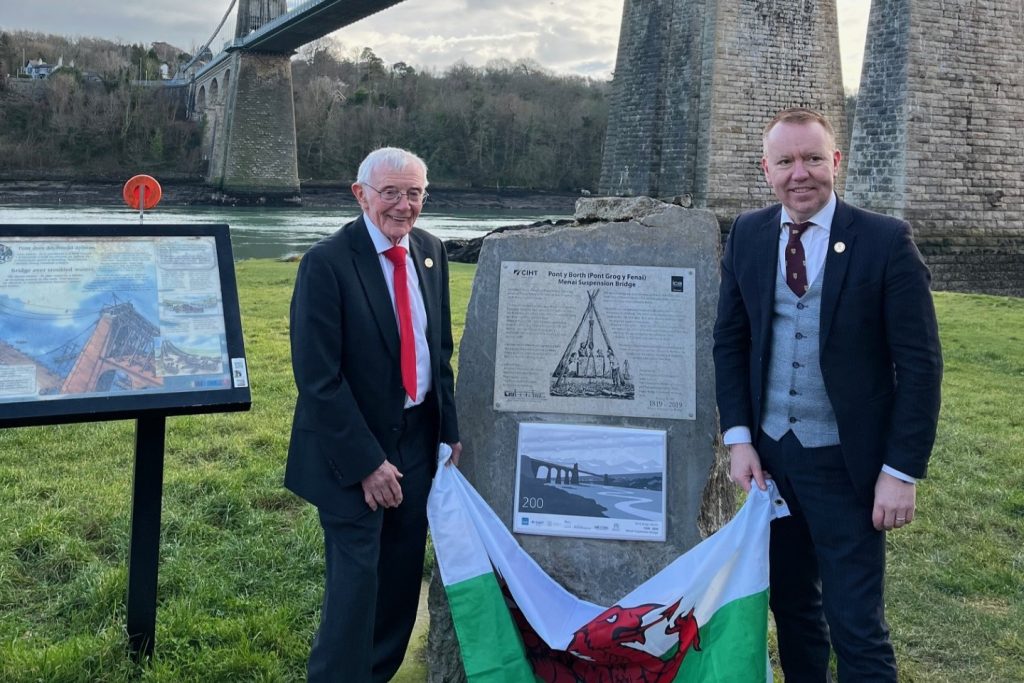
Menai Suspension Bridge has marked its 200th anniversary, with Welsh Government ministers and ICE leaders gathering on 29 January to commemorate the 1826 opening of Thomas Telford’s crossing between Anglesey and mainland Wales. The wrought-iron chain suspension bridge, originally designed for horse-drawn traffic and later strengthened for modern road loading, remains a critical A5/A55 route over the Menai Strait. The bicentenary focus is on long-term structural maintenance, corrosion management and traffic loading on historic suspension elements.
ICE has introduced three mandatory continuing professional development themes for all professionally active members following a consultation that ran from May 2023 to March 2024. The topics – climate change and carbon, ethics, and digital transformation – must now be covered within the existing annual CPD requirement rather than as additional hours. Firms will need to evidence structured learning in areas such as whole-life carbon assessment, data and information management, and professional conduct, which may drive more formalised training programmes and updated competence records.
Delivery of the Institution of Civil Engineers’ Building Safeguards action plan is now in focus, following its 2024 review of safety and risk management that builds on the 2018 In Plain Sight report issued after the 2017 Grenfell Tower fire. The programme targets clearer dutyholder accountability, more rigorous competence requirements and stronger assurance processes across design, construction and asset management. For practising engineers, this signals tighter expectations around safety cases, risk registers and independent technical review on complex buildings and higher-risk structures.
Government and Welsh ministers have endorsed Transport for Wales’ long-term rail vision, outlining a pipeline of upgrades worth up to £14bn and including seven new stations across the network. The programme is intended to increase passenger capacity on key inter-urban corridors, support higher service frequencies, and enable transit-oriented housing and commercial schemes around new and existing hubs. For civil and rail engineers, the plan signals sustained demand for track renewals, station structures, earthworks and associated utilities over a multi-decade delivery window.
Engineering apprenticeships are being pushed as a primary tool to close the UK’s infrastructure talent gap, particularly for civil, geotechnical and structural roles on major programmes such as HS2 and large water and energy schemes. Employers are focusing on Level 3–6 pathways that blend site rotations, design office experience and day-release study, aiming to produce technicians and graduate-equivalent engineers who are productive on projects within 12–24 months. For practitioners, this signals growing reliance on structured on-the-job training to staff design, inspection and construction supervision teams.
Albert Bridge in London is expected by the Royal Borough of Kensington and Chelsea to be fully repaired within a year, after early inspections following its closure to motor traffic found no additional visible structural damage. The Grade II* listed hybrid suspension–cable-stayed bridge remains open to pedestrians and cyclists, limiting live loading on its wrought iron and steel elements while detailed investigations continue. Engineers can now plan targeted repairs rather than major strengthening, potentially reducing intervention on historic members and minimising long-term traffic disruption on this Thames crossing.
Network Rail has opened consultation on plans for the Transpennine Route Upgrade between Standedge and Gledholt, including major works at Marsden and Slaithwaite stations on the Huddersfield–Manchester corridor. Proposals cover new or lengthened platforms to accommodate longer trains, revised track layouts and signalling to increase line capacity, and accessibility upgrades such as step‑free access. Geotechnical and civil teams should expect significant works in a constrained valley setting, with interfaces to existing masonry structures, retaining walls and historic tunnel and cutting assets.
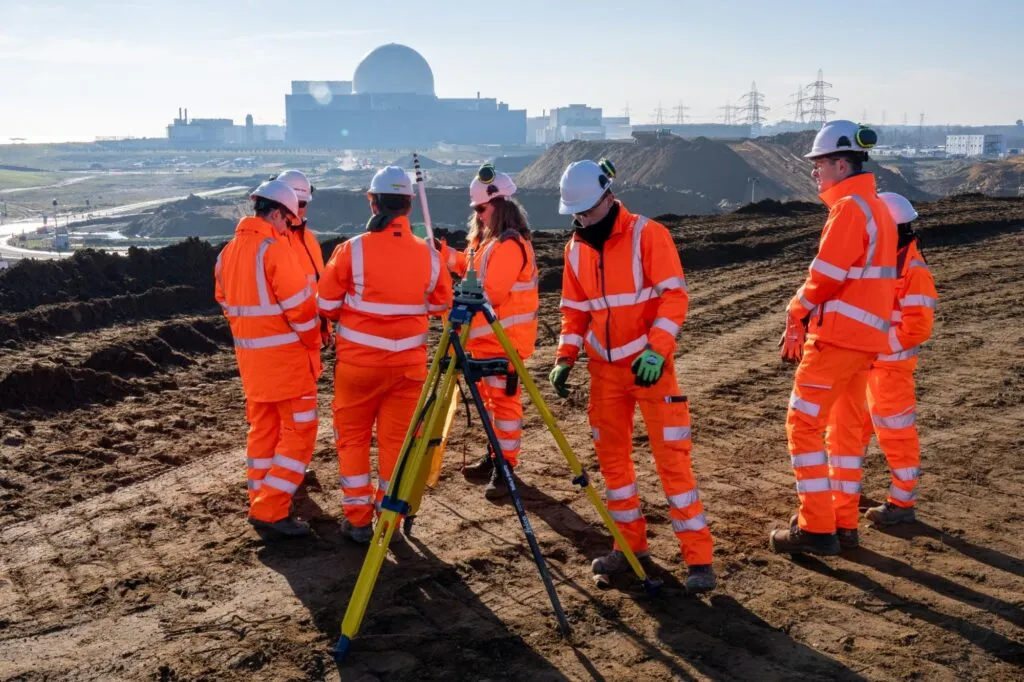
Nuclear Industry Association chief executive Tom Greatrex argues that the UK’s nuclear “rebirth” will depend on delivering large gigawatt-scale plants such as Hinkley Point C and Sizewell C alongside a fleet of standardised small modular reactors (SMRs). He points to nuclear’s role in providing firm low‑carbon capacity to stabilise a grid dominated by intermittent offshore wind, with 60‑year design lives and high load factors well above typical renewables. For civil and geotechnical engineers, he stresses repeatable nuclear‑grade design, modular construction, and long‑term skills pipelines as central project constraints.
Viridien has entered a collaboration with NVIDIA to optimise its subsurface seismic imaging algorithms on NVIDIA accelerated computing platforms, including NVIDIA DGX systems and NVIDIA Clara for AI-enabled imaging. The work targets full-waveform inversion and reverse time migration workloads, aiming to exploit multi-GPU, high-bandwidth memory architectures and cloud-native HPC deployment. For miners, faster, higher-resolution seismic volumes could tighten drilling targets, reduce uncertainty in complex structures and enable more iterative geophysical modelling within existing exploration budgets.
South Australia is preparing to revive its Plan for Accelerating Exploration (PACE) program, signalling renewed state-backed funding and geoscience support for greenfields drilling. The original PACE rounds were credited with de‑risking targets in the Gawler Craton and Curnamona Province through pre‑competitive datasets such as high‑resolution aeromagnetics and deep seismic surveys. A rebooted scheme would likely prioritise critical minerals and undercover exploration, with implications for co‑funded drilling campaigns, access to new stratigraphic drilling data, and updated basin-scale geophysical models.
Energy Exploration Technologies (EnergyX) has commissioned one of North America’s largest roll-to-roll membrane production machines at its Austin, Texas plant, enabling industrial-scale output of up to 500,000 m² per year of ion exchange membranes for its GET-Lit lithium separation systems. The in-house line reduces dependence on overseas membrane suppliers and underpins EnergyX’s Lonestar lithium project in southwest Arkansas, as well as its move into nuclear-grade lithium isotopes for fusion and fission. The same proprietary membranes target desalination, carbon capture and electrodialysis markets projected at US$7.5 billion by 2035.
Nouveau Monde Graphite is advancing Phase 2 of its Matawinie graphite mine in Québec, designated a “major project of national interest” by the Canadian government, by awarding key contracts for construction capacity, services, equipment and materials. The recently signed packages include provisions for full execution once remaining project milestones and financing are secured, locking in contractor availability and pricing ahead of the main build. For mine planners and project engineers, this signals a move towards shovel‑ready status and a tighter timeline for detailed civil, earthworks and process-plant design coordination.
Parliament’s continuing struggle with the deteriorating Palace of Westminster fabric is again in focus, with unresolved decisions on how to tackle extensive stone decay, ageing mechanical and electrical systems, and fire-safety risks in a live legislative building. JCB is relaunching a redesigned range of JCB-branded power tools, signalling renewed competition in the professional cordless segment and potential shifts in site equipment procurement. Persimmon is pushing a soil recycling initiative on its housing sites to cut disposal and import costs, with implications for on-site segregation, geotechnical verification and materials management.
NTN is promoting high-performance tapered roller and spherical roller bearings for mining applications exposed to extreme loads, abrasive dust and frequent shaft misalignment. The range, supplied locally through Motion Australia, targets critical equipment such as conveyors, crushers and vibrating screens where premature bearing failure drives unplanned downtime. For site engineers, the focus is on higher dynamic load ratings, improved sealing against fine particulates, and bearing geometries that tolerate misalignment without excessive heat or spalling.
Pilbara Minerals has approved the restart of its Ngungaju spodumene processing plant at the Pilgangoora operation in WA’s Pilbara, aiming to capture improving lithium prices after last year’s curtailments. The restart will add a second processing stream alongside the existing Pilgan plant, lifting total site nameplate capacity once fully ramped and re‑utilising previously idled crushing, grinding and flotation circuits. For mine planners and process engineers, the move signals renewed confidence in hard‑rock lithium throughput and may trigger fresh contracting for drilling, tailings, and power and water infrastructure upgrades.
A new state-of-the-art minerals processing facility has opened in Queensland to accelerate testwork and flowsheet development for critical minerals, positioning local projects to move faster from resource definition to pilot scale. The lab is geared to handle complex ore characterisation, bench-scale processing and variability testing, supporting commodities such as rare earths, vanadium and battery-grade manganese under controlled, repeatable conditions. For miners and process engineers, this centralised capability should de-risk plant design, reduce reliance on overseas laboratories and shorten timelines for metallurgical optimisation.
Caterpillar has completed its roughly $1.1 billion acquisition of mining software specialist RPMGlobal, adding mine planning, scheduling and simulation platforms such as XPAC, HAULSIM and TALPAC to its portfolio. The deal folds RPMGlobal’s cloud-based enterprise solutions for fleet management, maintenance and ESG reporting into Caterpillar’s MineStar ecosystem, tightening integration between OEM equipment data and planning tools. For engineers, this signals deeper OEM-backed digital workflows for haulage optimisation, drill-and-blast design and life-of-mine scheduling, with potential lock-in around Caterpillar machine data and interfaces.
Alcoa of Australia has secured a clearing exemption from the Western Australian Government while it undertakes a strategic assessment of its existing and potential bauxite mining areas in the northern Jarrah Forest through to 2045. The exemption allows continued vegetation clearing under the Environmental Protection (Clearing of Native Vegetation) Regulations 2004 while Alcoa prepares a whole-of-operations environmental impact assessment under the WA Environmental Protection Act. For geotechnical and mine planners, the review timeframe to 2045 signals long-horizon pit sequencing, haul road, and residue storage planning under tighter cumulative biodiversity and water catchment constraints.
Glencore is accelerating its copper strategy after securing a land access deal with Gécamines for Kamoto Copper Company in Kolwezi, unlocking restricted ore zones, extending mine life into the mid‑2040s and supporting a 300,000‑tonnes‑per‑year output target. Analysts estimate the group aims to almost double copper production by 2035 at a capital intensity of about $16,200/t Cu‑equivalent, with peak development capex near $4.5 billion in 2031 and total investment potentially reaching $11 billion. Management plans to self‑fund growth, while considering partners at Agua Rica and El Pachón and a 40% sale of its DRC copper‑cobalt business.
Industry leaders, investors and policymakers will convene in Islamabad in April for the Pakistan Mineral Investment Forum, with attention centred on Barrick’s Reko Diq copper-gold project and wider critical minerals such as cobalt, lithium, rare earths and zinc. Analyst Erik Groves will spend over 10 days in Pakistan, visiting Balochistan project areas, federal and provincial mining offices, and university geology departments to map how permitting, power, water and transport planning actually function. The series will probe whether Pakistan’s “institutional middle” can deliver predictable approvals and coordinated infrastructure for large-scale copper and critical mineral developments.
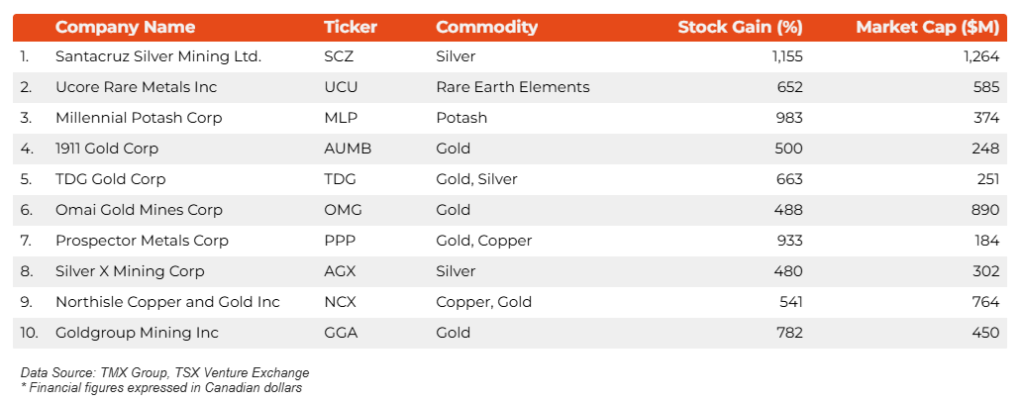
Mining stocks dominated the 2025 TSX Venture 50, taking 48 of 51 spots as Santacruz Silver Mining posted a 1,137% market cap increase and Ucore Rare Metals rose 1,109% on rare earth processing momentum. The mining cohort reached a combined market capitalisation of $19.9 billion with an average 443% share price gain, while overall TSXV 50 trading volumes doubled year-on-year to 13.2 billion shares. Nearly 80% of companies operate in Tier-1 jurisdictions in the Americas, with 43 issuers raising over $1.5 billion in equity during 2025.
Northern Dynasty Minerals’ shares fell up to 45% to C$1.52 after the US Department of Justice filed a brief in Alaska backing the EPA’s Clean Water Act veto on the Pebble copper-gold-molybdenum project. The EPA move, which blocks storage of mine waste that it says would destroy more than 2,000 acres of wetlands in the Bristol Bay sockeye salmon watershed, effectively halts what was slated to be North America’s largest copper, gold and molybdenum mine. A 2023 study projected 6.4 billion lb copper and 7.4 million oz gold output over 20 years, now in limbo pending summary judgment.