GE Vernova Hitachi BWRX‑300 GDA: design and civil works notes for engineers
Reviewed by Joe Ashwell
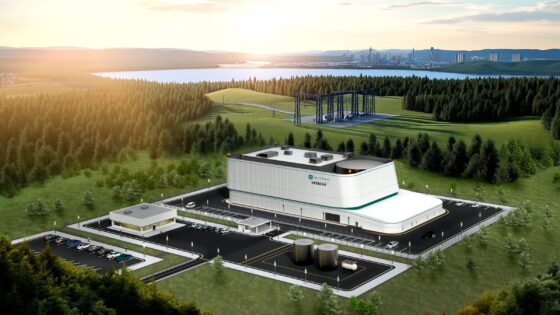
First reported on New Civil Engineer
30 Second Briefing
UK regulators have advanced the GE Vernova Hitachi BWRX‑300 small modular reactor through the Generic Design Assessment in record time, signalling strong early confidence in the 300MWe boiling water design. The BWRX‑300 uses a simplified, natural‑circulation reactor concept derived from the ESBWR, with modular construction intended to reduce on‑site civil works, shorten programme durations and standardise below‑grade nuclear island layouts. Rapid GDA progress is likely to accelerate site‑specific geotechnical investigations, deep excavation design and nuclear‑grade concrete specification for potential UK deployments.
Technical Brief
- Progression through GDA enables site-specific safety case development, including fault studies and probabilistic safety assessment.
- GDA advancement allows early definition of nuclear safety classes for concrete, reinforcement and embedded items.
- UK regulators will require demonstration of defence-in-depth, including passive safety features and severe accident mitigation.
- Rapid regulatory progress is likely to compress timelines for independent design verification and nuclear-grade QA on civils.
- Experience from this GDA may set precedent timescales and expectations for other SMR safety assessments in the UK.
Our Take
Hitachi’s presence here on the nuclear side sits alongside its push into electrified construction equipment in Europe, with the planned LANDCROS Development Center Europe GmbH in Germany signalling a wider regional engineering and regulatory footprint that could ease future UK deployment of complex infrastructure technologies.
Within our 240 Infrastructure stories, relatively few combine ‘Projects’ and ‘Safety’ tags without a specific commodity focus, so GE Vernova and Hitachi’s SMR progress in the United Kingdom stands out as part of a small cluster of safety‑critical, grid‑scale technology rollouts rather than conventional transport or civils schemes.
Hitachi’s involvement in an agnostic safety and autonomy platform for Bell Equipment’s fleets suggests the company is building a cross‑sector safety technology stack, which could translate into more advanced human–machine interface and diagnostics approaches for SMR plant operation and maintenance in the UK context.
Prepared by collating external sources, AI-assisted tools, and Geomechanics.io’s proprietary mining database, then reviewed for technical accuracy & edited by our geotechnical team.
Related Articles


Related Industries & Products
Construction
Quality control software for construction companies with material testing, batch tracking, and compliance management.
Mining
Geotechnical software solutions for mining operations including CMRR analysis, hydrogeological testing, and data management.
QCDB-io
Comprehensive quality control database for manufacturing, tunnelling, and civil construction with UCS testing, PSD analysis, and grout mix design management.