Geomechanics, Streamlined.
© 2026 Geomechanics.io. All rights reserved.
Finnish aggregate equipment manufacturer Metso has added machine-learning features to its support software to predict maintenance needs and cut crusher and screen downtime by analysing operating data in real time. The system relies on continuous collection of equipment performance and fault data, raising customer concerns over how these datasets are stored, who can access them, and whether they might be shared across fleets or sites. For plant owners, the trade-off is between higher uptime and potential loss of control over sensitive production and condition-monitoring information.
Payment reform in UK construction comes under renewed scrutiny as barrister Rudi Klein, former chief executive of the Specialist Engineering Contractors’ (SEC) Group, joins the Re:Construction podcast to assess progress on fairer cashflow for the supply chain. Klein focuses on persistent late payment, abuse of project bank accounts and the impact of long payment terms on specialist contractors delivering M&E, civils and geotechnical packages. For engineers and subcontractors, the discussion signals continuing commercial risk around working capital and contract administration on major projects.
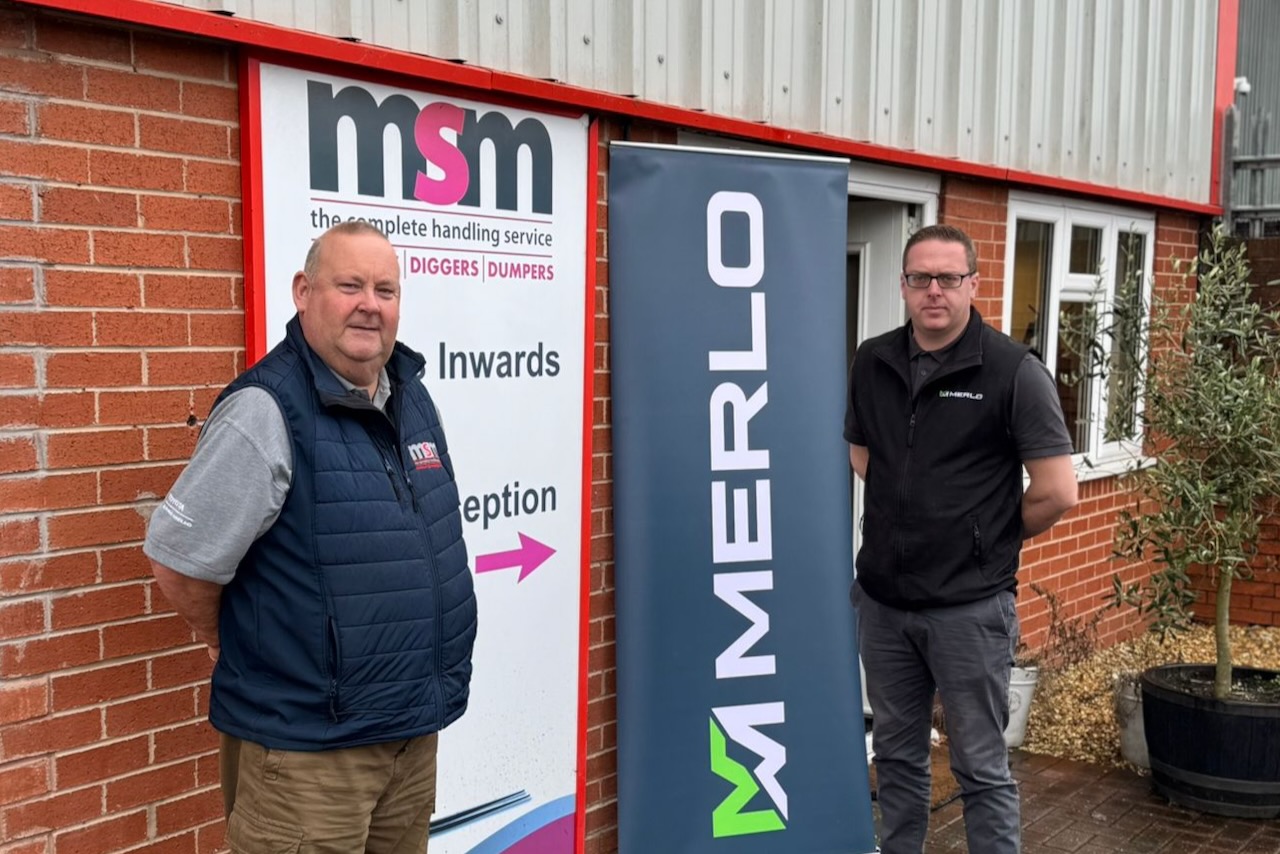
Worcester-based equipment dealer MSM/DRH has signed a distribution and service agreement with Merlo UK to supply Merlo telehandlers into construction, infrastructure, industrial and specialist sectors across its region. The deal covers machines widely used for materials handling on constrained sites, with MSM/DRH providing local aftersales support while drawing on Merlo’s factory technical staff. This is MSM/DRH’s second new OEM partnership in a week, following a distributor agreement with compact equipment manufacturer Takeuchi announced on Monday.
Canada’s Energy and Natural Resources Minister Tim Hodgson says the new Major Projects Office will deliver “conditions documents” for major mines within two years of referral, aiming to make Canada the fastest G20 jurisdiction on permitting while coordinating “one project, one review” across federal and provincial regulators. Priority files include Foran Mining’s McIlvenna Bay copper project in Saskatchewan, Canada Nickel’s planned build in Ontario, Northcliff’s tungsten project in New Brunswick, Nouveau Monde Graphite in Quebec, and the Red Chris expansion in B.C. backed by Newmont and Imperial Metals. Ottawa has also launched a C$1.5‑billion First and Last Mile infrastructure fund, earmarking C$115 million for five mine‑to‑market links, and is planning a C$2‑billion sovereign fund with potential equity stakes in critical mineral projects.
SSR Mining will sell its 80% stake in Turkey’s Çöpler gold mine and associated eastern Anatolia licences, assets and liabilities to Cengiz Holding for $1.5 billion in cash, sending SSR shares up 15% in New York pre-market trading. Operations at Çöpler have been suspended since a 2024 heap leach failure and landslide that left at least nine miners missing, with an independent review blaming a third-party engineered design flaw. SSR is now concentrating its portfolio in the Americas, including the Cripple Creek & Victor mine, and is reviewing its 20% interest in the Hod Maden project.
Canada and Brazil have signed a technical cooperation accord between the Geological Survey of Brazil and the Geological Survey of Canada at PDAC 2026 to apply AI‑driven mineral potential modelling to nickel exploration, integrating geology, geochemistry, geophysics and remote sensing datasets on a shared research platform, with first results due in 2027. The work targets better understanding of nickel formation, concentration and preservation processes to prioritise high‑probability targets, particularly in Brazil, which holds an estimated 16 Mt of nickel reserves but only produces about 2.1% of global output.
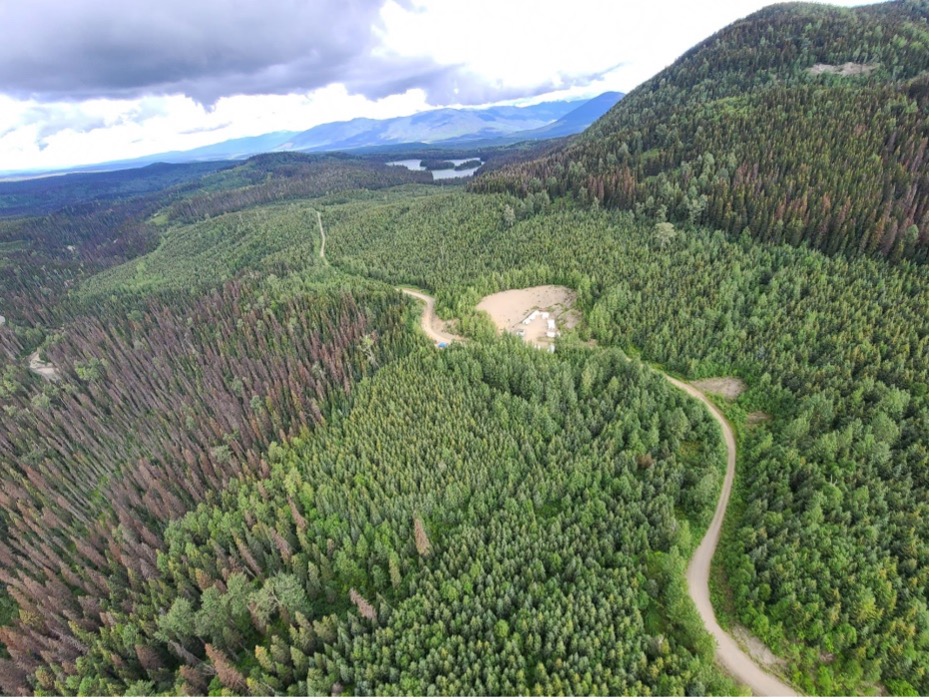
Defense Metals has secured conditional approval for C$1.88 million from Canada’s Critical Minerals Infrastructure Fund to support power and access works for its Wicheeda rare earths project, 80 km northeast of Prince George, British Columbia. The funding targets a new 60-km transmission line delivering up to 35 MW from the BC Hydro grid, plus engineering upgrades to the existing 43-km forest service road linking Highway 97 to site. Wicheeda currently hosts 25.5 Mt of reserves at 2.4% REO, with a PFS outlining a 15-year operation producing 31,900 t/y of concentrate.
Gold rebounded on Wednesday as spot prices jumped 2.3% to above $5,200/oz and US futures gained about 1%, after a 6% selloff on Tuesday driven by margin-call liquidations and spiking US Treasury yields linked to the war in Iran. BMO Capital Markets’ Helen Amos cited a strong dollar, higher yields and forced balance-sheet protection as temporarily overpowering gold’s safe-haven bid, while CFTC data show money managers’ net-long positions near decade lows, which UBP’s Peter Kinsella says should cap further downside. JPMorgan now forecasts $6,300/oz and BNP Paribas $6,000/oz by end-2026, framing gold as a hedge against extreme inflation or deflation rather than stable conditions.
Aluminium prices on the London Metal Exchange jumped 2.5% to nearly $3,340/t, a four‑year high, after Aluminium Bahrain (Alba) declared force majeure and halted shipments via the Strait of Hormuz due to war‑related transit issues. About 5 Mt/y of Middle Eastern metal normally moves through this corridor, and Alba alone produced roughly 1.62 Mt in 2025, so traders now see a realistic upside scenario of $3,600/t if regional production is disrupted for a month. The squeeze compounds looming tightness from the planned closure of the Mozal smelter in Mozambique, a key supplier to Europe.
Planning approval has been granted for Blocks 9 and 10 at the Waterloo & Queen Street site in Romford, allowing Wates Residential to deliver two mid-rise blocks totalling 107 apartments for the London Borough of Havering. The scheme forms the first phase of a £1.5bn, 12-estate regeneration programme being delivered by the Wates–Havering joint venture, with Section 73 and reserved matters consent secured after public consultations through 2025. Construction will now progress towards a targeted completion date in late 2028, locking in the phasing and capacity assumptions for subsequent estate renewals.
Penta Real Estate has joined Ballymore on phase two of the £300m Brentford Project in Hounslow, adding 373 residential apartments to the 11.8‑acre regeneration that reconnects the high street to the River Brent with new homes, retail, cinema, supermarket and landscaped walkways. Residents in phase two will use shared amenities – swimming pool, gym, lounge and concierge – already delivered in the first phase, which is 98% sold. The 50:50 JV’s London pipeline now exceeds 1,000 homes and £1bn GDV, including the 52‑storey Cuba Street tower at Canary Wharf and The Capston at Embassy Gardens.
Bouygues Energies & Services Contracting has been formally rebranded as Equans Sci-Tech, consolidating the business under the Equans identity following Bouygues’ acquisition of Equans in October 2022. The contracting arm has been integrated into the wider Equans group since January 2023, and will now trade solely as Equans Sci-Tech. The unit focuses on projects in life sciences, technology and advanced manufacturing, signalling continued demand for highly serviced, technically complex facilities in these sectors.
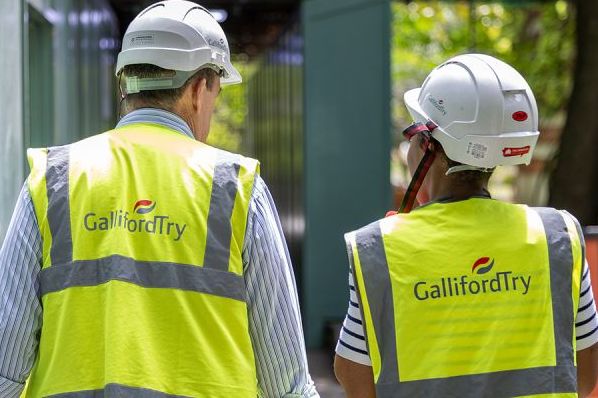
Galliford Try has secured a £16.1m Department for Education cost-pilot contract to rebuild St Helens Primary School in Hartlepool, which currently accommodates 374 pupils plus an additional resourced provision for 25 children with special educational needs. The new two-storey facility, due for handover in summer 2027, will be designed as net zero carbon in operation, with fabric-first energy efficiency measures aimed at cutting long-term running costs. Facilities will include a main hall, library, nursery, staffroom and both hard and soft external play areas.
Reforms to the National Planning Policy Framework announced in December 2024 have yet to lift housebuilding, with the Office for Budget Responsibility’s March 2026 Economic and Fiscal Outlook showing net additions to the UK housing stock falling from around 260,000 a year in the early 2020s to a projected low of 220,000 in 2026-27. The OBR still expects planning changes to push net additions to just over 305,000 by 2030-31, compared with a current stock of more than 32 million dwellings. For contractors, developers and ground engineers, this points to a short-term pipeline dip before a potential late-decade ramp-up in housing sites and associated infrastructure.
Galliford Try has acquired Northamptonshire-based Nene Valley Fire & Acoustic for approximately £10m in cash, adding a 70-strong fire door installation and maintenance specialist to its Asset Intelligence and Oak Fire Protection passive and active fire businesses, with the deal expected to be margin accretive in year one. The contractor reported interim pre-tax profit up 21% to £24.3m on revenue of £934.9m for the six months to 31 December 2025, slightly ahead of expectations. Its order book has grown from £3.9bn to £4.1bn over 12 months, with management signalling higher revenue and margin expectations through to 30 June 2026.
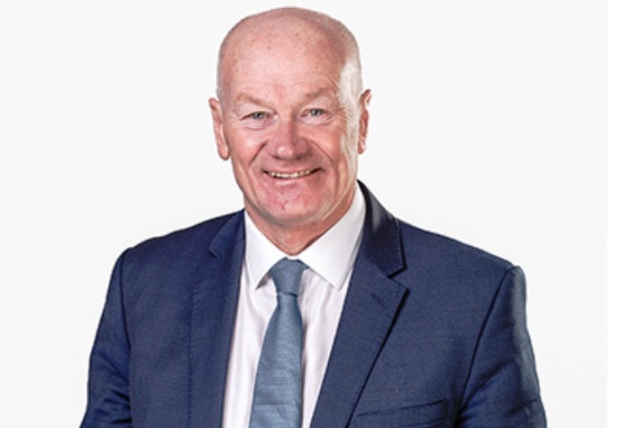
Barratt Redrow has appointed Dean Banks, currently chief executive of Australia–New Zealand infrastructure services group Ventia Pty and former head of Balfour Beatty UK Construction Services, as its next CEO from Q4 2026. Long‑serving chief executive David Thomas, who has led the housebuilder for 11 years and spent 17 years at the group, will stay on until March 2027 to manage the handover. Banks’ background spans more than five years at Balfour Beatty plus senior roles at Massey Ferguson and De La Rue, signalling a continued emphasis on disciplined execution and large‑scale project delivery.
Chancellor Rachel Reeves’ spring statement drew warnings from the Construction Plant-hire Association that family-run hire firms face higher employer national insurance, rising wage bills and impending changes to business property relief and inheritance tax, threatening delivery of the 1.5m homes target without measures such as full expensing for leased plant. BCIS data services director Karl Horton cautioned that the OBR’s downgraded 1.1% GDP growth forecast for 2026, combined with Middle East unrest and oil and gas price spikes, could push up transport, materials and tender prices. The National Federation of Builders argued that planning reforms have only partly unwound a “bureaucratic quagmire”, making 300,000 homes per year by 2030 feasible but the 1.5m pledge unlikely without an Autumn Budget boost for Help to Buy, key infrastructure and SME builders.
Vistry Group’s combined chair and chief executive Greg Fitzgerald will retire, stepping down as chair at the AGM on 13 May 2026 and remaining CEO for up to 12 months while a successor is recruited. Fitzgerald, who previously led Galliford Try and drove the £1.1bn acquisition of its Linden Homes and Partnerships & Regeneration businesses in 2020 to create Vistry, also oversaw the later acquisition of Countryside and a pivot to partnerships-led, affordable, mixed-tenure housing. Vistry’s 2025 results show pre-tax profit up 87% to £196m despite a 4% revenue fall to £3.614bn, signalling a robust platform for the incoming leadership.
Kier Transportation, John Graham Construction and John Sisk & Son will share National Highways’ £968m legacy concrete roads reconstruction framework, targeting the 5% of England’s motorway and trunk network still built in 1960s–70s concrete. Running for six years to 2032, the programme covers full pavement demolishment and reconstruction, principal designer/contractor duties, and design of temporary traffic management on sections concentrated in the northeast, Yorkshire, East Anglia and the southeast. Contractors must record carbon, and recover, recycle and reuse arisings to minimise embodied emissions and support circular-materials use.
Sandvik Rock Processing is running a dedicated Exciter Repair and Refurbishment Facility in South Africa to keep its vibrating screens operating at design stroke, speed and G-force for longer intervals between failures. Led by Aftermarket Manager for Screening Solutions (Africa), Sydney Baloyi, the in-house service focuses on OEM-spec overhauls of exciters, including bearing replacement, precision machining and dynamic balancing. For plant operators, this centralised facility reduces unplanned screen downtime and supports higher throughput on critical classification circuits.
Mineral Mining Services (MMS) has secured a comprehensive mining services contract from Ora Banda Mining at the Davyhurst Gold Project in Western Australia’s Goldfields, covering full load-and-haul, drill and blast, and associated open-pit mining activities. The award expands MMS’s portfolio from specialist services into full-scale contract mining, positioning it as the primary mining contractor across Davyhurst’s multiple satellite pits. For geotechnical and production teams, the single-provider model should streamline pit scheduling, drill-and-blast design and haulage fleet integration across the project’s dispersed ore sources.
Komatsu has launched the HM460-6 articulated haul truck at CONEXPO-CON/AGG 2026 in Las Vegas, built around a new high-output powertrain and advanced traction control system to keep payloads moving over soft or uneven haul roads. The redesigned operator environment targets better visibility and control ergonomics, signalling a push towards higher cycle-time consistency on challenging ground conditions in quarrying and small to mid-scale mining. For mine planners and contractors, the focus is on more reliable material movement rather than simply higher peak capacity.
Efforts to cut comminution emissions are centring on flowsheet-wide changes such as higher-pressure grinding rolls replacing SAG mills, coarse particle flotation to allow coarser primary grind, and in-pit or near-pit crushing to reduce haulage energy. OEMs are pairing more efficient cone crushers and stirred mills with digital load monitoring, ore characterisation sensors and advanced process control to stabilise circuits and avoid overgrinding. For mine planners and process engineers, the direction of travel is towards fewer, more energy‑intensive unit operations run at optimised throughput rather than incremental tweaks to legacy multi-stage crushing.
Global Air Cylinder Wheels has completed extreme-condition validation of its patented Air Suspension Wheel (ASW) in Minnesota mining operations and is targeting commercial deployment in 2026. The ASW replaces conventional pneumatic tyres with a steel air-cylinder and suspension system designed to run cooler, resist blowouts and maintain performance in sub-zero winter conditions typical of iron ore and taconite sites. For mine operators, the technology aims to cut haul truck tyre failures and downtime on high-impact haul roads while enabling heavier loads without increasing rim size.