Geomechanics, Streamlined.
© 2026 Geomechanics.io. All rights reserved.
Austmine has appointed Tony Davis as Chief Executive Officer, effective 1 April 2026, bringing more than 30 years’ senior executive experience across government and mining-related industrial, energy and advanced manufacturing sectors. Davis has a track record in building Australian mining equipment, technology and services (METS) capability in global markets, including export-oriented advanced manufacturing and energy technology projects. His appointment signals continued emphasis on technology-led productivity and supply-chain development for Australian METS companies serving large-scale open-pit and underground operations worldwide.
Sandvik has launched the CH442 and CH662 cone crushers at CONEXPO-CON/AGG 2026 in Las Vegas as the next evolution of its CH400 and CH600 series for hard rock and aggregates applications. The new models target higher uptime and reduced maintenance through upgraded hydraulic systems, improved liner configurations and optimised crushing chambers tailored for secondary and tertiary duties. For mine and quarry operators, the machines are positioned for tighter control of product size distribution and more stable performance in automated, high-throughput crushing circuits.
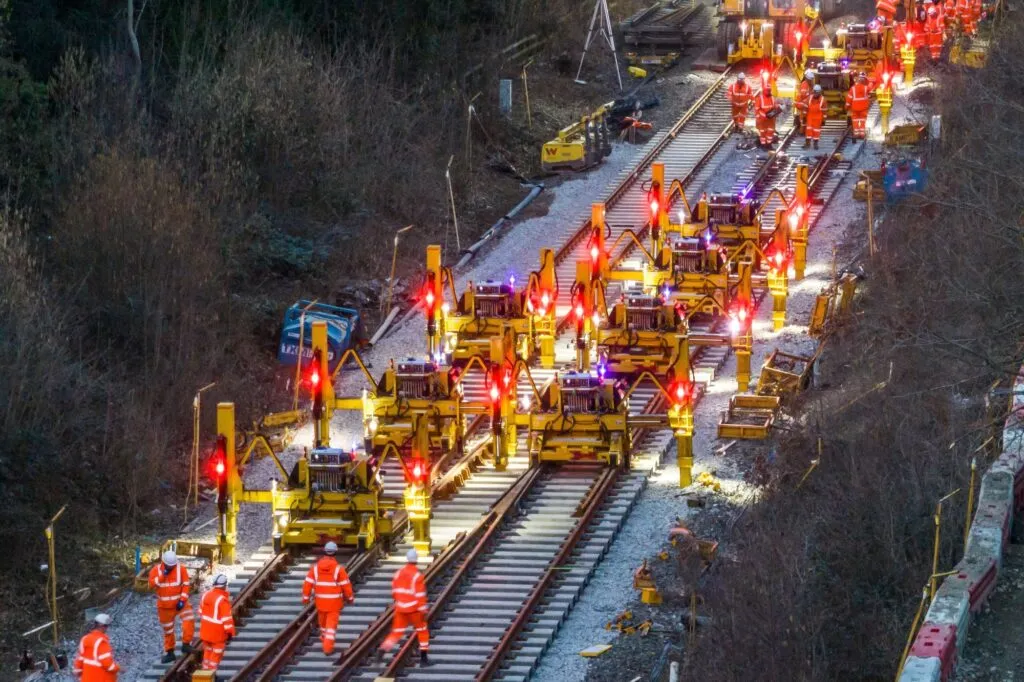
Network Rail has awarded Arcadis a £100M programme delivery partner contract on the Transpennine Route Upgrade, a major rail modernisation between Manchester, Leeds and York. Arcadis will support integration of track, civils, structures and systems works across multiple work packages, coordinating interfaces between electrification, signalling and capacity enhancements. The appointment signals continued momentum on TRU’s complex multi-phase delivery, where tight possession windows, legacy Victorian structures and mixed-traffic performance requirements will drive demanding design, staging and constructability decisions for civil and rail engineers.
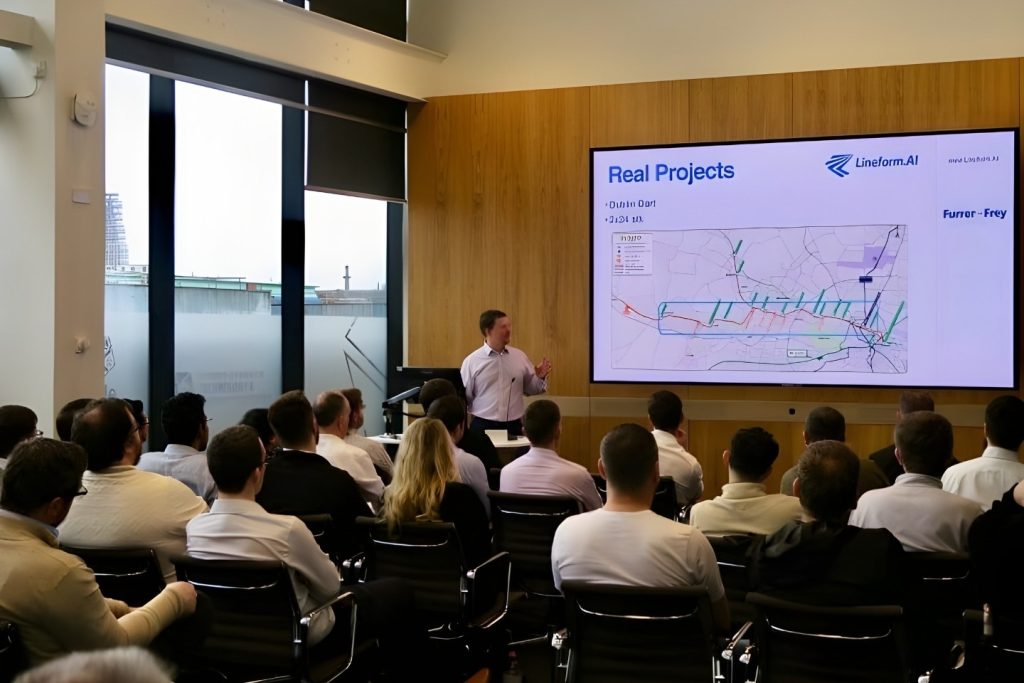
An artificial intelligence tool unveiled in Glasgow is being used by Network Rail to optimise overhead line equipment layouts and mast positions for rail electrification schemes, cutting design time and early-stage survey work. Developed with industry partners, the system rapidly tests multiple wiring configurations against gauge, clearance and structural constraints that would traditionally require extensive manual CAD work and site visits. Early deployment on UK route upgrades is already delivering measurable cost savings in design and enabling faster iteration of electrification options at GRIP/Project SPEED stages.
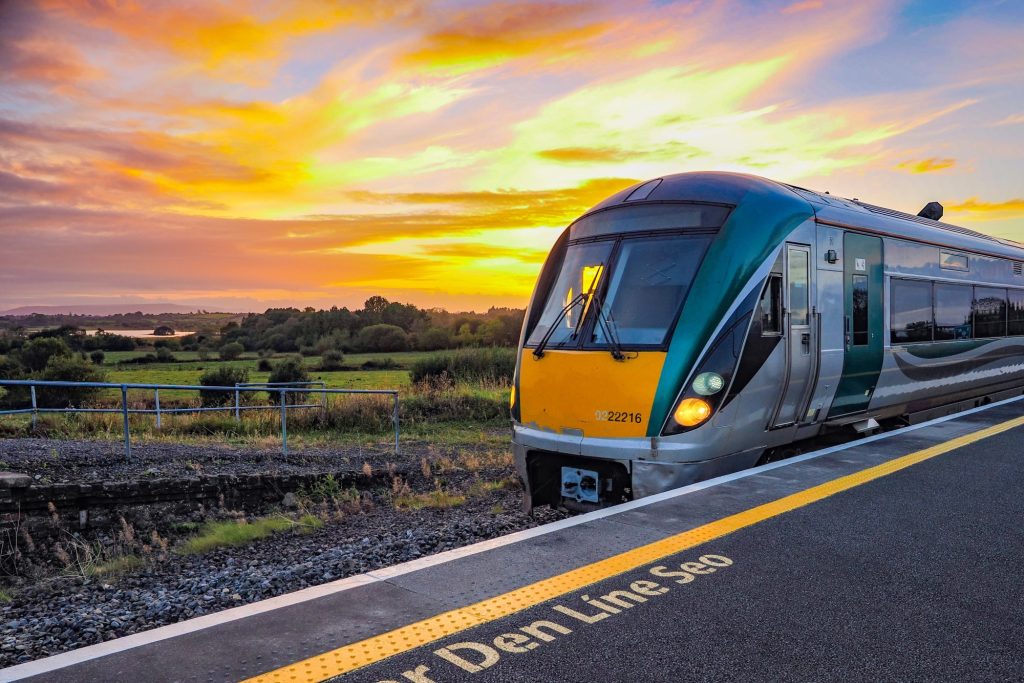
A campaign group has proposed a new metro-style rail system for the north‑west of Ireland, aiming to accelerate long-delayed cross‑border links and station upgrades promised in existing transport plans. The concept reframes current and planned heavy rail corridors into a higher-frequency, integrated network, rather than relying solely on new greenfield alignments. For civil and rail engineers, the shift implies prioritising corridor capacity upgrades, station reconfiguration and signalling modernisation to deliver earlier operational benefits within existing rights‑of‑way.
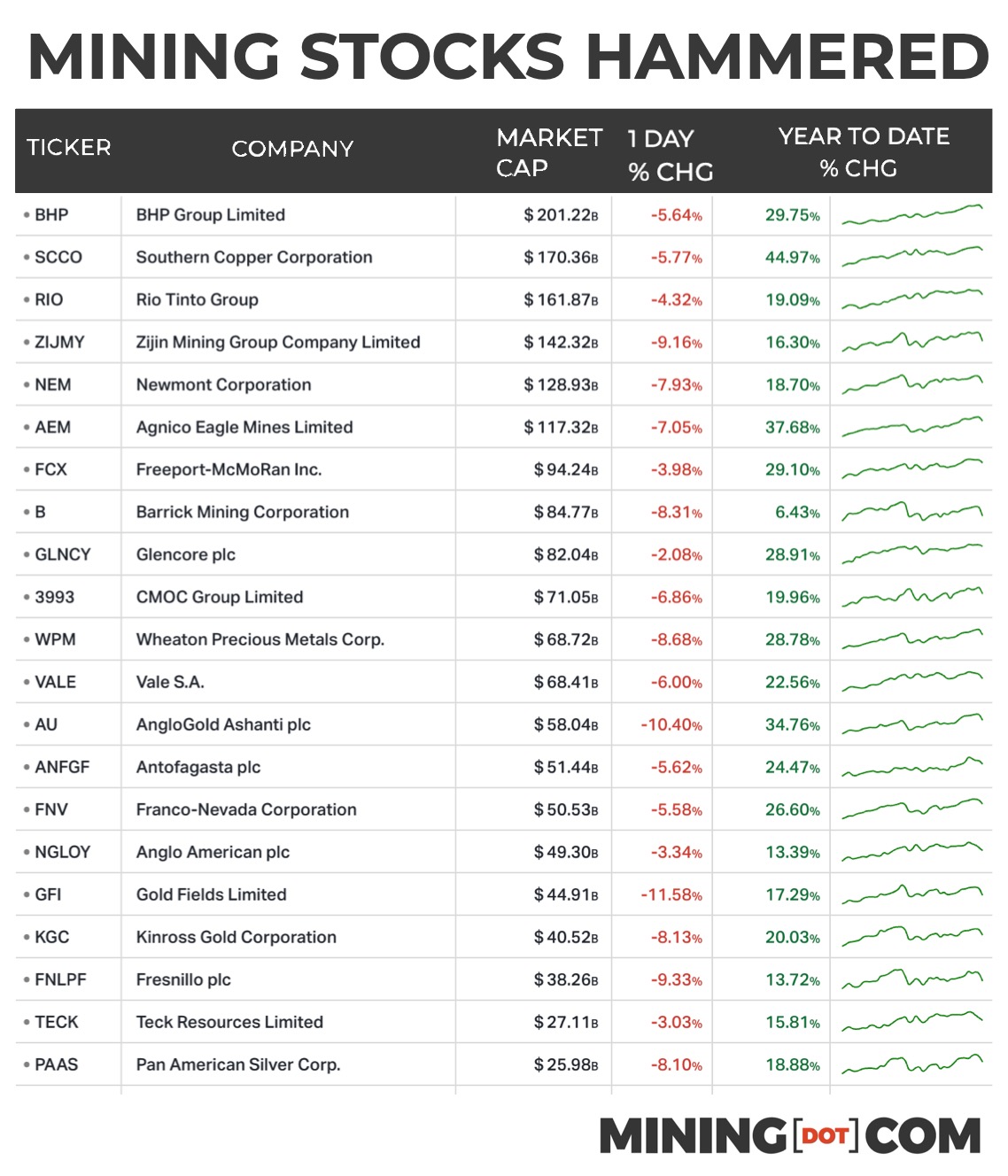
Mining equities sold off sharply as the Iran–US conflict escalated, with gold futures briefly nearing $5,000/oz before closing down 3.5% and silver trading around $83/oz, still 6% lower on the day, while copper slipped 2% to $5.83/lb. Newmont, Barrick and AngloGold Ashanti fell 7.9%, 8.3% and 10.4% respectively, Gold Fields dropped 11.6%, and platinum-focused Valterra Platinum slid 13.6% after intraday platinum price falls of up to 10%. Diversified and copper majors fared slightly better, with BHP down 5.6%, Southern Copper 5.8%, Rio Tinto 4.3% and Glencore only 2.1% helped by trading roughly 4 million boe/day of oil.
Weir has acquired the remaining 50% of Chile-based ESCO Elecmetal Fundición Limitada (ESEL), taking full ownership of the ground engaging tools manufacturer previously operated as a joint venture. The deal, first announced on 12 December 2025, gives Weir direct control over ESEL’s foundry and wear parts production for mining buckets, shovels and loaders across South America. Full integration is expected to tighten supply chains for cast GET components and allow closer alignment of design, metallurgy and service support with Weir’s comminution and slurry equipment portfolio.
Sandvik has launched the Ranger DX1010i long-feed top hammer drill rig at CONEXPO-CON/AGG 2026 in Las Vegas, extending the Ranger DXi family with up to 6.4 m single-pass drilling and a significantly higher onboard compressor output for demanding mine benches. The longer feed reduces collaring cycles and set‑ups per hole, while the upgraded air capacity supports larger hole diameters and more efficient flushing in hard, fractured ground. For mine planners and drill‑and‑blast engineers, the rig targets higher penetration rates and tighter pattern control on mid-sized production and pre-split drilling.
DIGITAL is committing C$4.0 million in co-investment to Novamera Inc. to advance the next phase of its Surgical Mining™ system, an AI-guided, narrow-vein extraction method aimed at low‑disturbance recovery of copper and rare earth element orebodies in North America. The funding will support field deployment of downhole sensing, directional drilling and real‑time orebody imaging to selectively mine steeply dipping, small‑scale deposits that are uneconomic for conventional stoping. Novamera will also work with Ontario regulators to create a First-of-a-Kind permitting pathway tailored to this minimal-footprint approach.
Eldorado Gold’s Lamaque Complex in Val‑d’Or, Québec has received the Mining Association of Canada’s Towards Sustainable Mining Gold Leadership Award after achieving Level AAA, the highest rating across TSM performance protocols. The recognition covers site-level performance in areas such as tailings management, energy and greenhouse gas control, Indigenous and community relationships, and safety and health systems. For engineers and operators, Lamaque now serves as a benchmark operation for MAC’s TSM framework, particularly on integrated ESG governance at an underground gold complex.
Work to deliver the new elevated Melton Station in Victoria has installed all six lift shafts and four staircases, with glazing and cladding of the station structures scheduled over the coming months. A 16‑metre‑wide pedestrian thoroughfare beneath the viaduct is being formed as part of the grade separation, enabling removal of nearby boom gates and improving rail–road interface performance. For designers and contractors, the works signal continued rollout of elevated rail with multi-span structures and integrated vertical transport systems in Melbourne’s outer suburbs.
Heathrow Airport has appointed Turner & Townsend and AtkinsRéalis to provide portfolio management office services for its long‑term expansion programme, signalling a move into detailed, multi‑year delivery planning. The PMO mandate is expected to cover cost control, schedule integration and risk management across major airside and landside works, including future terminal, runway and surface access upgrades. Civil and geotechnical contractors should anticipate more tightly governed frameworks, standardised reporting and earlier integration of constructability and ground risk data into programme‑level decisions.
Rachel Reeves’ 2026 Spring Statement, centred on a message of macroeconomic “stability” and fiscal restraint, offered no new funding envelopes or timelines for major infrastructure beyond previously announced pledges. Contractors and consultants had anticipated clarity on delivery of schemes such as the £36bn Network North package and long-term settlements for the Road Investment Strategy and rail enhancements. The lack of detail on multi‑year capital budgets and pipeline phasing prolongs uncertainty for design teams, geotechnical investigations and supply-chain capacity planning.
Motion’s Wittenbaker Engineering Services in Mackay is expanding its role as a heavy-industry repair and fabrication hub, using advanced CNC machining centres and industrial knife-cutting systems to tackle complex mining components. The workshop focuses on refurbishing and custom‑manufacturing parts for conveyors, draglines and other large mobile plant, aiming to reduce lead times compared with OEM supply and extend component life in abrasive conditions. For site engineers, the capability to machine large, high‑tolerance parts locally offers more options for redesign, wear‑material upgrades and rapid failure response.
Austmine is positioning Australian mining equipment, technology and services (METS) suppliers for global partnerships as countries seek new industry-building collaborations in exploration, extraction and processing. The organisation is leveraging its Australian Pavilion model at major international mining expos and trade missions to connect local OEMs, drill and blast specialists, and digital mining technology firms with overseas operators and governments. For engineers and contractors, this signals growing export opportunities for Australian-developed solutions in areas such as mine automation, ore characterisation and remote operations support.
Sunrise Energy Metals has completed the feasibility study for its Syerston scandium project in New South Wales, positioning the deposit as a potential large-scale, long-life source of scandium for global alloy and battery markets. The study confirms mine and process plant designs tailored to scandium recovery, including hydrometallurgical treatment of lateritic ore and downstream refining to high-purity scandium oxide. For engineers, the project signals future demand for scandium-bearing aluminium alloys and solid oxide fuel cell materials, with supply security moving from by-product to dedicated primary production.
Mineral Resources’ mining services division posted a record first-half result, with volumes and revenue boosted by strong external demand and ramp-up activity at the Onslow Iron project in Western Australia. The business expanded crushing and processing contracts across multiple iron ore hubs, while deploying additional mobile crushing plants and higher-capacity haulage fleets to lift throughput. For contractors and mine operators, the performance signals continued appetite for outsourced crushing, screening and haulage, particularly on large-scale Pilbara-style iron ore developments.
Applications have opened for Queensland’s 2026 mine rehabilitation scholarships, targeting emerging researchers working on post-mining land use, tailings management and progressive rehabilitation of open-cut and underground sites across the state. The programme is expected to support projects on issues such as acid mine drainage control, cover system design for waste rock and tailings, and long-term stability of backfilled pits under Queensland’s tightening rehabilitation and financial assurance regime. For consultants and operators, the scheme signals future regulatory and technical priorities for closure planning and geotechnical design.
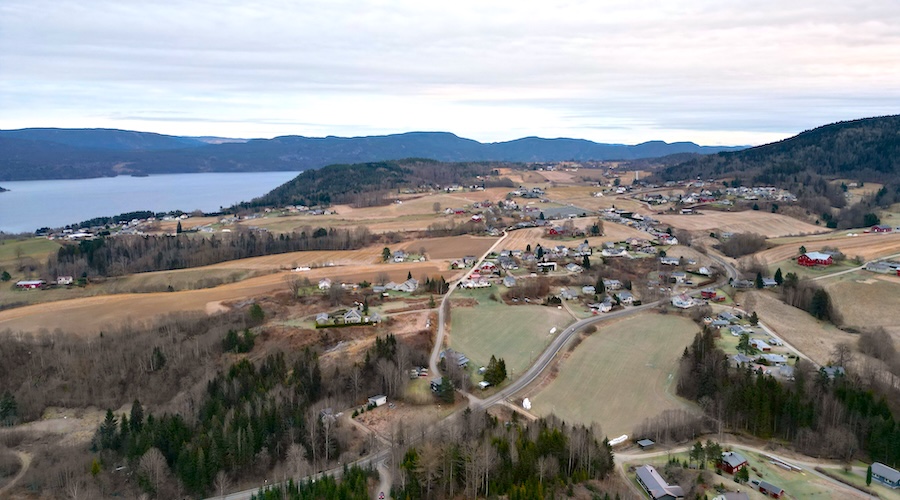
Rare Earths Norway has increased the Fen carbonatite complex resource by 81% to 15.9 million tonnes of indicated and inferred rare earth oxides, with 19% NdPr content, overtaking Sweden’s Per Geijer deposit (2.2 million tonnes REO) as Europe’s largest. The company targets late‑2031 start-up and 800 tonnes/year NdPr by 2032, equivalent to about 5% of EU demand, and already holds an extraction permit but still needs an operating permit. Fen also hosts niobium and thorium, positioning it for a potential “mine‑to‑magnet” value chain under the EU’s ResourceEU critical minerals plan.
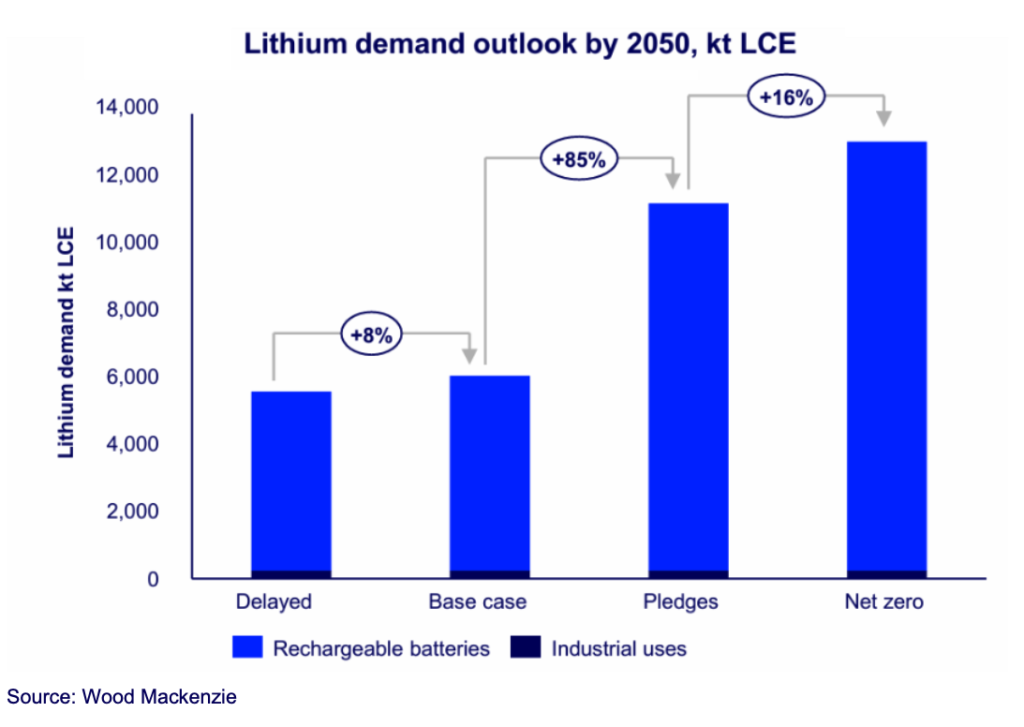
Global lithium demand is projected by Wood Mackenzie to reach up to 13.2 million tonnes LCE by 2050 under a net-zero pathway, with market deficits starting as early as 2028 and total sector investment needs ranging from $104 billion (delayed transition) to $276 billion (net zero). Electric vehicles account for 72%–80% of demand across scenarios, with EV penetration reaching 75% by 2040 under current country pledges and 95% under net zero, while grid-scale energy storage grows 6%–7% annually. Recycling is forecast to supply 2.3–2.7 million tonnes LCE by 2050, leaving 6.7–8.5 million tonnes of new supply still required, implying sustained pressure on new mines, refineries and regionalised supply chains from the 2030s.
Shorter, more frequent commodity volatility cycles are eroding supercycle-based trading models and concentrating value among firms with advanced AI and strong control of physical flows, with sector-wide trading revenues at $69 billion in 2025, roughly double pre-pandemic levels. McKinsey estimates around $20 billion of optimisation value remains untapped in oil and gas products, and early agentic AI deployments are delivering 50–60% efficiency gains in support functions by automating post-trade operations and compressing deal cycles. In a January 2026 survey of 150 professionals, 49% favoured partnership-led expansion of trading capabilities, rising to 78% in Asia and 80% in the US, with metals, mining, oil and gas targeted for the largest investment increases.
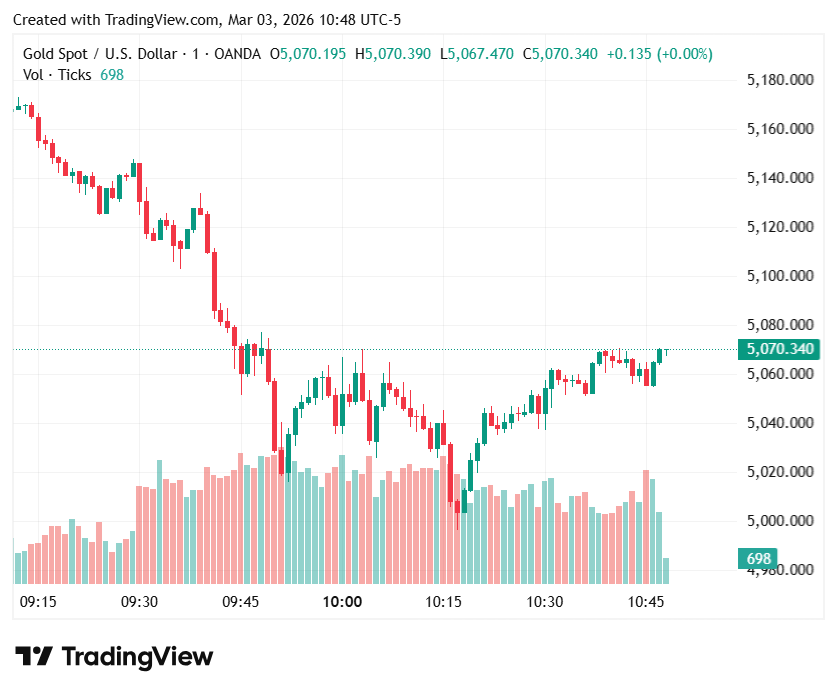
Gold prices slumped as spot bullion dropped 6% to about $5,018/oz from a one‑month high above $5,400/oz, with futures down over 4% and silver sliding nearly 12% to below $80/oz amid a stronger US dollar and rising US bond yields. The move erased last week’s gains but still leaves gold more than 17% higher year‑to‑date, as the Iranian conflict, now in its fourth day, drives energy prices and complicates Federal Reserve rate‑cut expectations. XS.com and RJO Futures analysts frame the sell‑off as a liquidity event, with BNP and JPMorgan still projecting gold above $6,000/oz by year‑end.
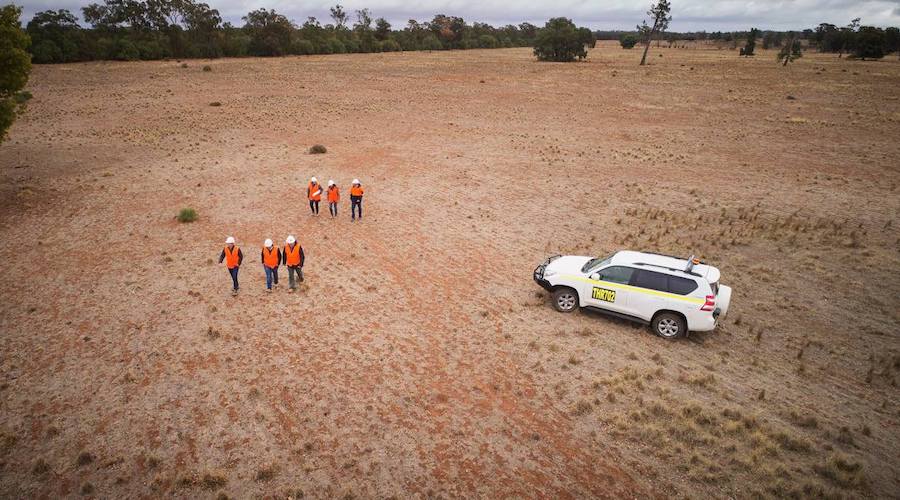
Sunrise Energy Metals has completed the feasibility study for its Syerston scandium project in New South Wales, outlining Phase 1 production of 60 tonnes per year of scandium oxide (Sc2O3) over a 32‑year mine life at a capital cost of $120 million and C1 cash operating costs of $534/kg. The laterite deposit, about 450 km west of Sydney, contains nearly 46 million measured and indicated tonnes grading 414 ppm scandium, positioning it as one of the largest high‑grade scandium resources outside China. With China supplying 80–85% of global scandium and tightening exports, Syerston is being framed as a key non‑Chinese source for aerospace aluminium alloys, solid oxide fuel cells for AI data centres, and advanced electronics.
US Antimony has reported an SRK Consulting–prepared inferred resource of 14.62 million tonnes at 0.17% WO₃ (53.6 million lb contained) at its Fostung tungsten project, 70 km west of Sudbury, replacing a previous 12.4 million tonnes at 0.213% estimate. The company plans an initial open-pit operation leveraging existing infrastructure, followed by underground mining, and has applied for US Defense Production Act Title III funding to accelerate development. If built, Fostung could be the first tungsten ore source in the US or Canada since 2016, in a market where WO₃ prices have nearly tripled to about $1,890/t.