Geomechanics.io

  • Free Tools
Sign UpLog In
AllGeotechnicalMiningInfrastructureMaterialsHazardsEnvironmentalSoftwarePolicy

Geomechanics.io

Geomechanics, Streamlined.

© 2026 Geomechanics.io. All rights reserved.

Geomechanics.io

CMRR-ioGEODB-ioHYDROGEO-ioQCDB-ioFree Tools & CalculatorsBlogLatest Industry News

Industries

MiningConstructionTunnelling

Company

Terms of UsePrivacy PolicyLinkedIn
    Projects
    Sustainability

    Pepsi’s new solar generation: structural design notes for industrial roofs

    March 14, 2026|

    Reviewed by Joe Ashwell

    Pepsi’s new solar generation: structural design notes for industrial roofs

    First reported on The Construction Index

    30 Second Briefing

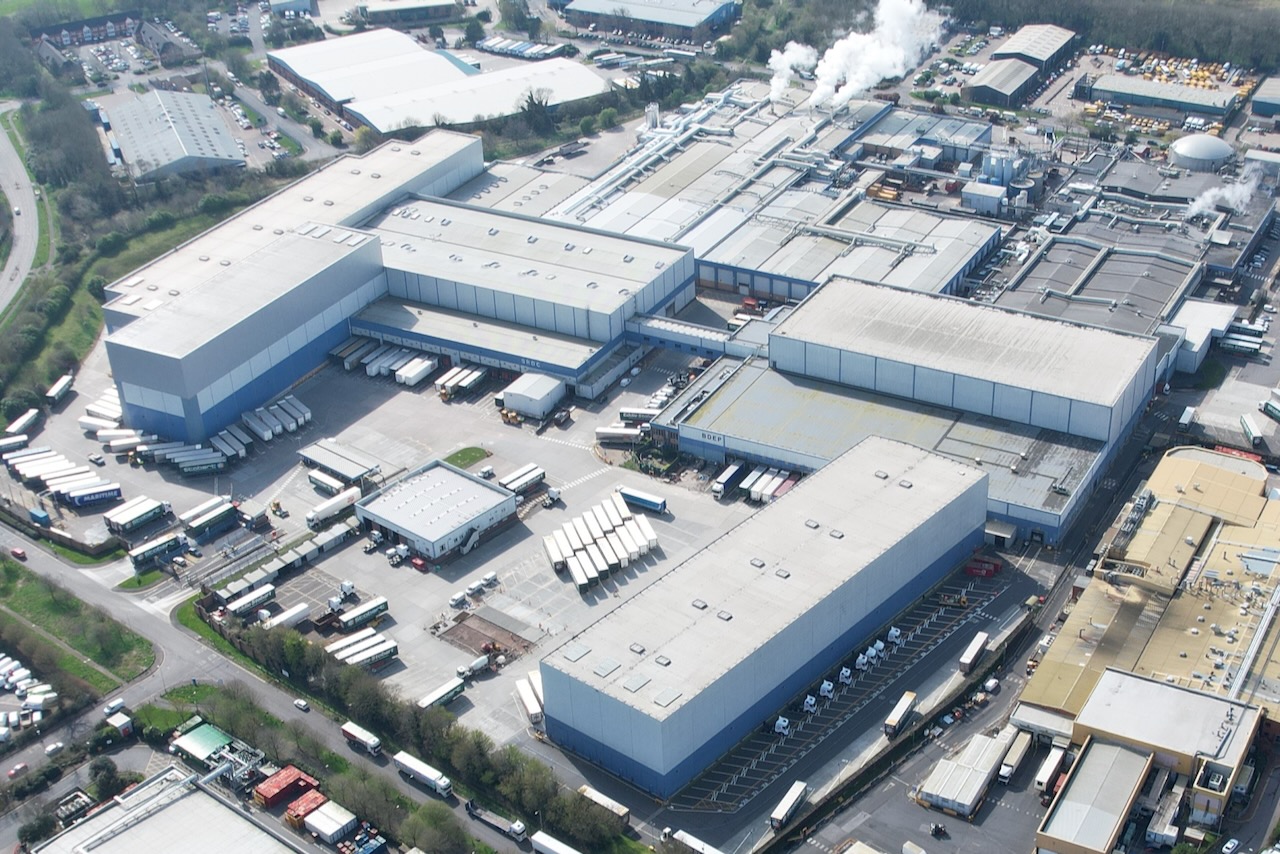
    PepsiCo UK is investing £3.6m in rooftop solar at its Leicester distribution centre, with Ineco Energy installing photovoltaic panels across 30,000m² of roof area. The system is designed to supply 100% of the site’s electrical demand, effectively turning the facility into a fully solar-powered logistics hub under typical operating conditions. For industrial estate designers and structural engineers, the project signals continued demand for large-span roof structures with sufficient load capacity, access, and detailing to support extensive PV arrays.

    Technical Brief

    • Large continuous arrays will require detailed consideration of wind uplift, edge zones and fixings to existing purlins.
    • Cable routing from distributed inverters to main switchgear will drive roof penetration detailing and fire-stopping design.
    • Integration with existing LV distribution and protection schemes will need discrimination studies and export-limiting logic if grid-tied.
    • Construction sequencing on an operational distribution centre constrains crane access, laydown areas and temporary roof loadings.
    • O&M access routes, walkways and non-slip surfaces must be planned to avoid overloading local roof elements.
    • Similar logistics roofs may need future-proofing for PV by increasing purlin capacity and specifying PV-friendly roof cladding.

    Our Take

    Among the 733 Infrastructure stories in our database, relatively few feature consumer-goods manufacturers like PepsiCo UK, signalling that on-site generation at food and beverage distribution hubs is still at an early but visible stage in the UK.

    A £3.6 million clean-energy upgrade at a single Leicester distribution centre suggests PepsiCo UK is treating energy resilience and power-cost hedging as core operational issues rather than CSR, a pattern also seen in other large-scale logistics facilities in the United Kingdom.

    Ineco Energy’s role at the Leicester site positions it alongside a small group of recurring sustainability-focused contractors in our 2053 tag-matched ‘Projects, Sustainability’ pieces, which often go on to secure repeat work across multiple industrial estates once a flagship installation is delivered.

    Geotechnical Software for Modern Teams

    Centralise site data, logs, and lab results with GEODB-io, CMRR-io, and HYDROGEO-io.

    No credit card required.

    • Save and export unlimited calculations
    • Advanced data visualisation
    • Generate professional PDF reports
    • Cloud storage for all your projects

    Prepared by collating external sources, AI-assisted tools, and Geomechanics.io’s proprietary mining database, then reviewed for technical accuracy & edited by our geotechnical team.

    Related Articles

    National Grid TBM under the Thames: tunnelling design and risk notes for engineers
    Infrastructure
    in 9 months

    National Grid TBM under the Thames: tunnelling design and risk notes for engineers

    A 271.5‑tonne Herrenknecht Mixshield TBM, Caroline, has started driving a 2.2km electricity cable tunnel with a 4m internal diameter beneath the River Thames in Essex for National Grid’s Grain to Tilbury project, delivered by the Ferrovial BEMO joint venture. The drive will pass through variable Thames estuary ground conditions between 35m‑deep launch and reception shafts of 15m and 12m diameter, with tunnelling continuing into 2026 and overall scheme completion targeted for 2029. The new tunnel will replace the 1969 Thames Cable Tunnel and carry new high‑voltage circuits between Grain and Tilbury substations.

    Panama Canal Mixshield undercrossing: design and tunnelling lessons for engineers
    Infrastructure
    in 9 months

    Panama Canal Mixshield undercrossing: design and tunnelling lessons for engineers

    A 13.46m diameter Herrenknecht Mixshield TBM has broken through into the future Balboa station on Panama Metro Line 3 after completing the first-ever TBM undercrossing of the Panama Canal at depths exceeding 60m below sea level. The 5,600kW, 26,616kNm machine, fitted with an accessible cutterhead and more than 4,500 sensors linked via the Herrenknecht.Connected platform, has achieved peak advance of 150 segment rings (about 300m) per month through mixed sandstone, tuff, breccias and basalt. Around 1.5km of the 4.5km twin-track tunnel remains to final breakthrough.

    Hudson Tunnel funding deadline: schedule and risk takeaways for project teams
    Infrastructure
    in 8 months

    Hudson Tunnel funding deadline: schedule and risk takeaways for project teams

    Federal funding for New York’s US$16bn Hudson Tunnel Project has been frozen, forcing the Gateway Development Commission to suspend works from 6 February after spending over US$1bn and employing about 1,000 site workers. A Manhattan federal judge has issued a temporary restraining order, giving the administration until 5 p.m. on 12 February to restore reimbursements or appeal, while contractors warn that demobilisation, resequencing and remobilisation will add cost and delay. Sites are now in “safe-pause” mode, with dewatering, ground support and environmental monitoring maintained, and assembly of two Herrenknecht TBMs in New Jersey likely to slip beyond the planned spring 2026 launch without funding certainty.

    Related Industries & Products

    Construction

    Quality control software for construction companies with material testing, batch tracking, and compliance management.

    Mining

    Geotechnical software solutions for mining operations including CMRR analysis, hydrogeological testing, and data management.

    QCDB-io

    Comprehensive quality control database for manufacturing, tunnelling, and civil construction with UCS testing, PSD analysis, and grout mix design management.