Geomechanics, Streamlined.
© 2026 Geomechanics.io. All rights reserved.
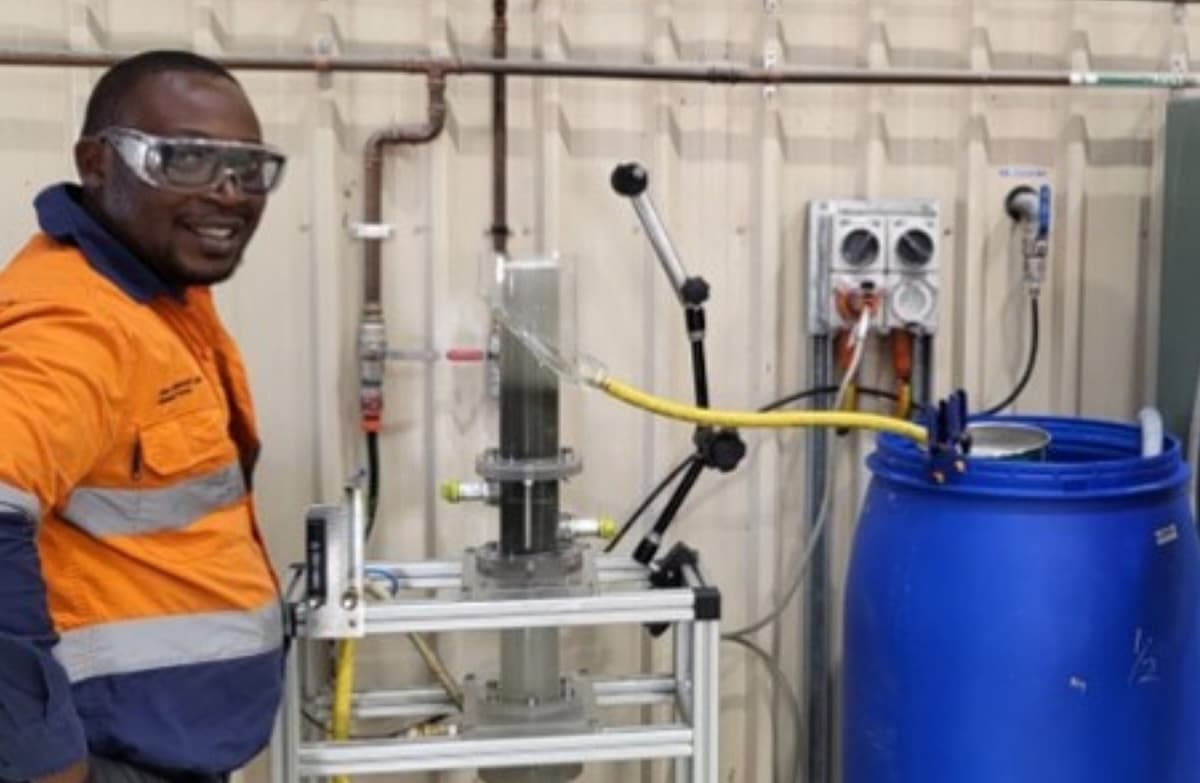
The University of Queensland’s Collaborative Consortium for Coarse Particle Processing Research is entering a second five‑year phase to scale up coarse particle flotation technologies that allow recovery of particles up to several millimetres, reducing grinding energy and water use. Phase I delivered the JKHFmini laboratory rig and plant trials with Eriez HydroFloat and FLSmidth REFLUX Flotation Cell units on copper and gold ores, targeting coarser grind sizes than conventional circuits. The renewed program will expand pilot‑scale testing and integrated circuit modelling, with direct implications for comminution circuit design, tailings management and brownfield plant retrofits.
Larvotto Resources is progressing a tailings reprocessing and site rehabilitation strategy at the historic Hillgrove antimony–gold project in New South Wales, targeting metal recovery from legacy tailings rather than fresh underground ore. The plan centres on re-treating existing tailings storage facilities using modern processing to extract residual antimony and gold while reshaping and capping the deposits to contemporary geotechnical and environmental standards. For engineers, the project signals further demand for tailings characterisation, stability assessment and water management design on brownfield Australian sites.
More than 1,900 UK trade union members have signed a letter urging the government to reject development consent for the Rosebank oil and gas field in the North Sea, one of the basin’s largest undeveloped discoveries. The signatories, drawn from energy, construction and transport unions, argue that new offshore infrastructure such as production platforms, subsea pipelines and tie-backs would lock in high-carbon assets and divert investment from grid upgrades and large-scale offshore wind. For civil and marine contractors, the move signals potential political and permitting risk for future North Sea platform, export pipeline and onshore terminal works.
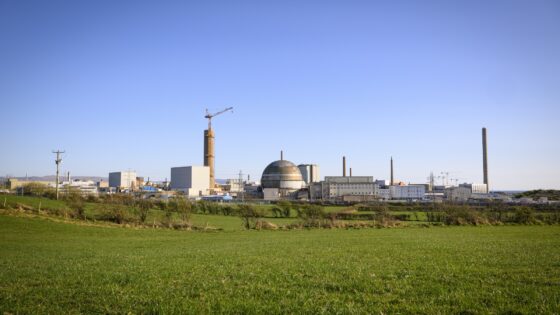
Progress on Morgan Sindall’s Sellafield Product and Residue Store Retreatment Plant (SRP) has reached an “important milestone” within the Programme and Project Partners (PPP) framework, advancing a key facility for long-term management of high-hazard nuclear residues. The SRP will retreat and condition legacy product and residue wastes from existing stores on the Sellafield site, preparing them for safe encapsulation and future geological disposal. For civil and nuclear engineers, the project is a major reference for complex reinforced concrete, containment and remote-handling infrastructure in a highly regulated brownfield environment.
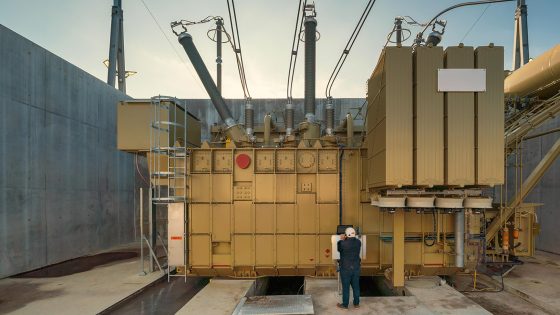
UK electricity distribution networks are increasingly exposed to extreme weather and rising peak demand, and a new Imperial College London report urges DNOs to shift from reactive fault repair to preventative resilience planning. The report calls for earlier reinforcement of substations and overhead lines in flood- and storm-prone areas, and for systematic use of probabilistic risk assessment rather than relying on historic outage data. For civil and geotechnical teams, this points to more pre-emptive hardening of foundations, access routes and flood defences around primary and secondary substations.
MPs on the Transport Committee question whether Heathrow’s proposed £49bn third runway and associated infrastructure can be delivered solely through private finance, given the airport’s already high debt levels. Concerns centre on potential future calls for taxpayer support for enabling works such as tunnelling and diverting the M25, rail and utilities interfaces, and major airfield reconfiguration. For designers and contractors, funding uncertainty could affect phasing, procurement models and risk allocation on large geotechnical and civils packages tied to the expansion.
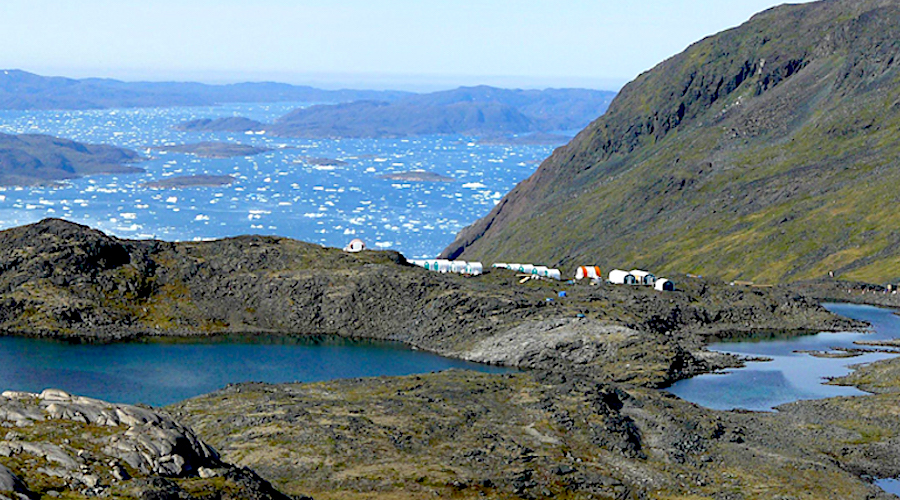
Greenland’s long-running dispute over Energy Transition Minerals’ Kvanefjeld rare earth and uranium-linked deposit shows that execution risk in permitting and regulatory stability can derail critical-minerals projects as effectively as metallurgy or ore grade. Alina Karpunina of GEM Mining Consulting argues that investors now price in years of legal conflict as a project cost, demanding higher premiums or walking away when uranium thresholds under Greenland’s 2021 law and shifting political signals make approvals look fragile. While projects like Malmbjerg molybdenum, Amitsoq graphite and Tanbreez progress under the 2025–2029 Mineral Resources Strategy and the 2023 EU-Greenland raw-materials partnership, she warns that unclear, revisable rules can render “strategic” deposits effectively unfinanceable.
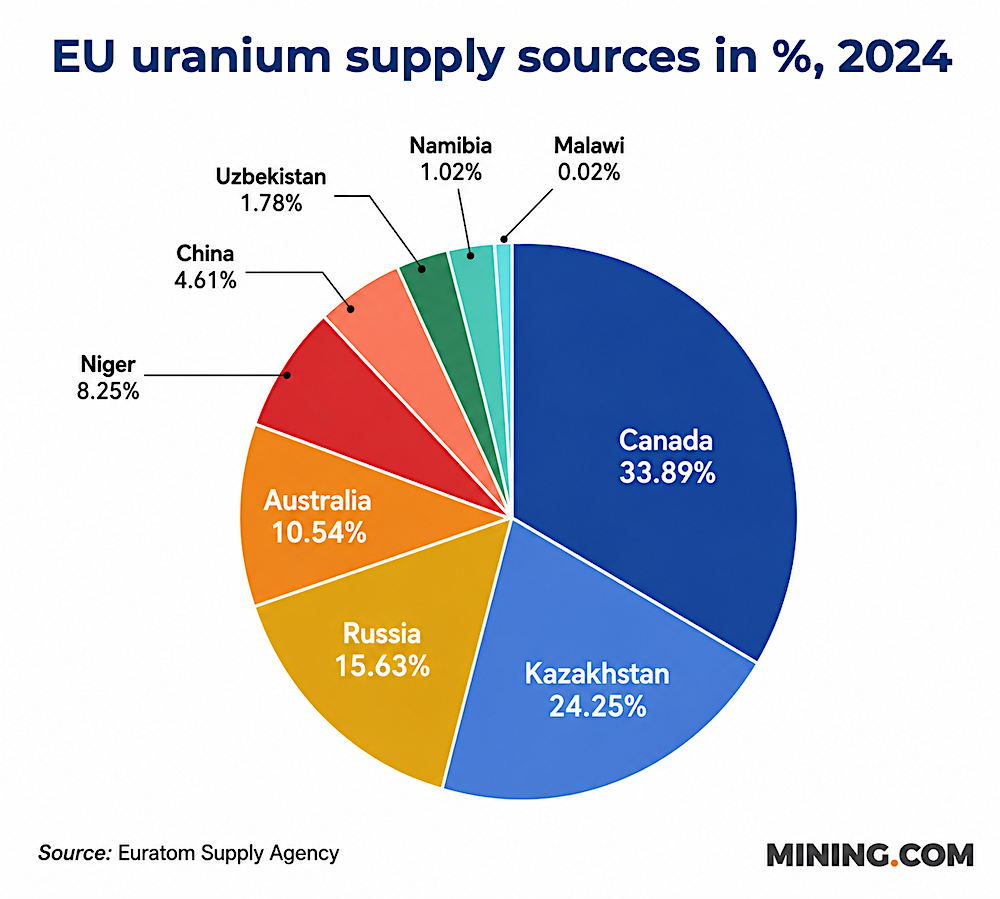
Mounting EU pressure to phase out Russian uranium and fuel services, which still provide about 25% of the bloc’s enrichment via Rosatom’s 43% share of global capacity, is pushing utilities towards Canadian supply, with Canada already covering more than 30% of EU uranium imports in 2024. Cameco, owner of 49% of Westinghouse, is positioned to capture long-term contracts as AP1000 reactor projects advance in Poland and Bulgaria and VVER units in Finland, Bulgaria, Slovakia and Ukraine convert to Western fuel. Analysts warn, however, that replacing Russian enrichment could take up to a decade due to limited Western capacity.
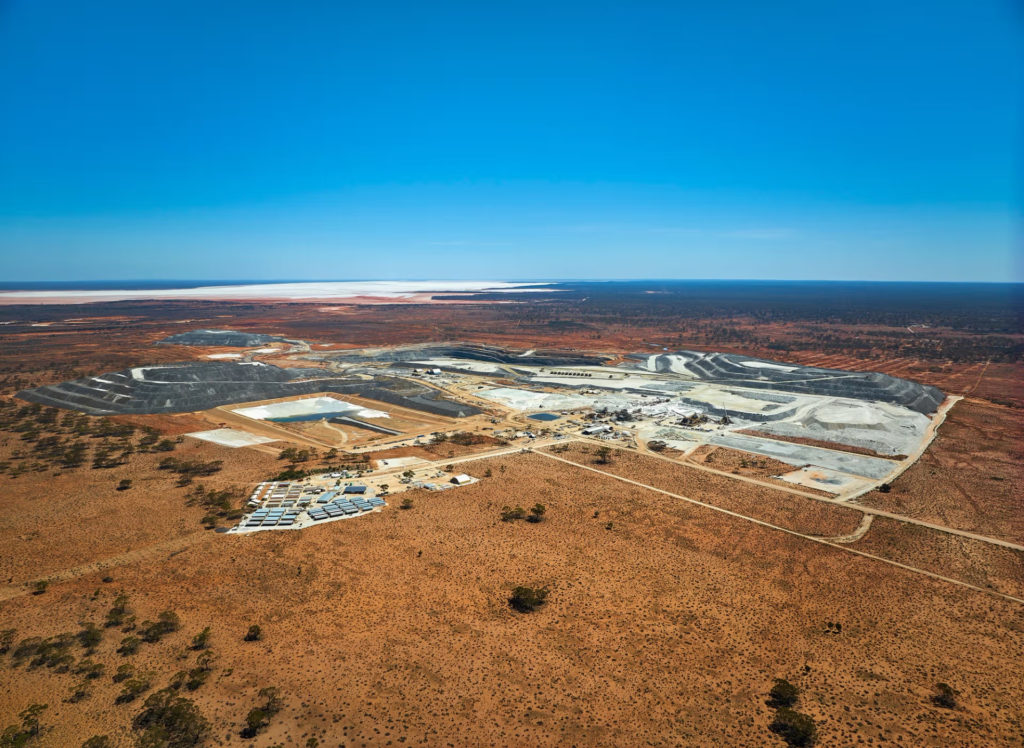
Mineral Resources is restarting the Bald Hill lithium mine in Western Australia after an 18‑month shutdown, bringing back a 58 Mt resource grading 0.9% Li₂O and nameplate output of 165,000 dmt per year of 5.1% spodumene concentrate (about 140,000 dmt SC6 equivalent). Ramp‑up will see crushing and mining restart next month, first concentrate in July, first shipment via the Port of Esperance in Q1 FY2027 and full capacity in Q2. Once online, MinRes will be the only operator running three hard‑rock lithium mines with on‑site concentrate plants, alongside Wodgina and Mt Marion.
US Energy Secretary Chris Wright has issued an emergency order requiring Midcontinent Independent System Operator and Consumers Energy to keep the J.H. Campbell coal-fired plant in West Olive, Michigan available through 16 August 2026 to address critical summer grid reliability risks. The 3-unit plant, originally slated for closure on 31 May 2025, has been run during peak demand and low wind/solar periods and was key in stabilising the grid during recent winter storms. DOE’s Resource Adequacy Report and NERC’s 2025 Long-Term Reliability Assessment both flag MISO as high risk, with DOE warning outage frequency could rise 100-fold by 2030 if firm capacity is retired too quickly.
EnergyX has signed an MoU with Compass Minerals to build a 30,000 tpa direct lithium extraction and refining plant at Compass’s existing Ogden brine operation near Utah’s Great Salt Lake, using an established brine stream and returning processed brine to the current sulphate of potash and magnesium chloride system. Compass has already invested an estimated $70–80 million in lithium-related equipment, cutting upstream drilling and CapEx risk and potentially simplifying permitting. EnergyX is targeting a 2028 construction start and plans to produce lithium carbonate on-site without additional Great Salt Lake water withdrawals.
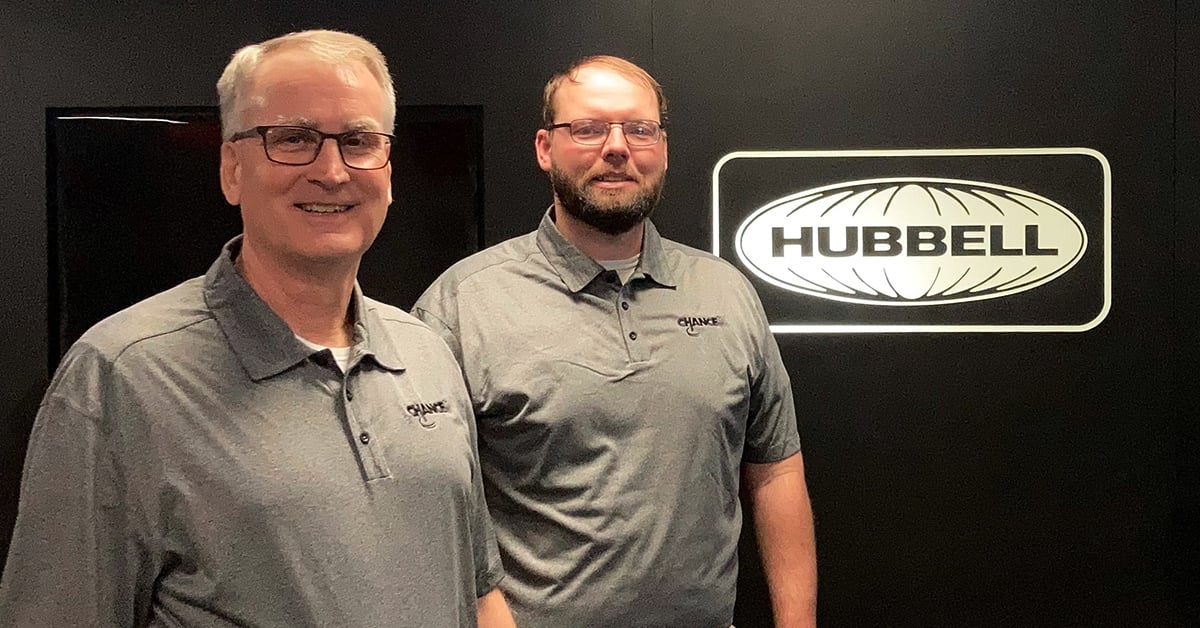
Gary L. Seider, P.E., is retiring after nearly 40 years with A.B. Chance, where he was instrumental in developing helical pile and anchor systems that became core to Hubbell’s foundation solutions portfolio after its 1994 acquisition. His work helped formalise design methodologies, installation torque–capacity correlations and training standards for contractors and engineers using screw anchors in transmission, distribution and commercial foundation projects. Seider’s legacy is a mature, codified helical foundation practice that many US geotechnical and structural engineers now treat as a routine design option.
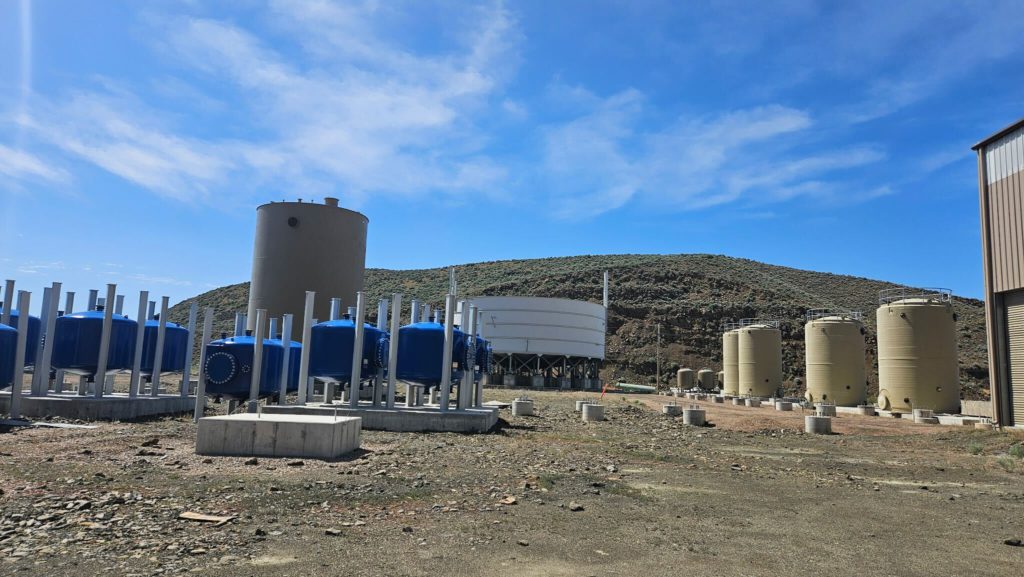
Clean TeQ Water has secured a design-and-construct contract from Broken Hill Operations for an ATA® Tailings Dewatering Plant at the Rasp Mine in Broken Hill, New South Wales, supporting the site’s production ramp-up. The plant will apply Clean TeQ’s proprietary ATA® (Advanced Tailings Aggregation) technology to dewater tailings, enabling higher-density deposition and reduced reliance on conventional tailings storage. For geotechnical and processing teams, this signals a shift towards drier stacked or thickened tailings strategies at a long-established lead-zinc-silver operation.
GR Engineering Services has been named preferred EPC contractor by Ora Banda Mining to deliver a 3 Mt/y gold process plant for the Davyhurst Expansion Project in Western Australia. The appointment follows Ora Banda’s ASX update outlining a step-up from the current 1.2 Mt/y Davyhurst plant, signalling a major throughput increase across its existing open pits and underground resources. For plant designers and contractors, the project points to upcoming demand for larger comminution, leach and tailings handling circuits in the Eastern Goldfields.
XCMG all‑electric heavy‑duty trucks have completed trial runs on the 700 km haul route between Codelco’s Chuquicamata copper mine and the port of Mejillones in northern Chile with zero reported malfunctions. The route, crossing the western Andean foothills, tests traction, braking and battery performance under high-altitude gradients, long downhill sections and desert temperatures. Successful operation over this distance signals growing feasibility of battery-electric haulage for mine‑to‑port logistics, with implications for charging infrastructure design, duty‑cycle planning and fleet energy management.
Anglo American has agreed to sell its Australian steelmaking coal portfolio to Dhilmar Ltd for up to US$3.875 billion, including US$2.3 billion in upfront cash and a price-linked earnout. The divestment covers multiple hard coking coal operations supplying blast furnace markets, signalling further strategic retreat from thermal and metallurgical coal. For mine planners and contractors in Queensland and New South Wales, new ownership by Dhilmar may trigger revised life-of-mine schedules, contract renegotiations and potential changes in capital spend on underground development and CHPP upgrades.
Meiteng’s ZhiMei Master large AI model for coal preparation was showcased at a CCPUA technical exchange in Jincheng on 24–25 April 2026, hosted with Jinneng Holding Equipment Manufacturing Group. Built on domain data from dense medium separation, flotation and dewatering circuits, the model targets intelligent control of product ash, yield and reagent dosage across complex coal washing plants. For process engineers, the move signals rapid deployment of plant-level AI optimisation in China’s large state-owned coal operations, with implications for retrofitting existing preparation facilities.
Early designs released by the Victorian Government show new Tottenham and Albion stations to be built in Melbourne’s west as part of Melbourne Airport Rail Stage One. Works already underway include upgrades to more than six kilometres of track between West Footscray and Sunshine, preparing the corridor for increased airport and suburban services. For civil and rail engineers, the project signals upcoming packages in station structures, track formation, drainage and signalling interfaces along this constrained brownfield alignment.
A major multi-year contract has been awarded to upgrade the Multi-lane Free Flow (MLFF) roadside tolling system on Melbourne’s EastLink tollway, with completion scheduled for mid‑2028. The project, described as a significant financial investment, will replace and modernise existing intelligent transport system hardware and tolling equipment across the corridor to support high‑speed, multi‑lane gantry operations. For civil and systems engineers, the works will involve staged roadside installations, integration with legacy ITS infrastructure and maintaining live traffic throughput during construction.
Strong gold intercepts at Forrestania Resources’ Mt Palmer project in Western Australia include multiple high‑grade zones, boosting the project’s exploration momentum and follow‑up drilling plans. The historic Mt Palmer mine area, which previously produced significant ounces from narrow high‑grade veins, is now returning modern RC and diamond drilling results that confirm mineralisation continuity along strike and at depth. For geotechs and mine planners, the combination of steeply dipping lodes and remnant underground workings points to selective underground extraction scenarios rather than bulk open‑pit designs.
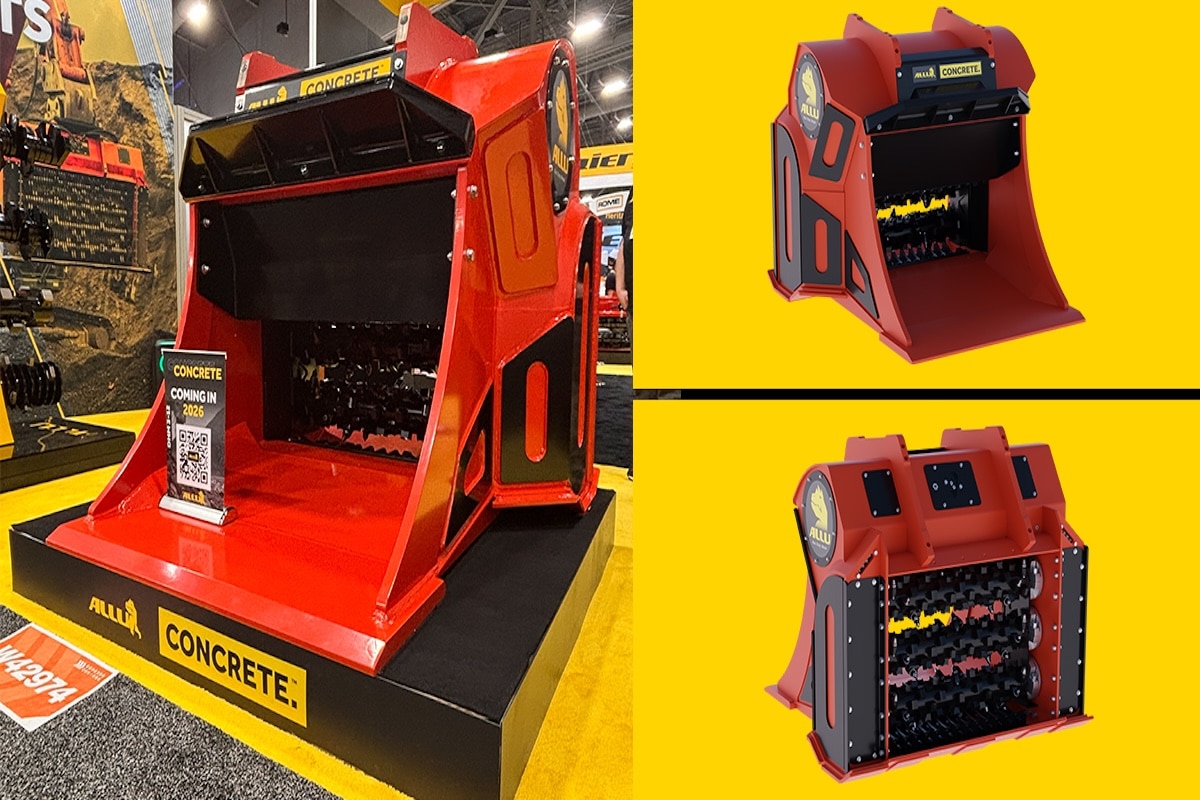
ALLU Group has expanded its material processing bucket line-up with a new concrete screening and crushing attachment aimed at on-site recycling of construction and demolition waste. The unit combines screening and crushing in a single bucket, allowing excavators or loaders to process reinforced concrete, asphalt and rock without separate mobile crushers or screens. For mine and quarry operators, this can reduce haulage of oversize or waste material, cut reliance on fixed crushing circuits, and support backfilling or road-base production directly at the face.
Pilbara Ports lifted April 2026 throughput to 65.9Mt, a 2 per cent increase on April 2025, driven primarily by iron ore exports through Port Hedland and Dampier. The result keeps the operator tracking near its typical annualised rate of more than 700Mt, sustaining high utilisation of deep-water berths, shiploaders and channel capacity in the Pilbara supply chain. For miners and logistics planners, the steady uplift signals continued pressure on rail–port interfaces, stockyard management and dredged channel maintenance in a region already operating close to nameplate capacity.
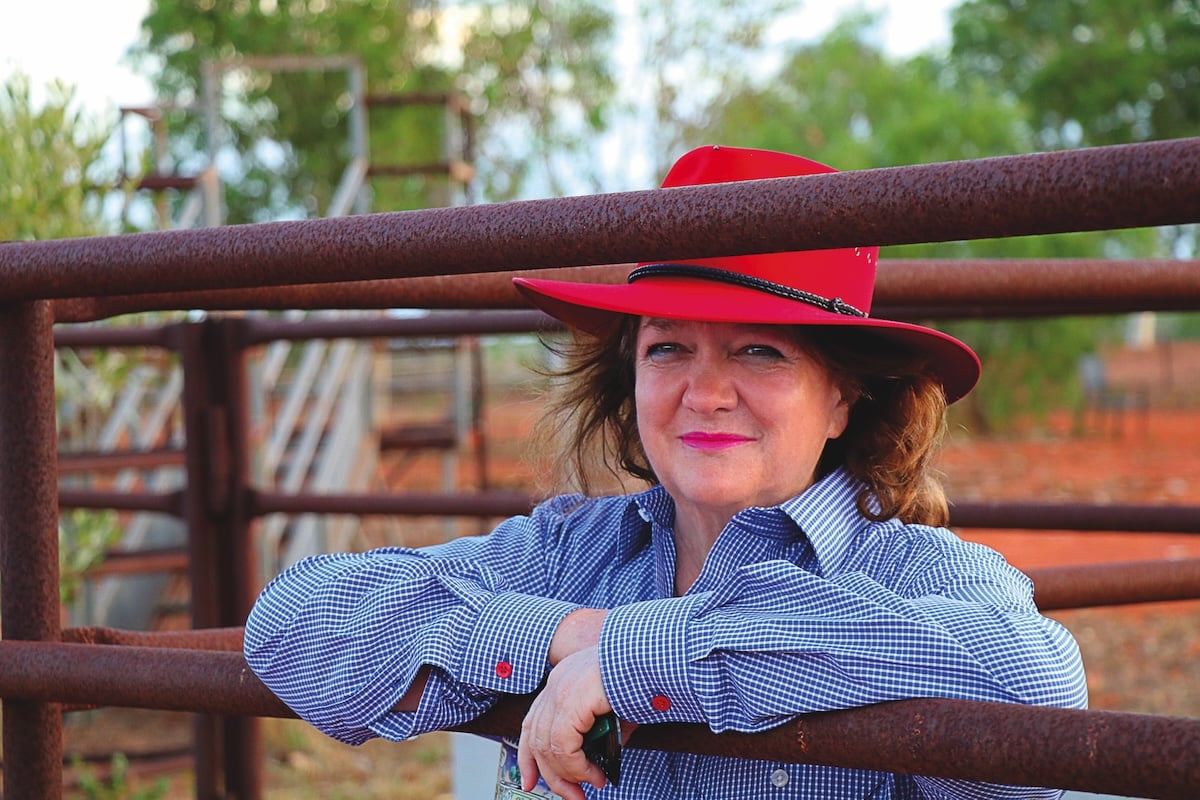
Hancock Prospecting, backed by Gina Rinehart, is reportedly moving to develop a billion‑dollar lithium project in Western Australia as lithium prices recover from 2023–24 lows. The proposed operation would add another large hard‑rock source to WA’s existing spodumene belt, where typical deposits exceed 1% Li₂O and support high‑throughput open‑pit mining and dense media separation plants. For geotechnical and civil contractors, the scale signals upcoming demand for pit slope design, waste dump and tailings storage facilities, haul road construction and associated processing infrastructure.
Wildcat Resources is fast‑tracking development of its Tabba Tabba lithium project in Western Australia’s Pilbara, shifting to a staged, lower‑capex start‑up aimed at bringing initial spodumene concentrate production forward. The company is re‑sequencing mine development and plant construction to prioritise near‑surface pegmatite zones and modular processing units, rather than a single large‑scale concentrator build. For geotechnical and civil teams, the approach points to shorter design horizons for early pits, leaner earthworks around a compact plant footprint, and scope for later expansion once cash flow is established.